14 May 2013

Conference Season

Ah, springtime! Leaves are budding, flowers blooming, birds singing, and writers conference season is starting. If you're a writer, consider rubbing elbows with other writers in person. Conferences have a lot to offer: you can meet and get to know other authors, you can go to craft workshops. Some even have writing contests and pitch opportunities with agents and editors. Before you sign up, think carefully about what you might want to get out of a conference. Do you need inspiration to give your writing a new shot in the arm? Do you want to meet a particular agent or editor? Do you want to connect with other local authors? Do you want to find some new critique partners? How much does the conference cost, including travel expenses? Do your research.

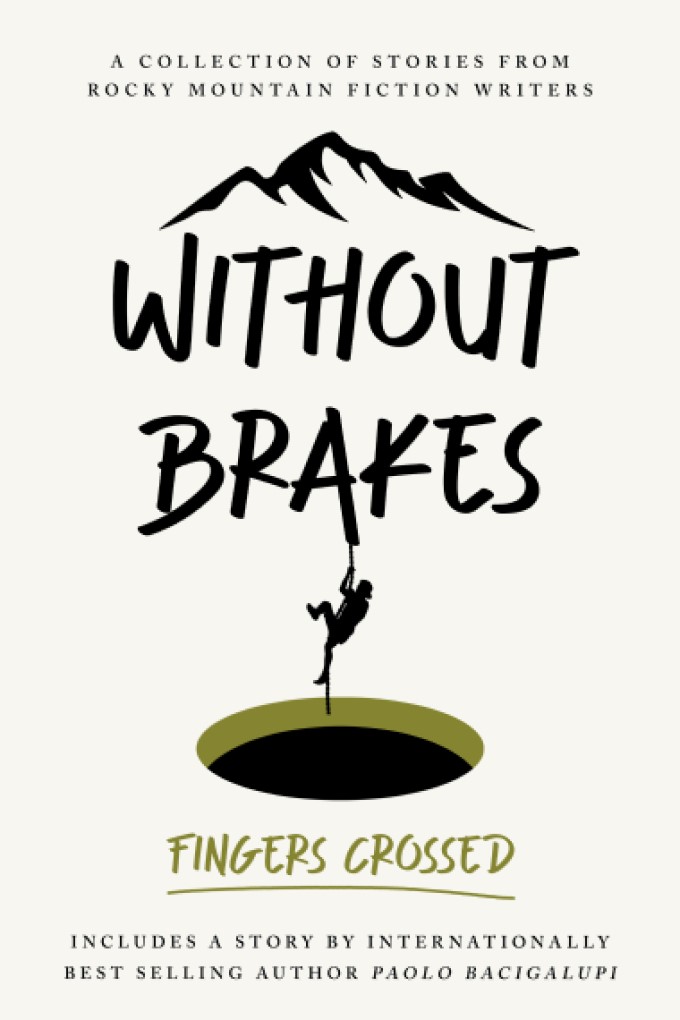
Some conferencs coming up include: Clarksville Writers Conference (June 6-7, 2013), the Carnegie Center’s “Books in Progress” Conference (June 7-8, 2013). Personally, one of my favorites is Rocky Mountain Fiction Writers annual conference (Sept. 20-22, 2013). I go every year. The deadline for their prestigious commercial novel contest "Colorado Gold" is approaching: June 1, 2013.

In general, a great place to find out about writers conferences is Poets & Writers: Writers Conferences, Colonies, and Workshops. Another excellent resource is the Shaw Guide to Writers Conferences & Writing Workshops.
Does anyone have a favorite resource to share? Or a favorite conference to recommend?

Maybe I'll see you at a conference this summer!

07 May 2013

emotion

At the production meeting last week we had an intriguing discussion about what makes a story good. One thing that came up was endings. Since we blogged about Story Endings last fall, I won't repeat myself. Another important component of a good story is emotion. I did touch on aspects of this in Story Layers earlier this year. But it can't be emphasized enough...

A good story affects readers' emotions by putting the protagonist through emotional situations. If I, as a reader, am not emotionally affected by a story, it hasn't done enough to grab me. The writer hasn't taken advantage of all the tools at his/her disposal. Emotion is one of the metrics we used to chose the final stories for the marvelous May issue of Electric Spec.
Check it out May 31, 2013 and see if your emotions are engaged! Feel free to let us know one way or another.
Thanks!

03 May 2013

production meeting

Hi, gang. The Electric Spec editors had the production meeting for the marvelous May 31, 2013 issue. All went surprisingly smoothly as we mostly agreed on which stories would be a good fit for the issue. Editors are in the process of emailing authors the good or bad news. Authors who made it into hold-for-voting should hear back soon with a "Yay" or "Nay." And they should pat themselves on the back for a job well-done since all the hold-for-voting stories were publishable.
In more behind-the-scenes news, each editor got assigned their stories to edit. We also shuffled some of the other administrative duties around. It's been over 7 years after all!

We also had a long discussion about the differences between horror and macabre and what kind of stories we've been getting in this genre. To make a long discussion short, we're tired of getting stories where some kind of monster (literal or metaphorical) murders someone. We're more interested in spooky, creepy, and/or paradigm-shifting stories. Thus, we're going to update our submission guidelines to reflect this. Stay tuned for this, and recall the fiction submission guidelines are here.

I guess that's it for production meeting info.
Keep sending us your stories!

30 April 2013

stay tuned

We're having the Electric Spec production meeting soon for our marvelous May issue. Stay tuned for an update at the end of the week. Thanks!

23 April 2013

grab me

I don't think it's a secret that all the Electric Spec editors are also writers. I write a lot of short stories and submit them to various venues. It's annoying when an editor writes back, "I liked this story, but it just didn't grab me enough. Sorry." Ugh! As we finish up slush for the marvelous May 31, 2013 issue, such comments do resonate with my inner editor. I've been reading a lot of nice stories, but not a lot of stories that grab me. (Feel free to think: Ugh!).

One how-to writing book I read recently emphasized manipulating readers' emotions. I hate to say it, but emotions grab readers.
How's a poor author supposed to manipulate a reader's emotions? By making the characters feel emotions. When people read fiction they become the characters they read about. If the protagonist is emotional, the reader will be more likely to be emotional and will be more likely to be grabbed by the story.
Unfortunately, you can't have emotions for no reason; they need to be integral into the story. This is done by having high stakes. The situation the protagonist is in needs to be important.

The good news is we all know at least one person very, very well and we can mine that knowledge for our fiction. What's the worst thing that could happen to you? What would rock you to your core? How would that make you feel? Why? What would be the consequences? What would you do to resolve or fix that? The deeper you delve into your psyche, the more writing seems like therapy--but maybe that's a good thing. Ultimately, readers want truth and understanding about the human condition.

Good luck!

16 April 2013

editorial relationships

Savvy Electric Spec authors know the deadline for the marvelous May 31, 2013 issue has passed. But, fear not! We're now accepting submissions for the awesome August 31, 2013 issue.

Recently, one of my favorite magazines changed editors. I had exchanged some emails with the old editor over the years, and seen him talk at cons. Of course, I always read his editorials, as well. I felt like I had a relationship with him. Similarly, I've already exchanged a couple emails with the new editor and read his first editorial. So, I feel like I've got a relationship with the new guy. However, I realize these feelings are incorrect. I do not actually have a relationship with either of these editors. If I were to call one of them on the phone, they would not be happy. If I were to email them on their personal email, rather than the magazine email, they would not be happy. We have a professional relationship and that is it.

You may know where I'm going with this. One of the Electric Spec editors is having a little trouble with a prospective author thinking they have a personal relationship. I know relationships can be tricky in the Facebook era, but editors and authors have editorial relationships, not personal relationships. We may greatly enjoy your fiction (or not), and/or enjoy working with you through the editorial process (or not), but that's it. Please do not call editors or use their personal email, unless explicitly invited to do so.
Thank you in advance for being professional! :)

I greatly enjoy your submissions! Keep 'em coming! ( submissions@electricspec.com )

09 April 2013

writing tips

Reminder: the deadline for the May 31 2013 issue of Electric Spec is coming up: April 15, 2013. Get those stories in!

I recently came across Joss Whedon's Top 10 Writing Tips. Check them out here. Whedon is one of the most talented and successful people of our time, so when he gives tips, I listen! His tips include: Finish It, Structure, Have Something to Say, Everybody has a Reason to Live, Cut What You Love, Listen, Track the Audience Mood, Write Like a Movie, Don't Listen, Don't Sell Out. Seriously, check them out.

All this prompted me to wonder what my writing tips would be. So, without further ado, here are my off-the-cuff writing tips:

  1. Keep writing. This is, of course, closely related to 'Finish It' but with good reason. Are you really a writer if you don't finish anything? Are you a writer if you don't write?
  2. Find joy in writing. I hate to say it, but I know many writers at various stages of their careers and money doesn't seem to be plentiful for anyone. Authors need to find their fulfillment elsewhere: in creating new characters/stories/worlds, or maybe in meeting and getting to know other like-minded souls, aka writers.
  3. Get feedback on your writing and listen to it. I don't know anyone who can write a perfect first draft. I know some aspiring writers who think their first drafts are perfect... And I'm not optimistic about their publication success. Note, however, you shouldn't change your work willy-nilly based on what random people say. Only you know in your heart what your story is and what it needs.
  4. Develop your writer's voice. Voice is invaluable. Voice is the combination of subject matter, vocabulary, sentence structure, tone, theme, and all other aspects of writing. Of course everyone has a voice, but you want your voice to be distinctive and unique. Think of Charlaine Harris' Sookie Stackhouse series, or Janet Evanovich's Stephanie Plum series. You'd know those voices anywhere. How do you develop your voice? You write with your inner editor turned off. Incidently, NaNoWriMo is great for this.
  5. Keep trying to improve. Read writing books. Study novels and stories: what worked, what didn't work? Go to writing conferences. Talk to other writers. Read writing blogs about writing tips. :)

How about you? What are your writing tips?