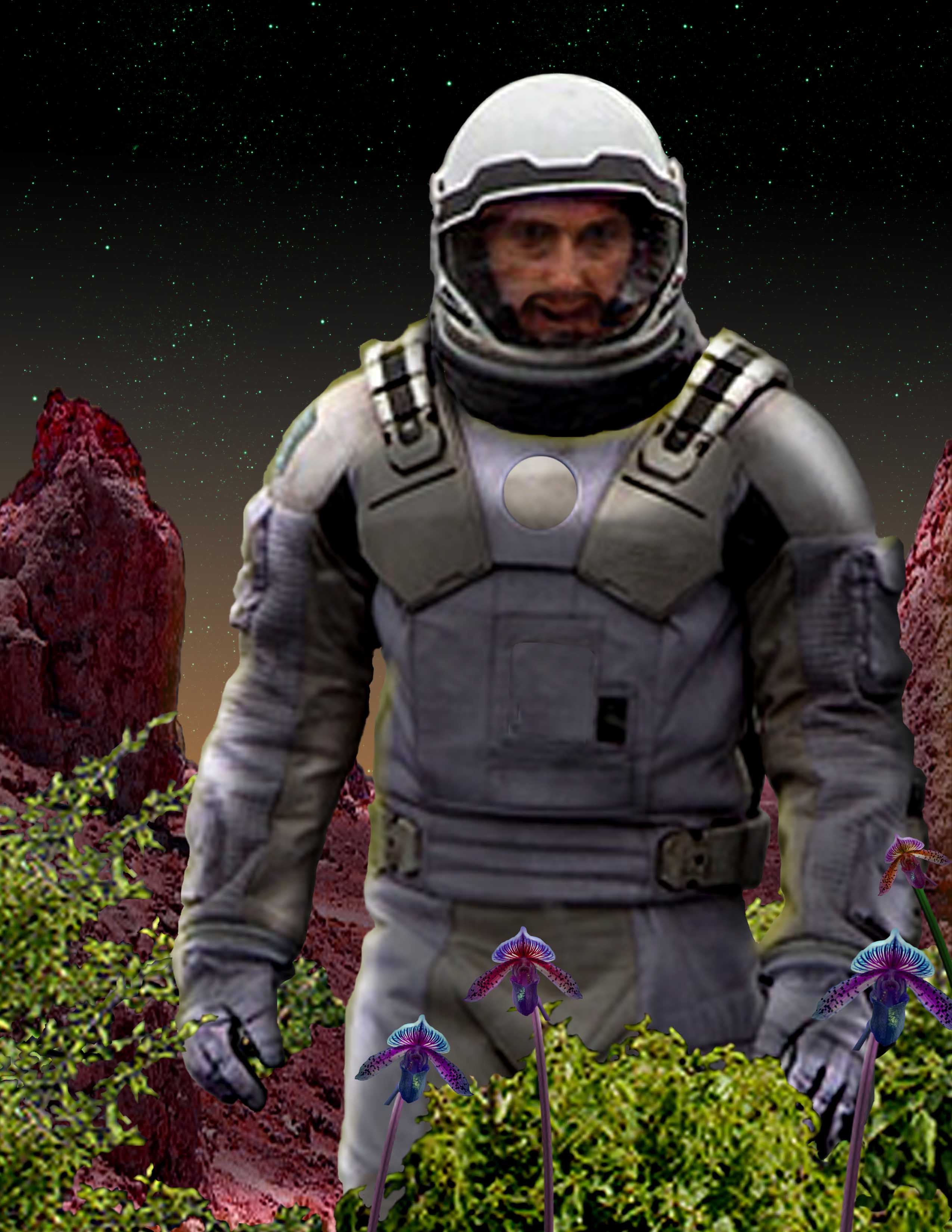
Thank you everyone who contributed including our authors, our cover artist, and the editorial and technical staff.
Woo hoo!

Thank you everyone who contributed including our authors, our cover artist, and the editorial and technical staff.
Woo hoo!
I'm fascinated by transitional living spaces and the things people do to make themselves comfortable in a new home.
It's always a bit eerie, moving into a newly empty space - particularly if you know you, too, will likely have to move on from that space soon. You need to walk that line between making it comfortable for yourself, but also making it easy to pack down and leave, because you won't be staying there long.
How people go about that varies and I love the little rituals people fall into. Some people make their bed before they do anything else - including unpacking boxes. Other people make a lot of noise, change the locks, or burn scented things to chase out the remnants of the old inhabitants.
Nowhere is this phenomenon more obvious to me than in the military where, combined with natural superstition derived from the random violence of war, people get very practiced at packing down and setting up in a new living space on short notice.
I liked having the opportunity to play with these ideas in this piece.
What would nesting and a home base look like when you're very far from home? What is the first priority for settling in? What unspoken codes of conduct and coping methods would develop between people who live this way but may never meet?
And what small, ridiculous things might you cling to in order to make a place feel like home to you?
And be sure to check out all the stories tomorrow, February 28, 2018 at Electric Spec!
This is a story about feelings -- how useless I feel when I'm sad; how dangerous I feel when I'm angry; and how terrified I am that if I say something too true, that the power of the truth could destroy everything around me.
There's a scene in the television show Crazy Ex-Girlfriend where the main character's friends stand around her in a circle, confronting her with something they’ve learned about her past. She’s so scared and cornered that she lashes out and tears down each and every one of her friends by saying the cruelest things she can. It is the scariest thing I've ever seen in video. Watching this woman tear apart her friends felt like watching one of my literal nightmares, pulled straight out of my sleeping head and plastered on the screen.
The lead character of Crazy Ex-Girlfriend is flawed and complicated and even kind of horrible, but she's the lead, and you come to love her and identify with her anyway through the magic of narrative. So many male characters are allowed to be so much worse, and yet they remain protagonists, sometimes beloved icons. When women characters go off the rails, they're written out of the show, and you never see what happens to them next. But in Crazy Ex-Girlfriend, the woman who went off the rails is the lead, and she goes right on with her life. When I went back and re-watched that scene, I realized that all of the cruel things she said -- they were true. They were said cruelly, but they were truths her friends probably needed to hear. A man can shoot people in the head and still be the iconic hero of a beloved trilogy of movies, but a woman must fear telling the truth, in case she doesn't do it nicely enough.
"Anger is a Porcupine, Sadness is a Fish" is a story about the crippling fear and anger that I've felt at times, and how I'm still afraid -- in spite of the healing powers of watching Crazy Ex-Girlfriend -- that if I speak the wrong truth, or say the truth in the wrong way, I could accidentally destroy my entire world.
The inspiration for this story came in two parts. Part one was George Bernard Shaw's Saint Joan, which examines the idea that a miracle is "that which increases faith" regardless of its truth value. Part two was my long-running fascination with necromancers. At some point, I realized that a skull-and-black-robes necromancer could easily position himself as a miracle worker if he only put a Lazarus-type spin on his works. Thus, the Order of the Blessed Return was born.
Of course, that's not how the final version came about. The first draft took that premise and used it to wag a sanctimonious finger at religious hypocrisy. As fun as it was to write that draft, I'm glad I didn't stop there. If I had, this story would be much shallower and more mean-spirited than (I hope) it is now. As I revised the story and let the characters become real people, I discovered something important. I discovered that, at its core, this story isn't just about religion.
At it's core, this is a story about compromise. We all make comprises between what our hearts know and what reality demands. We do dirty things and try to soothe ourselves with clean words. We set noble goals and set to work with coarse tools—the only tools available. Personally, I don't believe anyone in the Order is evil. I believe they are people, trying their best to make sense of a frightening world.
Of course, that's your decision to make in the end, just like Brother Wynam must make his decision.
I'm excited that we also have two authors lined up for blog posts already. Check back here on Feb 13 and Feb 20 for those. Hopefully, we'll have some more, as well.
At the meeting we had a nice discussion of story themes and the current cultural zeitgeist. It's fascinating how different authors address similar themes. This time we had a lot of social commentary along the dystopian arena. We also had ...porcupines. Weird, huh?
So, book-keeping: Everyone who submitted during the relevant submission period should have heard from us. If you did not: something went awry and please submit. Everyone who was in hold-for-voting but did not make the issue has been sent an email. A few acceptances are still are their way; keep an eye out for contracts. Next steps: editors work with authors to edit stories.
Be sure to check out the fabulous February 28, 2018 issue!
And the winner is: Clara by Adriana K. Weinert. Congratulations, Adriana! Woo hoo!
There was also an Honorable metion: The Chain Outside of Time by Aaron D. Proctor. Congrats, Aaron!
Checkout the ElectricSpec Facebook page some time.
Here, next time, I'll post a report on the Production Meeting.
How do you do this?
So, in the meantime...a few statistics. We are about to cross into 600,000 views for the blog! (Yes, right here!)
(Unfortunately, since we've had a few different hosters over the years, we don't have overall stats for Electric Spec itself.)
So, focusing on the blog, we tend to get a significant uptick around release dates. We also get a signficant upticks when we have guest bloggers--especially authors. :) Yay, authors!
It appears that two of our most popular non-author, non-release-date blog posts were:
Keep those stories coming! Thank you!
Every editor is different. Personally, I enjoy stories with strong characterization. I want to believe your characters are real people. How do you do this? By being specific. Use specific details. For example, don't write 'cookie,' write 'homemade chocolate chip cookie,' or whatever. Also, use metaphors and similes that are specific to your character. A witch would have much different metaphors and similes than a scientist. Often, you want to give the specific subjective thoughts and feelings of characters. Show me what's inside their head.
Furthermore, generally, the protagonist should be special in some way. Show me this specialness, and then use it in an integral way in the story. For example, I just read a story in which the protagonist is a clock-maker. The climax and resolution of the story should thus involve clock-making. Perhaps your protag is unusually compassionate or brave or whatever. The point is the story resolution should hinge on whatever this uniqueness is.
Consider sending us a story with some unique specific characterizations!
Don't forget the submission deadline for the fabulous February 2018 issue is right around the corner: January 15, 2018! Good luck!
Here's hoping 2018 is even better than 2017!
The submission deadline for the fabulous February 28, 2018 issue of Electric Spec is: Jan 15, 2018, midnight, US Mountain time.
We're starting to get enmeshed in the slush for the new issue, so I have a tip...
The number one job of an author is to evoke emotion in the reader. I can't stress this enough.
E-mo-tion is the most important component of every story. If I don't have an emotional reaction to a story, I'm much less likely to buy it. Conversely, if I do have an emotional reaction to a story, I'm much more likely to buy it! :)
What are some good examples of emotional stories? I happen to be rereading Connie Willis' excellent book The Best of Connie Willis: Award-Winning Stories (2014). In the past, I've discussed "The Last of the Winnebagos" (here and here) so I won't do that again. Instead, I'll mention "A Letter from the Clearys." Wow, talk about an amazing emotional reaction. It may be a perfect story. It starts very subltly: "There was a letter from the Clearys at the post office." What follows is a very slow reveal of something huge (I won't spoil it for you) done via an exceptionally well-created character. If you haven't read it, I highly recommend it.
Send us your emotion-evoking story!
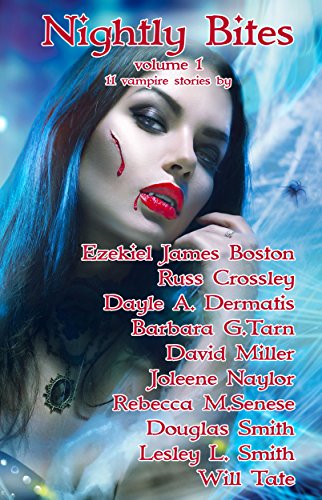 |
When you think of Christmas, you naturally turn to ...vampires, right? :) Okay, I admit that is a little nontraditional. But I'm very excited to be part of the fun vampire collaboration Nightly Bites, available now! |
Description can be tricky for authors. It almost never works to have a laundry list of adjectives or other descriptors. If your fiction has any of these, get rid of them. Nix the tall, dark, and handsome.
I've noticed 'Best' fiction rarely has objective descriptions. Physical characteristics of people aren't even described. Speculative fiction, however, is a unique genre because stories often have non-human characters and non-Earth settings. In that case, you do need descriptions. But...
They should be subjective descriptions. They should be told only through the lens of your protagonist(s).
They should also serve the story. For example, the reader doesn't need to know King Zdofudasdlkf has five tentacles until the reader needs to know it. :)
Please send us your laundry-list-free stories!
Thanks again, to everyone who helped make this happen!
And, thank you, Readers!
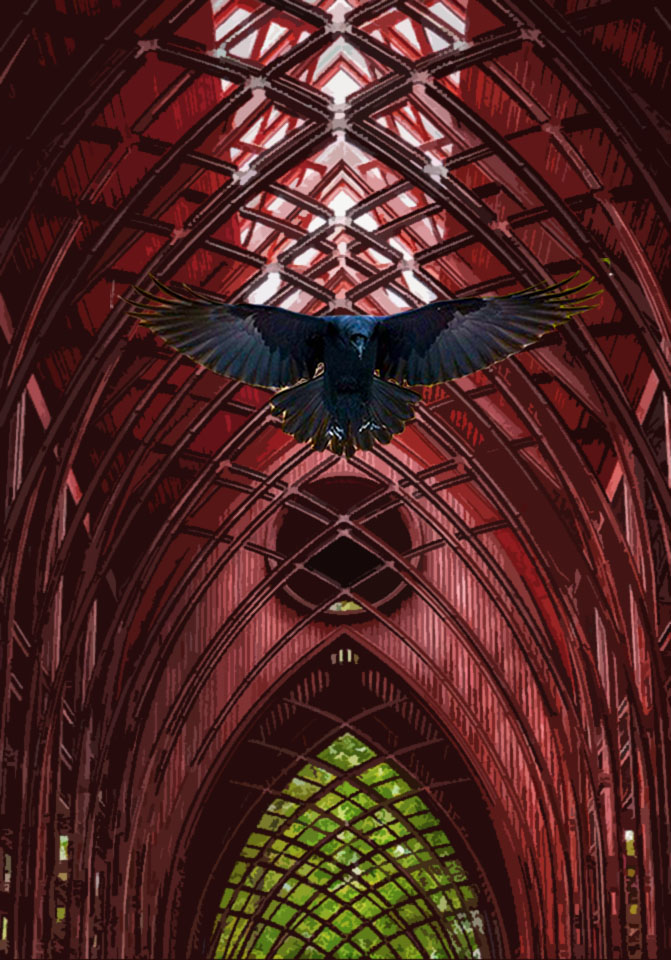
Thank you everyone who contributed including our authors, our cover artist, and the editorial and technical staff.
You rock!
One of our excellent featured stories is Clara. We're pleased to feature some remarks by its author Adriana K. Weinert:
When I was a child, there was a period when I couldn’t sleep with the light out. Each evening, I would direct my mom to leave the desktop lamp on and pull a chair in front of it to shield me from its direct glare. Similar to Clara in my story of the same name, we all had monsters, imaginary or not, to struggle with as kids, and we all have scars, seen or invisible, to bear witness to battles won or lost.
Demons and monsters in the wardrobe are not only childhood afflictions though. As we grow, the wardrobe merely becomes less tangible and the monsters harder to call out. Insecurities, heartbreaks, and grudges reside in closets in our minds waiting to peek out. But I’ve found that once I resolve to crack the wardrobe door open and shine some light on what lies within, the monster deflates and is far easier to manage. The hardest part is to find courage to face what must be faced, as Clara too finds out.
Eventually, one night, I peeked under my bed finding nothing but dust and forgot to tell my mom to leave the light on. I’ve been sleeping in the dark ever since—through all the subsequent battles.
Thanks, Adriana! Very interesting!
Be sure to check out this story and all the others on November 30!
One of our excellent featured stories is The Fish Kite. We're pleased to feature some remarks by its author Mary E. Lowd:
When I was ten, my grandmother died from early onset Alzheimer's. At the time, we didn't know whether her Alzheimer's was of the genetic variety that would have passed down to my father, sister, and me. We've since learned that it was not. But that question cast a big shadow over a ten-year-old. I wondered what it would be like to lose my memories. I worried that was how I would eventually die. In my ten-year-old way, I found a certain kind of peace with it; a way to live under that shadow. I had to, because it wasn't lifted until nearly fifteen years later. By that time, I had a daughter of my own, and I was seriously pursuing a career (as much as that's possible) writing fiction. Perhaps unsurprisingly, a lot of my fiction dabbled with questions of memory -- what it meant, and what it meant to lose it.
The first story I ever sold, "Forget Me Not," was about a man with an addiction to memory drugs -- Leland was a character with an artificial quirk inspired by my father's own perfectly normal forgetfulness. My mother has always had an excellent memory; my father not so much, and his forgetfulness has often helped him to remember his past in ways that are more comfortable than how they actually happened. I pushed that natural dichotomy to the extreme and provided a science-fictional explanation for it. A few years later, I was shocked and delighted to learn that the mechanism I'd described for targeted memory loss had actually been backed up by real science. Sometimes when science-fiction writers stab in the dark, we can still get it right.
Anyway, one of the strongest images from that first story, "Forget Me Not," involved a fish kite that Leland had made as a child. His fish kite was inspired by my own collection of My Little Ponies. I loved those ponies and treasured them -- until I was in high school and wanted some money. Somehow though, as an adult, I could always remember treasuring them, but I had a hard time remembering I'd sold them. Hours of happy playtime figured much large in my mental landscape than a few minutes spent handing a box over for a fistful of cash. Those missing ponies haunted me like Leland's fish kite.
Fast forward another decade, and discover the wonders of eBay. As my daughter got older, when I wanted to play ponies with her, my husband ordered us old ponies -- just like the ones I'd sold so long ago -- from eBay. Now, I have a new collection of ponies, similar enough to the ones I sold that I don't go looking for them any more. I know where my ponies are -- right on the shelf where I left them. My daughter and I can play ponies together any time she wants.
I was thinking about how I'd healed my own memory wound by replacing the ponies, and I decided that it was time to revisit Leland's story -- maybe give my character a chance to heal of his own.
(For anyone interested in reading "Forget Me Not," it's available online here: http://deepskyanchor.com/forget-me-not/ It's part of an entire collection of my short stories focused on questions of memory, called The Opposite of Memory.)
Thanks, Mary! Very interesting!
Be sure to check out this story and all the others on November 30!
One of our excellent featured stories is The Chain Outside of Time. We're pleased to feature some remarks by its author Aaron Proctor:
Any good story should be woven from some big idea. Once storytellers lose that idea, the story seems to lose it’s reason for being told. We all know that great show that just went off the rails at some point. Well, I believe that happens when the writers lose their authentic sense of of the idea upon which the story grows.
While writing “The Chain Outside of Time," I drew upon my past struggles with addiction. The fatalism. The isolation. But that doesn’t mean that the story is specifically “about” addiction because I’ve seen that fatalism and isolation reflected in the faces of many of you out there. Maybe you’re depressed. Maybe you’re anxious. Maybe you just feel out-of-step. And maybe this is all just grandiose writer BS; but—for better or worse--it helped me write the darn thing.
And I really hope you enjoy it and get something out of it.
Thanks, Aaron! Very interesting!
Be sure to check out this story and all the others on November 30!
Thus, an excellent way to market your fiction is via short stories. Short fiction can help create your audience. It gives readers a specific taste of what you have to offer. (What other artistic endeavour can do this?) Short stories are thus even better than ads, and bonus: editors pay you rather than the other way around. Short fiction enables you to get your name out there. Depending on the short story venue, you can get your name and product out in front of people you might not reach otherwise--but they're still readers who are interested in your kind of stuff.
In the case of Electric Spec we post an author bio and often an author blog post, as well as keeping your story itself posted forever (or until you ask for it back). Can you say: link s to your website and social media? And, yes, links are good things.
And oh yeah, there are other benefits to short fiction. It can really hone your writing skills. If you can writ
e an excellent short story, let's face it, you can do almost anything. :)
Bottom line: short fiction is an excellent marketing tool!
What's happening with Electric Spec? Why, I'm glad you asked. :)
We finished the slush pile for the notable November 30 2017 issue. All authors should have heard from us with either a 'no thanks' or a 'we're going to hold this for voting.' If you didn't hear from us by now, something probably went awry. Please resubmit your story.
Next week I'll blog about the production meeting and start bragging about the new issue! Stay tuned!
When science fiction first began a few authors tried translating a standard story, for example a western, to a science fiction milieu. In such a case, they would give different elements of the story science-fictiony names, but that's all they would change. Editors and critics refer to this kind of lazy writing as 'calling a rabbit a smeerp.' Once in a while, we get a story like this. Don't do it!
Ideally, every science fiction story has some uniquely SF element that is crucial to the story. It actually doesn't matter what you call things.
The real trick is to show protagonists deal with this uniqueness in a compelling way that resonates with readers, in a way that evokes emotions in readers.
Speculative fiction has the added challenge that protagonists aren't necessarily human. In fact, the protagonist often isn't human. Think ghost, werewolf, elf, god, alien, robot... You get the idea. I've disagreed with other writers in the past, however, in that I say none of these protagonists are truly not-human. Since readers are human, they need something they can relate to. Do you agree? Disagree?
Send us a story that proves me wrong!
And, oh, yeah, Happy Halloween!

 Posts
All Comments