31 January 2011

The Art(?) of Reading Epic Fantasy

I recently read Brandon Sanderson's The Way of Kings. It is a monster of a book--over 1000 pages, and it is only "Book I" of the series. (But a good read nonetheless). I noticed that I read epic fantasies in a particular way. I find it next to impossible to keep track of all the character and place names. I remember the major characters and a few who are unique or exceptionally well drawn, but I don't try to place all of them. I also don't keep track of all the place names, various religious (unless important to the plot), and backstory about the world in any great detail. I almost never refer to a map or the glossary, if included. It just takes too much time. In places, (the better written the fantasy, the less I do this) I skim. If a character is brooding about a decision, I skim over that. If the book goes on at length about a minor plot tangent, a non-major character, or worldbuilding, I tend to skim that as well. Even blow-by-blow battle scenes may become tedious and I'll just look to the end of duel to see who dies.

If the fantasy author has done his or her job, however, by the time I get to the end of the book, I'll be reading every word carefully. I'm torn between savoring it and wanting to rush to the end to see what happens. Some scenes may be so well done or exciting that I'll read them twice in a row.

What about you? How do you read fantasies? Other genres?

30 January 2011

Writing on Reading: The Girl with the Dragon Tattoo

I realize I'm a bit late weighing in on this book---it seems like most people I know have read it by now. As a result, I approached it with the question"what made this book so popular?" Even before starting the book, several people warned me that it didn't "get good" until a more than a hundred pages into the book. The start was slow; lots of backstory and narrative with very little present day action. So, obviously, the key to this book wasn't the "hook" at the beginning of the novel. Nor was it the premise made it popular. I watched a few trailers for the movie and even those had a hard time capturing the plot in a few catchy sentences.
I've heard a few people say that the "girl" in the book, Lisbeth, is one of the most fascinating new characters in literature. I'm not sure I buy into the hyperbole about Lisbeth. She is an excellently drawn character, but I'm not sure is solely responsible for making the book popular. (A side note--the original title for the book was Men Who Hate Women.)
In the end, I concluded that several factors have let to its popularity:
  • A generous amount of sex and violence
  • A likable (though ultimately forgettable) protagonist
  • A compelling and somewhat complex mystery
  • And, of course, an extremely well-drawn secondary protagonist (Lisbeth)
I agree with the masses who say Dragon Tattoo is a good read. On the other hand, I felt it could have been better. It had several of the shortcomings of a first time novelist. The pacing was off in places, it had sections of unnecessary or excessive narrative, and even a few POV/ head-hopping issues. (The version I had was also poorly translated in some places, but that's not the author's fault)

What do you think? What make this book work? Could it have been better?

p.s. Did you all know that Larsson was a huge sci-fi fan and even wrote a few sci-fi stories?

26 January 2011

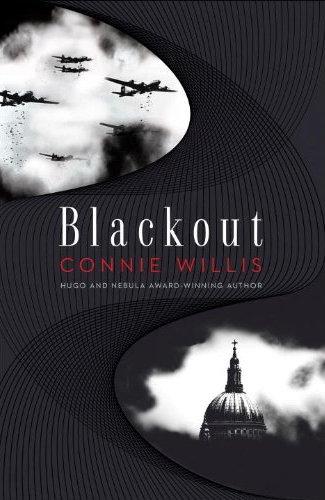
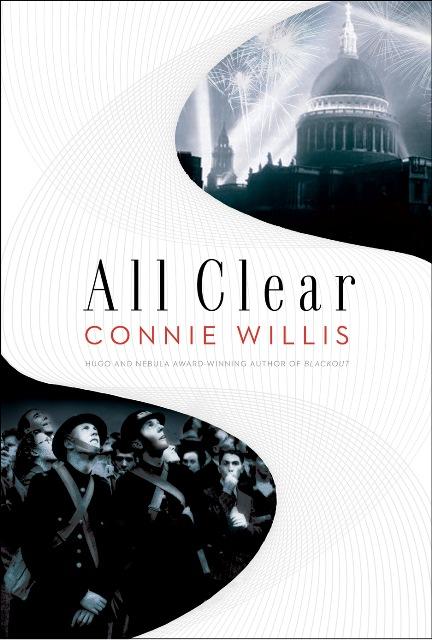
Writing on Reading: Blackout & All Clear


I just finished reading Connie Willis' 2010 science fiction novel in two parts Blackout, and All Clear. As Willis fans know, she is one of the most award-winning SF authors of all time, having won at least ten Hugo Awards and six Nebula Awards. In Blackout/All Clear she returns to her future Oxford University time-traveling world, also featured in Doomsday Book and To Say Nothing of the Dog. I've said before it's a brilliant idea to create a world and utilize it more than once. Editor Betsy blogged recently about themes; in Blackout/All Clear Willis does address her ubiquitous theme of coming to terms with death/loss/grief.


Blackout/All Clear features more of Willis' unique voice, which I enjoy very much. Willis has a gift for making readers care about her characters; she does this by showing her characters care about others. This book has a strong message which is badly needed in today's culture. Additionally, there are some lovely plot twists/reveals at the end of the novel. Nonetheless, in my opinion, at 1132 (!) pages this novel would have been better if it had been shorter. The multiple time-lines and multiple protagonists with multiple names can also get a bit confusing.

There are some lessons here for writers of short fiction as they consider the following questions: Is your story too long? Is your story too complicated? Do you have too many characters?

Knowing Ms. Willis, however, Blackout/All Clear will probably be nominated for several awards. Good luck to her. :) I look forward to her next work.

23 January 2011

More on Themes

Balian of Ibelin
We all have personal themes. Often enough we don't think they're original. But think, really think, about how you apply your themes to your stories. Think about the combination of your themes, the things that make your muse sing. Alone, themes are rarely original. But combined with your own sensibility, they suddenly take on a new flavor. And embracing your themes and personal sensibility lends a ton of confidence to your writing. Because how you apply theme(s) to story--that's the original bit. That's all you, something no one can steal or copy.

Make a list of your themes. You can do it in comments or on your own. Don't know them? Or can't quite articulate them? Alexandra Solokoff recommends making a list of films (or books or stories or TV shows, even music, whatever floats you) that appeal to you. Think archetypes, too, even music.

My list would look something like this, in no particular order:
Robin Hood
  • Sons of Anarchy (TV)
  • Rome (TV)
  • THE OUTSIDERS by S.E. Hinton
  • Boondock Saints
  • Kingdom of Heaven
  • The Bourne Trilogy
  • Robin Hood, in all its various forms
  • THE GHOSTS OF BELFAST by Stuart Neville
  • JOE PITT series by Charlie Huston
  • Most anything written by Richard Kadrey
  • LOTR films--but really only certain sequences
  • HOUSE TO HOUSE by David Bellavia
  • OFF ARMAGEDDON REEF by David Weber
  • Most punk rock music, particularly Green Day, Cage the Elephant, Sum 41, My Chemical Romance...Okay, there's more. Loads more. Those are off the top of my head. But it's plenty to work with.
Next, we analyze the list. First thing: I like me some MALE PROTAGONISTS, and cute ones at that. I suspect it's because I have two brothers. (My forthcoming book features two brothers and one sister.) Beyond that: VIOLENCE, lots of it. Most of these stories have antagonists who perpetrate a lot of violence. They certainly suffer it. Even punk rock sounds violent. And with violence comes meaningful DEATH.

I like soldiers and WARRIORS dealing out death, and often they're self-appointed, like in Boondock Saints. Occasionally, though, they're stuck in a world they don't really understand, like in OFF ARMAGEDDON REEF and The Bourne Identity. Which leads me to another personal theme: the OUTSIDER. Hell, it's even one of the titles.

Outsiders generally have one or more people they'd die for though, or at least friends. Think Jax in Sons of Anarchy. He'd die for the Sons, even when he disagrees with them. So LOYALTY is one of my themes. Plus, Jax has major father issues, along with Ponyboy, Joe Pitt, and Balian. So PARENTAL ISSUES is another. And several of the stories (Kingdom of Heaven, Saints, LOTR, Kadrey's work, and Robin Hood) have MYSTICAL ELEMENTS AND RELIGION, particularly as an impetus to act. That's a big one for me.
So there you have it: my personal themes. Not very original: Male Protags, Violence, Death, Warriors, Outsiders, Loyalty, Parental issues, Religion, all played with background tracks from American Idiot and Danger Days.

But how I apply it, now there's where I find my originality. That's where it's all me. I've developed characters like rock star assassins, disgruntled mystics, martyr princes, twin demon warriors, Wiccan eco-terrorists, changelings who are determined to wipe out their own kind... I think a lot of those stories are pretty original, and they all stem from my quite unoriginal personal themes.

We have to write to our themes, otherwise we're just not really interested, right? So you may as well know what they are and put them to work for you. So how about you? What are your personal themes and how do they manifest themselves in your work?

20 January 2011

To Draft or To Revise

Something I've been struggling with lately, amid many projects and reading slush, is getting a chance to draft. I've hit the climax of a novella, but I just haven't had time, with revising another book and submitting yet another, to finish it.

That makes me itchy. Something about drafting... I have a clear addiction to words and drafting is the only thing that satisfies it. I don't hate revising, but it gets tedious. Hence, I try to draft fairly competently (and I could go into my habits that help that some other time) to cut down on revision time.

But I know some writers loathe drafting and the only reason they write anything at all is to get the opportunity to revise.

So. Which are you? A drafter or a reviser? And why?

18 January 2011

Notes from an editor...

We are deep into production mode for the next Electric Spec issue: February 28, 2011. So, I thought you all might want some info about what's going on...

We are preparing for our big production meeting that is coming up. There are a few stories still in the slush pile that we're getting through. (Don't worry, authors, you should hear back soon if we're holding you for voting or if your story is rejected.) It is very sad that we have to reject the majority of our submissions.Editor Betsy said "I want to know what the story's about quickly." This is a good tip and particularly true for on-line stories. It's just too easy to click away.However, I don't agree 100%. (Darn Editors!) I want to be intrigued quickly.This can be with a great plot right out of the gate, but it can also be with a unique character, an unusual voice, an amazing original world, or even a very provocative sentence. There is one thing Betsy and I totally agree on and that's the importance of originality. We publish stories at Electric Spec that have some kind of originality.

At the production meeting, we decide what stories to publish and it is a bit of a knock-down drag-out. (That's why we need the beer...) Invariably different editors will favor different stories. So, as I've said before, if you make it to hold-for-voting you are publishable. At the production meeting we also have to consider things like issue balance; we don't want 5 werewolf stories, for example. We decide on things like columns or interviews. We also decide on cover art at the production meeting. (Send us some art!)

After the production meeting, we contact all the authors and send contracts to the acceptances. When they get back to us with their contracts, we edit the stories. We send the editted stories back to the authors for a final check, and we make the webpages. Actually, I usually ask my authors to check their story on the webpage. Final versions of stories and columns are created as the month progresses and then on the last day of the month ...viola! We unveil the new issue.

Be sure and check out our next issue of Electric Spec! And keep sending us your stories.

14 January 2011

Tales from the Slushpile

I've read a lot of slush in the past few days, trying to get caught up. Most of it's really fun. It's awesome to see the cool ideas out there! But, and here it comes, there's the constant downside of having to reject most of what I read. Out of about 40 stories I saved 2 to vote on.

Why'd they make the cut? They had the full package: interesting story idea, things I hadn't seen before, clever protagonists, and the foundation of decent writing. There's also some other aspect, a sort of confident passion. More on that in a moment.

But as I do reject most of what I read, here's some notes on why:

I want to know what the story's about quickly. I know, I know. I harp on this all the time.

For instance, I don't like idle discussions between characters and being left just hoping they play into the story eventually. I don't like a fight scene without knowing why the protagonist is fighting. I don't like punchlines too well either.

I really really like when stories start on the first page and end on the last page, and when beginnings and endings frame the story in a way that makes sense. Beginnings are meant to take your reader by the hand and lead them deeper into the story, not skirt around it.

I like meeting the cast fairly quickly and being shown their importance to the story. Also not crazy about important, influential characters remaining off screen. I'll put it this way: antagonists were meant to be seen and heard.

I don't have to feel sorry for your protagonist, or even like 'em. But I damn well need to be interested in him or her. Everyman protags don't appeal to this editor.

Our word limits are firm. Stories outside the limits are not read. I had a few of these. I have to say, it annoys me a bit because we have pretty generous word limits. And yeah, if a story claims something close to 7K words, I usually do a word count to double-check.

This one's fuzzier to explain, but the writing has to be solid. I've got to feel like some skill, craft, and thought went into telling your story. I know Electric Spec can't pay a lot, but on the flipside, we don't keep rights for very long, and only electronic rights at that. It's still a business relationship, one in which we expect to deal with professionals.

Strive for originality. A lot of what I reject, I've seen before. Not the actual story, of course, but the idea. There's a few ways to rectify this.

  • Read short fiction, a ton of it. Read novels. Read your genre and others. Read great stuff and bad. See what's lately and what's old news. It's not that tough to keep up on. The short story market moves quicker than the novel markets.
  • Skip TV for research. TV and film stories, incidentally, are pretty far behind the written word when it comes to speculative fiction story trends. Case in point: graphic novels have had a tremendous upsurge in the past decade. Film is just now catching up in the past few years with its superhero blockbusters.
  • Put your personal stamp on your work. All writers have personal themes, things they return to again and again for exploration. I see a lot of stories that have the vague feeling of ignoring the writer's personal themes. They lack passion. Sometimes it's immaturity; sometimes it's outright denial. But at some point good writers embrace their personal themes, readers and editors be damned. You have something to say; say it in a way that's as true to yourself as possible.
Hopefully this helps some writer out there know what's going through my little editor's head. Now...tell me what's going through yours...

13 January 2011

Porridge!

Neil Gaiman, arguably one of the great speculative fiction writers of our time, claims he's struggling with one of his stories lately.

Gaiman says: And also, please wish me luck with this short story I'm writing. I'm up to page 19 and nothing's happened yet. Right now, they're eating porridge. In my head, by this point in the story everyone was going to be terrified, and strange oogly things would be happening to all the villagers. Porridge!

Nice to know I'm not the only one!!

I'd guess Gaiman is still learning about his characters and story, doing what I call "Authorial Discovery." I'd also guess he'll be smart enough to edit it out when it comes time to sell the thing. Alas, I see authorial discovery in our slush pile from time to time.

I've said it before here: I've learned over the past few years that I simply MUST plot to finish a short story. (I do my authorial discovery on a piece of paper in my big moleskin rather than in drafting.) Otherwise I will write reams to find out what's going on, and before I know it I'm knee-deep in a novel that's going no where. Those stories usually languish on my hard drive. I don't advise plotting for everyone; do whatever gets the job done.

Because even with a detailed plot, short stories are a struggle for me. Probably my biggest challenge is to come up with ideas concise enough for the short form. And for some reason, writing them feels more like drudgery than novel writing, even with the end always in sight. I've never figured out why. But write them I do, and I'm always glad (and more than a little relieved!) when I've got a finished product to send out.

What's your biggest challenge with writing short stories?

11 January 2011

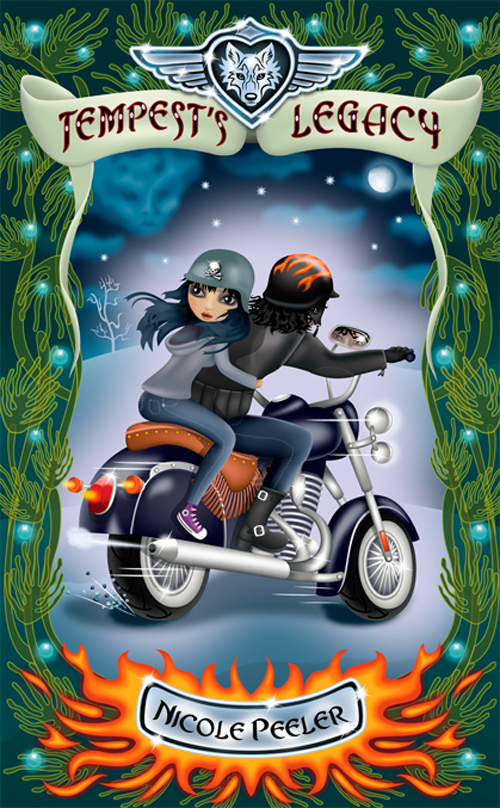
Writing on Reading: Tempest's Legacy


I just finished reading Nicole Peeler's 2011 urban fantasy novel Tempest's Legacy, book three in the Jane True series. As readers know Jane is half selkie, and this series is chock-full of unique Scottish-based (?) mythology including kelpies and the Baobhan Sith.

As Dr. Peeler says of the book, After a peaceful hiatus at home in Rockabill, Jane True thinks that her worst problem is that she still throws like a girl – at least while throwing fireballs. Her peace of mind ends, however, when Anyan arrives one night with terrible news . . . news that will rock Jane’s world to its very core.

After demanding to help investigate a series of gruesome attacks on females — supernatural, halfling, and human — Jane quickly finds herself forced to confront her darkest nightmares as well as her deepest desires.

And she’s not sure which she finds more frightening.


I have to say this is the best Jane True book yet. Jane has finally fully developed her kick-ass skills and is now a force to be reckoned with. Huzzah! :) Generally, Peeler does a very nice job with characterization. Additionally, the plot here is very dramatic and effective. {I don't want to give anything away.) If you're interested in urban fantasy with a more unusual mythology, I highly recommend this series.

Have you read it? What do you think?

09 January 2011

Interview

There's an interview with me over at Chiseled in Rock if you're interested to know a bit more about what makes this editor tick. Feel free to ask questions either here or there. Or neither here nor there. Whichever takes your fancy.

06 January 2011

Resolutions

Of course every writer's resolution is to write more, right?
(Say that out loud. See what I did there? Yeah...)

Anyway, people structure these goals differently and according to project. When I look at 2011, I'd like to reasonably sell one of my novels, finish revisions on my latest novel and get representation for it, finish and sell 3 of my "inappropriate" books (usually roughly novella length), and do some blogging/promotions/technical writing gigs, probably through my husband's company. IF I'm lucky, I'll slip a couple of short stories in there, but right now my ideas seem to be longer. We'll see. I realize this sounds like a lot, but I'm basically a full-time writer. It is my day job, albeit not the best paying one I've ever had. :)

Breaking this down, though, you have to think project wise, right? Big goals are useless without thinking over the steps to achieve them. And that takes us down to daily goals, something like NANO or a New Year's Resolution. I'm going to get XX wordcount a day or XX minutes a day. John Scalzi claims he's only doing paid work until noon or 2000 words, whichever comes first. At any rate, there's all kinds of tricks to keep us going for the next day, like stopping a writing session mid-sentence or plotting or writing to plot points or landmarks in the story... Or sometimes it's just not stopping until it's finished, right?

So, my question is for you: what are your resolutions and tricks to keep them?


04 January 2011

What's your story about?

I've been reading a lot of stories in the ElectricSpec slush, for my regular critique group and also for a workshop I'm going to soon, all of which prompt me to ask:
"What's your story about?"


Can you answer that question in one sentence? If not, you may have a problem.

I find with my own writing even when I think I know what a story's about when I start writing, this doesn't always agree with what's on the page at the end.
Usually, after I finish a story I have to revisit what it's really about.

Has anyone else ever had this experience? :)

Two writers who appear not have this problem are our own editors Dave and Betsy. Check out their stories posted now at Short-Story Me! . Betsy wrote one called "The Oath of Brutus" and Dave wrote one called "Spinner". Congrats, guys! :)

In ElectricSpec news, we are trying to get through the current slush. Please recall our next issue comes out February 28, 2011. This means we will close to submissions for the issue on January 15, 2011. Authors in hold-for-voting will hear back from us during the first week of February.

Good luck with your writing goals in 2011!

28 December 2010

How do you write?

Over my Christmas vacation I read John Irving's 2009 novel Last Night in Twisted River. It shows the development of a novelist and the writing process in that it is a story within a story. Interestingly, the career of the novelist in the book is similar to Irving's career. As a writer myself I found Irving's Afterward particularly fascinating. He admits he's gotten some flack over the years, and says of one conversation with a reader,
I was a dinosaur--or worse, a reactionary. ...I had told her a story. But that's what I do. And if you're telling a story --especially to illustrate a point--you'd better know what happens in the story before you start.
This is good advice. :)

Amazingly, Irving starts his works at the end!
Endings not only matter to me; endings are where I begin a novel or a screenplay. If I don't know the ending, I can't begin--and I don't mean that I need to know only what happens. I need to know the tone of voice, and the last sentence (or sentences). I write not only to a moment in time, but to a sound--a feeling. I have to know what that feeeling is, or I won't start.

From the last sentence, I work my way back to where the story begins. This constitutes a kind of road map in reverse. That process--of working my way backward through the plot, from the last sentence to the first--usually takes a year or eighteen months, sometimes longer. But for twelve novels now, the last sentence has always come first. And those last sentences have never changed in the process--not even the punctuation.

Wow!

How do you write?

26 December 2010

Over-Hooking

In past posts, we have emphasized that it is important to try to get our attention on the first page of a story, preferably the first paragraph. Sometimes I get the impression that authors are trying too hard to grab a reader's (or editor's) attention. For lack of a better term, I will call this an "over-hook." One example is a story that starts in mid-action. For example, the first few lines of a story are as follows:
Jordan's fingertips clung to the cliff edge. He knew he'd never survive the 1000-foot fall if he let go, and yet his fingers burned with agony. This must be the end . . .

A protagonist in immediate peril--who could ask for more? Well, me, for one. I don't know who Jordan is, so I really don't care that much about whether he falls off the cliff. In fact, I'm not at this point very much concerned about his burning fingers. Other than the fact that this story has "action" I have no clues about plot or genre. I'm left with the impression that the author is trying to sell me a story rather than tell me a story.

A second example of an over-hook is simile overkill. I think authors should be weary of similes in general, but a whopper in the first sentence or two smacks of an over-hook. For example, Bob's head pounded. If felt like a thousand scorpions were tap dancing on his frontal lobe.

An author creative and clever enough to come up with a unique simile--who could ask for more? Me, for one. Sometimes a simile can be an effective tool, but, in this instance, if feel like the author is screaming "LOOK AT ME!" I'm not looking for a clever author, I'm looking for a stunning story. If I get to the end of the story having ben lost in the author's world for a time, then I realize the true talent of the writer.

21 December 2010

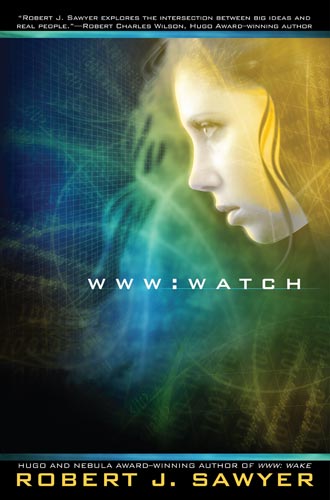
Writing on Reading--WWW:WATCH

In November 2009 I blogged about Robert J. Sawyer's novel WWW:WAKE in Spec Fic Tools VI: Plot. I analyzed some aspects of plot and concluded he did an excellent job with the novel.

Recently, I read the 2nd novel in the trilogy, WWW:Watch, (2010) and I have to say it continues to be very good. As faithful Electric Spec readers and writers know, Sawyer was kind enough to let us interview him in 2008. Of course, now he's famous for writing the novel Flashforward--which was the (loose!) basis for the TV series.

WWW:WATCH continues the adventures of Caitlin, the precocious blind 15-year-old, and her emergent A.I. friend Webmind. In WWW:WATCH Webmind has come to the attention of WATCH — the secret government agency that monitors the Internet for any threat to the United States, whether foreign, domestic, or online — and the agents are fully aware of Caitlin's involvement in its awakening. WATCH is convinced that Webmind represents a risk to national security and wants it purged from cyberspace. But Caitlin believes in Webmind's capacity for compassion — and she will do anything and everything necessary to protect her friend.

This is pretty standard SF fare in terms of plotting, but very well executed. Certainly, the ideas, such as the emergent A.I. are very neat and interesting (which is why they've been explored before). I do think Caitlin's feelings, and the emphasis on Webmind's compassion and the relationship between the two characters are a more modern take on SF. In the 'good old days' a SF novel about A.I. would not have a female protatonist, and it certainly wouldn't consider peoples' emotions.

Hurray for modern SF! :)

Notice, too, how well the novel title works here.

I've decided the truly amazing thing about these books is Sawyer does an excellent job with characterization. In particular, he does an awesome job characterizing the 15-year-old girl. There's also a subplot about Hobo, a chimp/bonabo cross; Sawyer does a very good job characterizing this 'character' as well. And the interactions between Webmind and Hobo are fascinating.

How many books have believable empathetic non-homo-sapien characters?

I look forward to the final novel in the trilogy!

Did anyone else read it? What did you think?

Happy Solstice!

19 December 2010

Humble Heros

Authors have invented all kinds of hero-protagonists for their books, but I've noticed the "humble" hero is quite popular, especially in YA. In the Harry Potter series, Harry is often sure in his own mind that he is not quite up to the task before him. Even when he accomplishes a task, he usually attributes his success to a combination of luck and help from friends rather than his own quickness, bravery, or cleverness. In fact, a big part of Harry's growth as the series continues is gaining confidence in his own abilities.

Katniss in the Hunger Games takes the "humble hero" to the next level. Instead of simply downplaying her accomplishments, she sees them as evidence of her character flaws. Deep down, she sees herself as someone interested only in her own (or her family's) survival and therefore incapable (or undeserving) of love. Part of her character growth is learning that she is a person worthy of the love that other give her.

I imagine this kind of character is appealing to children and teens because they, too, are working on some of the same issues. Am I capable? Am I worthy? But, as we know, Harry Potter and the Hunger Games are enjoyed by adults, too. I think the appeal that adults have for these kind of heros is slightly different. We love to see someone who does good because it is the right thing to do--not because they want others to see them doing it. We hope to live up to that ideal ourselves and that others do the same.


17 December 2010

Notes from the Slush Pile

I just wanted to say, those of you who are querying stories, or most of you, that I'm the hold up. Not Dave. Not Lesley. Me. Bets.

Sorry. I'm crashing through the first draft of a book and by the time I can sit down to read, well, let's just say I wouldn't show as much lenience as you'd like out of your slush reader. So I've been waiting for things to quiet a bit.

I know, I know, they never get much quieter, but when I'm through drafting this book (working title: THE LOST PRINCE, a space opera, hopefully released next year) at least I won't be crabby when I sit down to read. :) It's also my excuse for not posting here as much as I should. Lesley's really been holding up her end on that. Thanks, Lesley!

That said, I have been reading some slush this evening, and it seems a few writers got the idea we might like a more literary bent to our stories. Ummm, not so much. We're a genre rag. Oh, and I like my main characters to be sentient beings, as well as warranting a mention somewhere in the first 250 words or so.

That's all. More notes from the slush pile and lots of other fun, coming soon!!

16 December 2010

Genre vs. Literary Fiction

Many of you probably already saw this, but there's been some interesting 'debate' about Genre vs. Literary Fiction this week.

In The Guardian Edward Docx asked Are Stieg Larsson and Dan Brown a match for literary fiction? (He doesn't think so.) IMHO, one of the big draws of Larsson and Brown is story--they do a very good job sucking you into the plot.

Laura Miller explained Why we love bad writing at Salon.com.

I have another hypothesis: lots of genre writing is good writing. :)

Anyone else have any thoughts?

14 December 2010

Keeping the Faith

As 2010 draws to a close, one might be tempted to review how well one did on those 'New Years Resolutions'... Did you have any resolutions related to writing? How did you do?

I already mentioned Editor Betsy's nice post there is no punchline to life but I recently came across The Day I Quit Writing by Pikes Peak Writer Mandy Houk. Mandy discovers as hard as writing is, not-writing is even more difficult.

Incidentally, Pikes Peak Writers has decided to make membership free. Check it out to improve your craft, learn about the business of writing, connect with other writers, share successes and failures, and grow as a writer.

Do you have any tips on 'Keeping the Faith'? How do you keep writing (or anything else, for that matter!) when your success isn't quite what you'd like?

Keep sending us those stories!

08 December 2010

So-so Suspense

I've been reading some of the Harry Potter books, and I've noticed that Rowling likes to use a suspense technique at the beginning of her stories that I've never been enamored with. I'll call it the "suspended information" technique. (If there's a formal term for this, please comment!). Here's how Rowling uses it in the Goblet of Fire: The various adults hint and comment that "something big" is coming during the next school year, but they refuse to say what it is. Pretty soon, it sounds like everyone knows what this "something big" is except Harry and his friends. Even his minor nemesis Malfroy knows and taunts Harry for his ignorance. Finally, Dumbuldore lets the cat out of the bag: the upcoming Tri-wizard Tournament. At that point, we get a big info dump about what the tournament is, how it works, etc.

Rowling uses a similar technique in Order of the Phoenix, keeping Harry ignorant of what Voldemort has been up to until another big info dump happens.

Like I said, I'm not crazy about this technique. It creates somewhat of a false sense of suspense because, in reality, the protagonist could find out the information sooner rather than later. The author has simply manipulated the plot so that information is withheld. The "suspense" is the timing of the author's reveal of information that should be readily available. On the other hand, I confess that Rowling uses this technique to her advantage because (1) she injects some suspense where otherwise there wouldn't be much until the larger plot develops further; (2) it disguises the info dump. In other words, since the protag so desperately wants to know the revealed information, we as readers don't mind a whole much of narrative and dialogue that is really backstory and/or worldbuilding.

This technique should not be confused with another so-so suspense technique, where the author and the protag collaborate to keep the reader in the dark. A crude example of this would be: "Joe had to sit down as he read the letter from his father. He felt like he was going to be sick. He couldn't couldn't imagine finding out anything more horrible." [end chapter]. The next chapter takes place three days later, with Joe going about his normal life. Joe never bothers to inform the reader what was in the letter. We only find out several chapters later. (And, even worse, we find out it's not so horrible and Joe overreacted.)

This technique feels like a cheat. As readers, we feel we have a right to know what's going on in our protag's head, which includes knowing the information our protag knows. In the above example, the chapter-ending cliffhanger would be okay if, in the next chapter we see Joe, we soon find out what horrible information the letter revealed. But withholding this info from the reader for long periods usually only serves to piss off readers. (I can think of a few examples where this technique has worked, but I can't really explain why).