25 October 2016

slush tips: plot

The slush is up somewhere around our chins...
The most important thing (or second-most important thing) in a story is plot. Basically, you don't have a story if you don't have a plot. Plot is particularly important in speculative fiction because readers expect a plot. There are many definitions of plot, such as: the sequence of events and happenings that make up a story. I prefer to think of it as the actions the character(s) take to solve the story problem(s) and the resulting resolution.

A literary professional told me recently the number one "plot" they see in queries is the wandering protagonist. She said this is not, in fact, a plot and they never request these manuscripts. It's worth repeating: someone wandering around is not a plot. On the other hand, someone seeking something for some specified purpose is a plot. A quest, then, may resemble someone wandering around, but it is a very different animal.

Some people say there are only a few basic plots, such as

  • the quest
  • overcoming a monster
  • rags to riches
  • comedy
  • tragedy
  • voyage and return
  • rebirth
Obviously, there's some overlap here and many stories combine more than one of these ideas.

I don't care what you call it or how you classify it, just show us your plot.

Next week I hope to start updating you on our next Electric Spec issue, the notable November 2016 issue.

18 October 2016

slush tips: character and voice

As you probably can guess, we're hip deep in the slush. I've been glad to see a lot of stories that have their facts right and that use similes and metaphors. :) Thanks!

One of the most important things a story needs is character. We editors are in disagreement about if character is the most important thing or the second-most important thing, but it's definitely important. Your story must have a character that acts. It's also important that the character drives the story, rather than having the character serve the story. This is accomplished by creating a fully-fleshed out person, complete with loves, hates, desires, passions, goals, flaws, and every other quality a person has. Of course, readers will not see all these qualities on the page, but we should get the impression that they're there somewhere in the background.

I admit I cheat when creating characters. I often base my characters on people I know. Surprisingly, these templates never seem to recognize themselves. Personally, I think it's because we create imaginary 'characters' out of the real people in our lives--which may or may not agree with how the people see themselves.
Uh oh. I'm getting a little too philosophical? Cynical?

Which brings me to my second topic: voice. Voice can be a tricky concept to understand. Partly because there are two different meanings. Meaning one: each character should have a unique voice. Each character should show his voice via his/her/its unique combo of syntax, diction, vocab, personality, etc.

Meaning two: the author's voice. Author voice is the author's individual writing style, created by their unique combo of syntax, diction, punctuation, character development, dialogue, etc. Some authors showcase a different voice for different works. For example Charlaine Harris's Sookie Stackhouse series is much different from her Lily Bard Shakespeare series. On the other hand, some authors have a distinctive voice in all their work, e.g. Connie Willis. Personally, I love a strong voice. For example, I love Connie Willis's voice, so I know in advance that I will enjoy any Connie Willis work.

Consider wowing us with your unique voice--be it of you or your character.

The submission deadline for the November 2016 issue has passed. But we are now taking subs for the Fenruary 2017 issue.

11 October 2016

facts

We, The Editors, are working hard on Electric Spec slush. I must admit I have a pet peeve: I get quite annoyed when a story contradicts facts. I try to stay objective if a story contradicts facts, but I don't know how successful I am. Probably, not very successful.

You're thinking But, wait a minute. Stories are fiction. They're supposed to be made-up. They're not supposed to be true. This is a good point. But...

Know facts! Use facts! If your story is set basically on our Earth in basically our society with basic humans, you need to get basic physics correct. You need to know what gravity and electromagnetism are and basically how they work. You need to know about the sun and the moon and other planets and stars. You need to know approximately where the continents and countries and basic landmarks are. If you get any of this wrong with no explanation or confirmation my peeve will be activated. By confirmation, I mean more than one character or situation is involved in this difference from our world; somehow indicate this difference is intentional.

An aside on explanations: Don't over-explain. A pitfall of alternate history can be a lot of exposition about what exactly is different in history and what the ramifications were, etc. etc. In this case, don't explain, show.

Of course, all bets are off if your story is set on another world with other creatures, or if there's magic or other extenuating circumstances (unreliable narrator?) involved.

The submission deadline for the November 2016 issue is October 15, 2016! Send those stories in!

04 October 2016

similes and metaphors

I've been taking particular notice of similes and metaphors lately. They can elevate a piece of writing from good to great. Recall, a simile is when two things are compared directly, often using words such as 'as' or 'like.' A metaphor is when two things are compared directly, but without using 'as' or 'like.'
Similes and metaphors should be unique to your characters and worlds and can be very effective in helping build both.

Similes and metaphors are extremely useful in descriptions.
Consider: The sky is blue. Kind of boring, right?

In comparison, let's look at a couple similes...
The sky is as blue as a mother's tears.
The sky is as blue as mermaids' scales.
Wow. Those bring to mind two totally different images and are much more descriptive than the declarative statement.

Consider using similes and metaphors in your writing!

FYI the next Electric Spec submission deadline is coming up: October 15, 2016. Get those stories in!

27 September 2016

stay positive

Here in the U.S. Rocky Mountains there's an awesome writer's group called Rocky Mountain Fiction Writers and they just had their awesome annual conference filled with fun, information, networking and all kinds of neat stuff.

Some of the excitement may be wearing off... RMFW members and others may need a pick-me-up.

Writing is hard. Stringing one word after another is hard. Revising is hard. Proof-reading is hard. Finding markets is hard (An awesome resource is ralan.com). Submitting is hard. Getting rejected is hard.

I'm here to say: Keep the faith! Stay positive! One of my favorite Jesse Jackson quotes is "...it is not their aptitude but their attitude that will determine their altitude."
Nice!

Some people say you can train your brain to be more positive. Tips include:

  • Express gratitude
  • Repeat positive affirmations
  • Challenge negative thoughts
Here, at Electric Spec we sincerely appreciate all your submissions.

Good luck!

20 September 2016

Why Manuscripts Stand Out

We have a special treat today. Our Associate Editor Minta Monroe has some advice for authors. For those of you who don't know her, she's the author of The Mound Dwellers and 2 collections of short stories, Home, Sweet...Death and Crossing Over.

Recently, I’ve been binge-reading a bunch of manuscripts by authors seeking publication (that’s all of us, right?) They’re all very well written, but some of them stand out, and others do not.

So I took the opportunity to study this—because we all want our manuscripts to stand out in a positive way when they reach the editor’s desk. The reasons why some of them *do* stand out didn’t become apparent to me until I noticed that certain elements of the exceptional manuscripts were missing from the rest.

Here are 5 things I’ve noticed so far. Manuscripts that stand out…

  • …use sensory detail. As a reader, I want to go on the journey with the characters. I want to see, feel, taste, hear, and smell all the things that they notice. Not only does this help to make the setting feel real, but also the characters.

  • …have characters who feel real. What the characters look like doesn’t matter nearly as much as what they are feeling, or how they act, or why they choose to act in the way they do. They’re active characters rather than passive. They actually do something—and it’s interesting—rather than talking about it.

  • …have lots of conflict. Once we readers care about a character, we *really* care when trouble comes knocking. We are rooting for the character, and we want him/her to solve whatever problem crops up. But will he/she solve it in time?

  • …have twists and turns and surprises. Readers want to be surprised. We don’t want the expected answer. We want new and marvelous adventures that we haven’t been able to predict.

  • …have a nice balance of pacing. Sometimes the action is fast, when exciting events are happening. And sometimes the action is slow, when the characters are introspective so that the reader gets to understand why they are doing the things they are doing. It’s not all of either one, but some of both, and they need to be balanced.
This is just the beginning, but here’s the bottom line: even the most brilliantly luminous story ideas will fall flat without these 5 elements.

Thanks, Minta!

13 September 2016

W00t! W00t!

W00t! W00t! We're still celebrating the latest release of Electric Spec! Thanks again, everyone who helped make it happen. We appreciate it.

What's your favorite story? The Dead Life? The Lightship? Song of the Brethren? The Quiet Death? The Inmates are Running the Asylum, and the Asylum is Running the Ship? I really like them all--but I guess that's not much of a surprise since I helped choose them.

I'm also tickled that we got to hear from so many of our authors this time here on the blog. Here are the links in case you missed any of them: T.A. Hernandez, Neil Davies, Dean Giles, David Cleden.

What's next? We're accepting submissions for the notable November 2016 issue! Please send us your stories! The deadline for this issue is coming up...October 15, 2016.
Next week we'll have a blog post from Associate Editor Minta Monroe with some tips for writers.
Cheers!

12 September 2016

from Author Cleden

We hope you're continuing to enjoy the new issue of Electric Spec. For your reading pleasure here are some words by Author David Cleden about his intriguing story "Song of the Brethren."

For most of us, a sense of place plays an important role in our lives. We may talk about being drawn back to the place where we grew up, to where friendships were made (or broken), to where our familial roots are. Sometimes the place where we feel we truly belong is not where we start out; we have to journey through life to discover it. And sometimes the journey of discovery leads us right back to our beginnings.

For a long time, I've wanted to explore the idea of what would happen if that bond to a place was as strong as it could conceivably be. Maybe even a matter or life and death. How would it feel to be physically tied to one particular place for an entire lifetime? What would be the penalties for breaking those ties--and the motivations of those who decided to ignore them?

Those ideas, without shape or form, were still tumbling around in the great void of my skull when I remembered something from a long-past family holiday. My eldest son was only a few months old and we'd gone for a family walk up a valley in the beautiful wilds of Dartmoor in the UK. As we stood under a twisted, wind-blown tree on the side of valley, my infant son (who was strapped to my chest in a baby-carrier) became absolutely entranced by the dappling of the sunlight through the leaves above him. He couldn't tear his gaze away. It was as though that tree was the most wondrous, magical thing he had ever seen. (It was). For one brief moment, he seemed to have a special bond with that tree and nothing else mattered to him.

Back home, and wrestling with a little patch of garden behind our house, it also struck me how easily the wrong things are determined to grow in the wrong places. Tufts of grass constantly thrust up through the gravel path, yet zilch in the little patch of lawn where we'd appreciate it more. And brambles! Oh don't get me started on brambles. If ever there was a plant destined survive a nuclear winter...

Anyway, the story ingredients seemed to jell in my head during one intensive weeding session in the garden. With a little care and attention and application of various seasonings, it matured into the dish that I'm delighted the fine editors at Electric Spec have chosen to serve up amongst a whole host of gourmet treats. I hope it sits well on your palate. (But always remember, not all poisons taste bitter. Some disguise their true nature with an unnatural sweetness. Bon appetit!)


Very interesting! Thanks, David!

10 September 2016

We're alive!

We're alive! Huzzah!
Check out the new issue of Electric Spec

Thank you very much to everyone that worked hard to make this issue happen. Thank you Authors Hernandez, Davies, Cleden, Giles and Nichols! Thank you Artist Errigo! Thank you Associate Editors Cooper-Towler, Monroe, and Devlin!

Most of all, thank you readers!

09 September 2016

from Author Giles

And the hits continue... It's so fun hearing from our authors. Author Dean Giles tells us about his story "The Quiet Death."

To give you some insight into the story, I worked on a 4 year European collaborative R&D project back in 2011 looking at advanced Telecom networks (http://modegap.eu). Our existing fibre optic networks will reach gridlock in around 15 years, so a drastically new approach is required to update the technology. The project was looking at novel fibres and components. The hope is that the new technology will increase 100-fold the capacity in our backbone networks. This will eventually filter through to home networks. It made me think, what will happen once bandwidth demand increases to the point that this new technology is saturated? I've read a lot of science fiction, especially authors like Arthur C. Clarke. One that really stuck in my mind was Light of Other Days by Arthur C. Clarke and Steve Baxter, where they develop a wormhole technology that allows you to spy on anyone at anytime, and the affect this has on human society. Fascinating idea. Any way, it gave me the idea that possibly in the future we might use a similar technology to overcome data gridlock.

I also love the idea that the universe is tied to consciousness. So in the same way time and space are part of the same fabric, consciousness is just another facet of that. My thinking was that the disruption the technology made to space-time, also affected consciousness on a local level, and this is how the "loop" effect came into play.

The character is based loosely on my Granddad. An old school British man who can fend for himself. Knows how to build stuff and tie knots, he is adaptable. He doesn't think much beyond what is necessary for the job in hand. He's not a dreamer, he is a doer. But underneath, at his soul, he is very human. I wanted to highlight the importance of human emotion, which is easy when compared against the Quiet. Harry is a man who has lived his life, stuck by his principals, and is prepared to accept death with dignity. He is my version of a decent human being, and, in this story, one that represents the human race.


Thanks Dean! Very interesting!

08 September 2016

from Author Davies

At Electric Spec we enjoy hearing from authors about their writing processes and what inspires them. Author Neil Davies told us the following about his upcoming story "The Lightship".

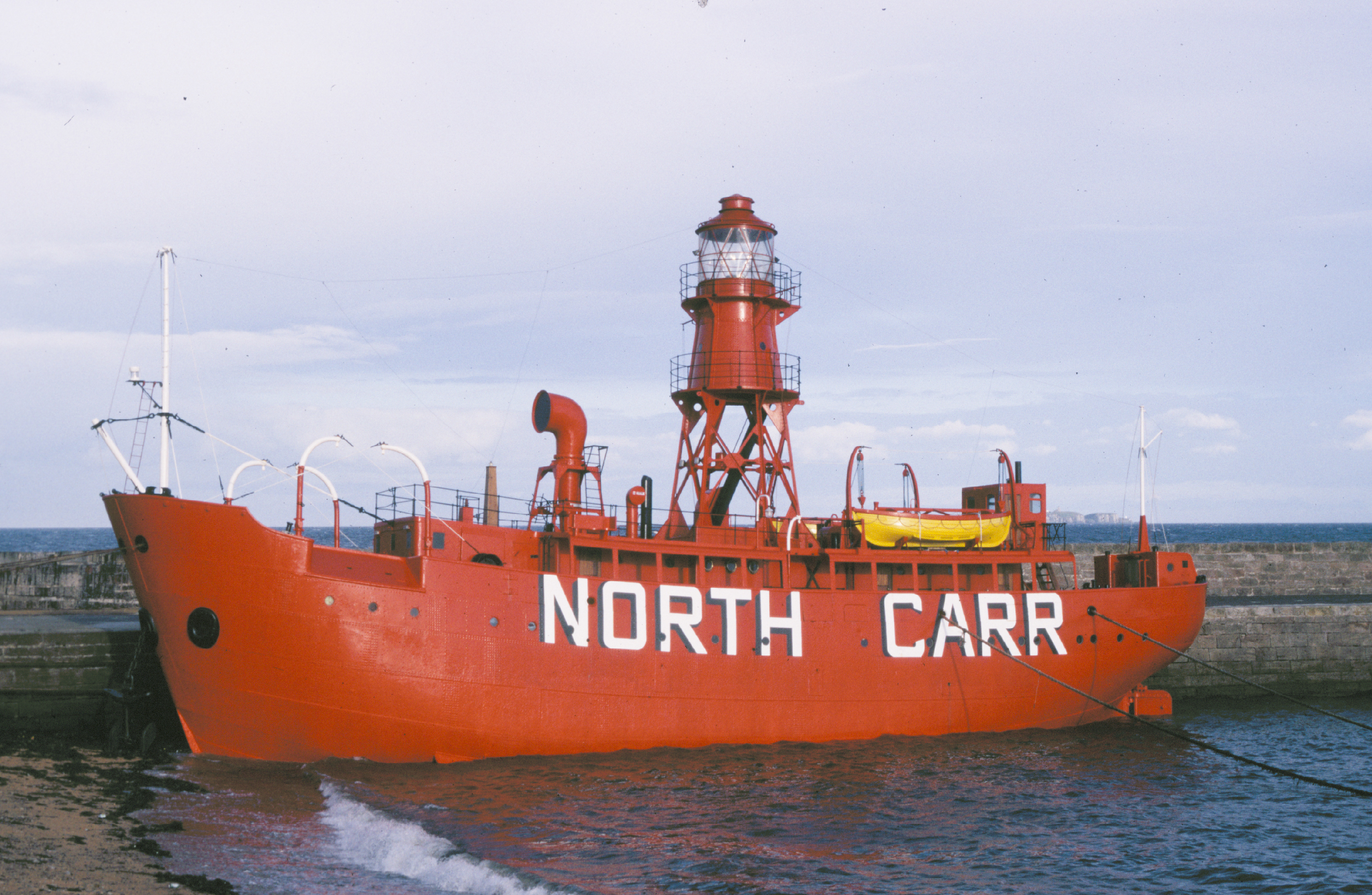
Image of the North Carr Lightship:

What is a lightship?

In our present day reality, lightships combine two of my lifelong fascinations, lighthouses and boats. A lightship is, basically, a lighthouse on a boat, able to move around to where it’s needed. Advancing technology has largely replaced them, but they do still exist, and I was lucky enough to get to look around one when it was docked as part of what has now become the U-Boat story attraction in Birkenhead. Back in the early days they only had the rusted hull of the U-Boat (which you couldn’t go on), a Royal Navy submarine (which you could), a Royal Navy warship and the little lightship. And back then I was fit enough (and light enough) to get round all of them!

In the setting of my story, the lightship is a spaceship that acts as a beacon (or lighthouse) to mark any area as it is required. Just like our present day lightships, it’s being overtaken by technology and is due to be decommissioned, which is where the story begins. With the lightship as the setting, the story combines combatants in a long-running war between Humanity and the alien Fris, and an unwelcome, and undetected, visitor on the lightship itself. The rest I will leave for you to find out by reading the story.

Have fun.


Fascinating! Thanks Neil!

06 September 2016

fiction firsts

Huzzah! We'll be releasing a bunch of free fiction in only 4 days, count 'em 4! We told you about this fabulous fiction in our spectacular September issue of Electric Spec last week: here.
Today, we're going to try something fun. We're going to post the first lines of the fiction to entice you to read...
Can you tell which first lines go with which stories? :)
  • The knife hovered over the flesh of the baby's plump little arm.
  • The oscillator in the west wing has stopped working.
  • For a moment, Rose couldn't move.
  • Commander Aldo Kinnear sprawled on the Rec Room bench, bruised, exhausted and scared.
  • Harry’s chair rocked noisily against the wooden slats of his porch-balcony.
  • A flash of too-bright light illuminated the dead girl's face for an instant as the crime scene photographer snapped a picture.
Wow! Quite a variety! Check them all out in only 4 days! (Did I mention a new issue's coming out in 4 days?)

30 August 2016

spectacular September issue

We're getting down to the wire. The spectacular September issue of Electric Spec (formerly the awesome August issue) is coming in only ten days. We saw a sneak peek of Michael Errigo's cover. We bragged about the excerpt from The Dragon Waking by Grayson Towler. We heard from author T.A. Hernandez about her story "The Dead Life." What else is coming?

We have a fresh take on military SF in "The Light Ship" by Neil Davies. We have a unique fantasy "Song of the Brethren" by David Cleden--which will make you rethink the term 'tree-hugger.' We have the haunting post-apocalypse SF tale "The Quiet Death" by Dean Giles. And, last, but not least, we have the terrifying SF tale "The Inmates are Running the Asylum, and the Asylum is Running the Ship" by Matthew Nichols.

If this seems like a lot of death and destruction, you'd be right! It's all very dramatic! Be sure to check it out on September 10, 2016!

23 August 2016

from Author Hernandez

One of the upcoming stories in our spectacular September 2016 issue of Electric Spec will be "The Dead Life" by T.A. Hernandez. The author says,

One of my favorite things about writing speculative fiction is that it allows me to explore so many variations of the question, "what if?" What if robots could feel emotions just like humans? What if dragons were tame, cuddly house pets instead of huge, fire-breathing monster? What if magic was real? What if ghosts lived among us and everyone could see them? That last question is what eventually led to me writing "The Dead Life."

Some of my best story ideas have come from the hardest times in my life, and that's true for "The Dead Life" as well. I first wrote it back in early 2010. The title is a reflection of what I was feeling at the time, that I was just walking through life a bit aimlessly, much like the main character of the story. I'd had some tough experiences that previous year and hadn't written anything for months, so I was a little surprised when I got this idea and had an overwhelming urge to write it immediately. I finished the first draft in a day, got some feedback, made revisions, and then put it away. It sat in a file on my computer collecting dust and cobwebs while I moved on to other projects. Years later, after hitting a wall with the novel I'd been working on, I dragged it out and decided to clean it up. It needed a lot of work and I ended up rewriting most of it, but in the end, I liked it enough to start submitting it. After several form rejection letters and a few more personal ones, I was was fortunate enough to have the story accepted here. It is my first published story and a lifelong dream come true, so I have to give a huge 'thank you' to the Electric Spec team for making it happen.


Thank you, T.A.!

16 August 2016

Sneak Peek Sept 2016 Issue

We are hard at work on the spectacular 2016 September issue of Electric Spec (formerly the awesome 2016 August issue)!
We got the cover art finalized. Huzzah!
Our cover artist is Michael Errigo (m.errigo@yahoo.com).
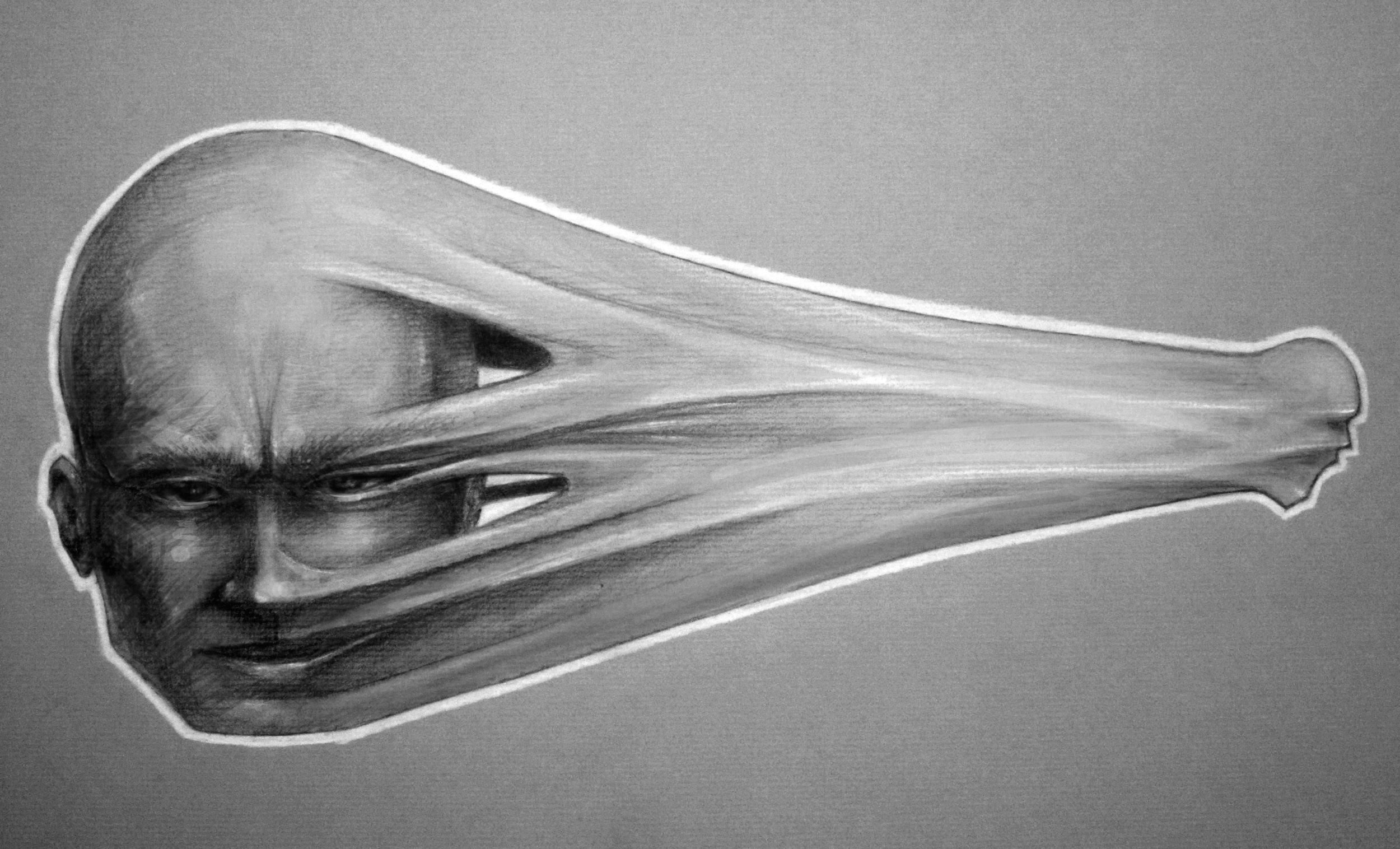
Here's a sneak peek:

Scary, huh?
It fits great with the issue. For some reason we got a bunch of scary stories. Maybe Halloween is already in the air?
Stay tuned the rest of the month to hear more about our upcoming stories!

09 August 2016

Aug 2016 Production Meeting

We recently had the production meeting for the awesome August 2016 issue of Electric Spec. Yes, it was slightly delayed. The most important takeaway is we're pushing the publication of the issue until September 10, 2016. Apologies for any inconveniences this may cause.

Authors who submitted a story for the awesome August issue should have heard back from us or will very shortly. We're in the process of sending out congrats and contracts to 'yes' authors. I emailed all the folks who had stories in hold-for-voting that we did not go with. If you were in hold-for-voting, your story is publishable, so take heart! Sadly, we can only pick five stories out of the many excellent stories we receive. :( Of course, we are accepting submissions for the neat November 2016 issue.

We had a spirited discussion of what makes a good story. At Electric Spec we do like original stories. Thus, if you're going to send us a vampire story, for example, it better be a fresh take on vampire stories. Some stories, including vampires, werewolves, ghosts, aliens, robots have been done a lot. Make sure you know what the common stories are and do something different.
We like endings in stories. This means there should be some kind of emotional resolution for the reader.
Formatting gimmick stories are tough to pull off in a fresh way. By this, I mean a story told in a way not using regular prose, for example, using only emojis, limericks, tweets or emails. Keep in mind the author's main job is evoking a response in the reader. You don't want the reader to respond to the formatting.
Don't explain your story in the end. If the reader can't understand what happened with an explanation the author didn't do his/her job. If we did understand what happened an explanation is tedious and repetitious.
We're not big fans of fictionalizing horrific dictators/despots like Hitler or similar and making them heroes. Tough sell.

We are excited about the fun stories coming up in the stupendous September issue! I'll tell you more about them here this month. :)

One thing we can now reveal is we will be featuring an excerpt from Grayson Towler's middle grade fantasy The Dragon Waking. Huzzah!

02 August 2016

The Dragon Waking

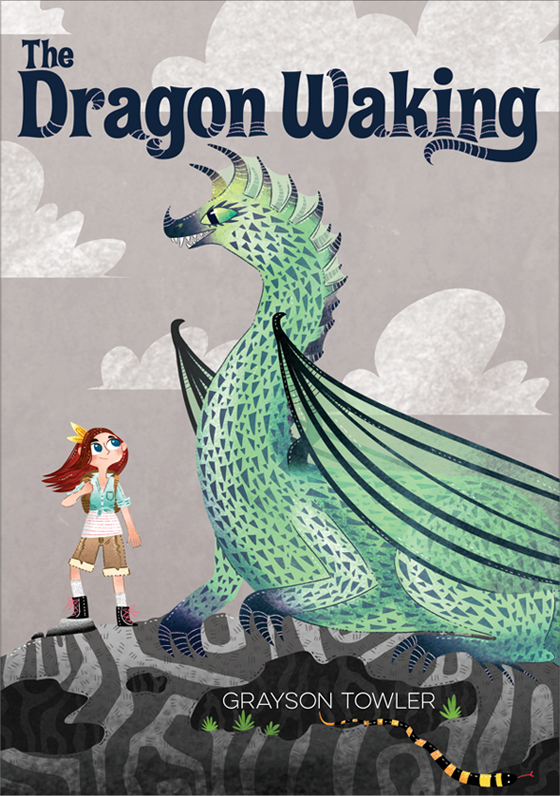
One of Electric Spec's Editors, Grayson Towler, has a new book out: The Dragon Waking.

It's a middle grade fantasy. I've read it and it's fantastic! I highly recommend it! We'll be featuring it in the awesome August 2016 issue of Electric Spec.

19 July 2016

abaft the scenes

The deadline for the awesome August 2016 issue of Electric Spec has passed. But, don't fear, we're accepting submissions for our November 2016 issue.

'What's going on abaft the scenes' you ask? Well, I'll tell you. We are going through our mountain of slush. (Thank you for sending us your stories!) We have 3 editors and 2 associate editors and we need every one of them. Please don't query us on the status of your story; we don't have the manpower to answer queries. We make every effort to get back to you as soon as possible. We got an email last week that a particular rejection seemed pretty nice, and they were wondering if we were sincere. If we send you a nice rejection we're being sincere. We have sent out our share of not-nice rejections, don't worry!
In other miscellany, our email autoreponders were kind of problematic so I got rid of them. So, if you sent us something and didn't get an autoreponse--that's why. Apologies, if that leaves you wondering if we got your story... Most do get to us!

Authors should hear back by ~July 31 with a "no thanks" or a "hold-for-voting." We will email all hold-for-voting authors back before ~August 9 with a final decision.

And then the editting begins! :)

Please note, we do tend to keep art submissions hanging around for a while. So if you don't hear from us, we're probably still considering your piece.

Finally, there is a chance the awesome August issue may get pushed a week or two and become the spectacular September issue. Stay tuned for that info.

I better get back to slush!

12 July 2016

do what works

Once in a while I get together with other writers to talk writing. (I recommend it.) I did this recently and was struck by how different everyone's writing process is. One writer plans and plots and outlines everything out before writing a word. I'm at the opposite extreme. I just start writing. Neither of these approaches is right or wrong.

I've learned the hard way to do what works for me as a writer. Don't get me wrong, you should try new things. You should be willing to put these new things into your writer's arsenal. But if you try something and it doesn't work, if it prevents you from putting down words, stop. Don't do that thing.

This advice is relevant to all aspects of writing. One writer friend has a huuuuge list of tasks and projects--that she likes to tell everyone about. Telling everyone makes her feel accountable. Multiple tasks gets her writing juices and optimism flowing. If I made a list like hers my head would explode. It's difficult to write with an exploded head. So, I do not do that. It would not work for me.

Bottom line: do what works for you

The submission deadline for the awesome August 31, 2016 issue of Electric Spec is on July 15, 2016! Yes, that is in a couple days. Get those stories in!