Thank you, authors! Thank you to our artist!
Thank you to the whole Electric Spec team!
Thank you, readers!
We hope you enjoy this issue as much as we did.

Thank you, readers!
We hope you enjoy this issue as much as we did.
Ever since I was a kid, I've been intrigued--and creeped out--by the idea of alien possession. Colin Wilson's tour de force, The Mind Parasites, scared the hell out of me, as did Heinlein's classic, The Puppet Masters. The very idea of some foreign entity feeding on your brain and thoughts was viscerally disturbing, and I mulled over adding my own fiction to the canon for many, many years, until something finally gelled in my head, and “Screaming Rain” came together into a story.
For my NOMADs, I owe inspiration to Cordwainer Smith's, “The Game of Rat and Dragon,” in which human space traffic is menaced by creatures born of the dust between the stars, which attack becalmed interstellar vessels, only to be fought off by augmented feline gunners. In “Screaming Rain” I wanted to flesh out such aliens with scientific plausibility--and to posit that their impact on humanity, rather than being malicious, might simply be a byproduct of their intrinsic strangeness, a strangeness engendering both madness and transcendence . . . the usual outcomes of any encounter with the celestial.
I also wanted to take a stab at emulating Wilson's remarkable literary feat of writing a thirty-page fight scene entirely in the head of his protagonist. Of course, “Screaming Rain” as a whole doesn't weigh in at thirty pages, but most of the story does take place in Bernie's mind. Equally, I wanted to write a story based on the trinity of classical drama: unity of action, time, and place--think of Fritz Leiber's, The Big Time--and so “Screaming Rain” is told in a rush of action, in a single location (OK, barring the introductory Po' Boy scene, mea culpa), over a span of fifteen or twenty minutes. Only you, Electric Spec readers, can decide whether I succeeded in these endeavors.
Personally, I'm a big fan of Star Wars and The Matrix, but I have a bone to pick with any fiction that depends on a savior with mystical or meta-human powers. I want my hero to be an everyman--an ordinary human who succeeds because of their wits and intelligence, not because they are anointed by the force, and whose solutions are within the reach of any reader of sufficient determination. Keep this in mind if our solar system ever enters a Big Cloud.
Finally, as to my choice of a protagonist, Bernie, well, here's some background. I am Jewish, but secular. I go to shul only on the High Holy Days, if then, and I regularly eat pork (bacon!), and I positively love oysters, especially soaked in buttermilk and dredged in flour and deep-fried until crispy. In none of my forty or so published stories have I ever given my protagonist a religion, mainly because belief was never a consideration of the plot or integral to the character, but while sketching out “Screaming Rain,” various threads came together--oysters, the name Bernie, his fascination with transcendence, his moral quandary--which made me understand Bernie was Jewish. It also made me think of my late poker buddy, Bernie Passeltiner, whose catchphrase while pondering whether to raise or to fold was “Bernie, baby, bubala.” May you rest in peace, dear friend.
Interesting! Thanks, David! Be sure to check out "Screaming Rain" and the rest of the stories May 31!
“Other figures split in two or three or ten. At times, it was only their limbs or facial expressions that split. Intuitively, Jane understood that she was witnessing all the possibilities of the moment before it became. She heard the ambulance siren from miles away and felt a city of heads turning, wondering what happened, swallowing pangs of their own mortality: cause and effect erupting outwardly—inwardly— endlessly, then coagulating into a single moment like a scab.”
“The Inbetween” is a peculiar story, unlike any other I’ve written. For one, it begins with the climax: reality as we know it briefly bursts apart on a subway platform in lower Manhattan. A woman running late to pick up her son from school witnesses the event, but unlike the others on the platform that day, she remembers. The experience reverberates throughout her life, healing relationships and old wounds in mysterious ways. What emerges is a shadow narrative that gestures to science, mysticism, and a fictional mythology of beings who, through conscious observation, hold our material reality together.
I wrote this story after reading an account of the double-split experiment, which demonstrates a principle
of physics known as the observer effect. In short, the experiment showed that on the quantum level, light
acts as a particle when observed by humans (or machines), and as a wave when it isn’t. This story asks:
What are the implications of such an effect on our macro, material world? On our relationships? Our
minds? It is the seed of what I hope to be a larger literary project. This is to say, there are many more
Inbetween stories to tell. I am grateful to Electric Spec for giving it this first one a home, and to all who
read it.
Interesting! Thanks, Noah! Be sure to check out "The Inbetween" and the rest of the stories May 31!
Interesting! Thanks, Pamela! Be sure to check out "The Wise Guy" and the rest of the stories May 31!
There's nothing like a crisis to get you thinking about anything other than the problems before you. Even the most insignificant issues - say, the garbage bag splitting open while carrying it to the bin - can trigger thoughts of all the other small indignities we suffer each day. The broken shoelace; the spilled coffee; the lack of coffee. The bigger the crisis, the bigger the previous ills brought to mind.
Perhaps it's an emotional immune response, with past problems serving as a kind of inoculation against the frustration that comes with new obstacles.
If only things actually worked like that. Instead, in such moments we too often find ourselves regretting things we can't change and surveying a past that is, at least in this universe, immutable.
Maybe that's why the cliche of seeing your life flash before your eyes is one that resonates. Because when confronted with that moment - your last moment - what better way to escape than by retreating to the tapestry of your life, warts and all?
Interesting! Thanks, Eric! Be sure to check out "14 Seonds" and the rest of the stories May 31!
Starting next week, some of the authors will tell us about their stories...
Stay tuned!
How do the fully blissed residents of heaven spend their time? Do they have needs or wants, or, if they are lacking in such, are they still human at all? Perhaps it is impossible to depict something that at its core builds on such a vague and elemental longing. Perhaps descriptions of logistics are the antithesis of eternal bliss. (Interestingly, humans have never had much trouble describing highly specific hells and endless torments.)
Despite, or because of, these contradictions, the few depictions of heaven and angelic beings that do exist in the Christian and Jewish traditions are wildly diverse, disquieting, and often psychedelic. My story draws on descriptions from the books of Ezekiel, Isaiah, Enoch, and Revelations, as well as Maimonides' hierarchy of angels. Other inspirations included William Blake's The Marriage of Heaven and Hell, Many Waters by Madeleine L'Engle, and The Wrestler's Cruel Study by Stephen Dobyns. I have also compiled a short playlist highlighting some of the story's musical references, which you can find here: https://open.spotify.com/playlist.
Interesting! Thanks, Nathaniel! Be sure to check out "The #1 Punk Band in Heaven" and the rest of the stories now!
Thank you, readers!
We hope you enjoy this issue as much as we did.
"Vedma Returning" explores this question and the persevering human spirit. The main character, Katya, is wrapped in grief, stress, and wonder. She strives for a better future while carrying the nightmares of war with her. She gets a glimpse of what life is like without war, but it isn't what it seems.
This story was inspired by my interest in World War One aviation, as well as pondering the circumstances that make us who we are.
We should all do our best to look out for each other.
Interesting! Thanks, Duncan! Be sure to check out "Vedma Returning" and the rest of the stories on February 28th!
My writing process can be pretty much boiled down to two maxims: read as much as you can and write as much as you can. I've often tried to hit wordcount goals, but sometimes my schedule (job, kids, other interests) makes it impossible to hit them. My ideal is 2000 words a day, every weekday, but I can't hit that every day lately. Still, the thing is to get at least a few in and not lose the habit. Because once you lose the habit it's twice as hard to restart the process. At least for me!
Interesting! Thanks, Gustavo! Be sure to check out "Peace Between the Tribes" and the rest of the stories on February 28th!
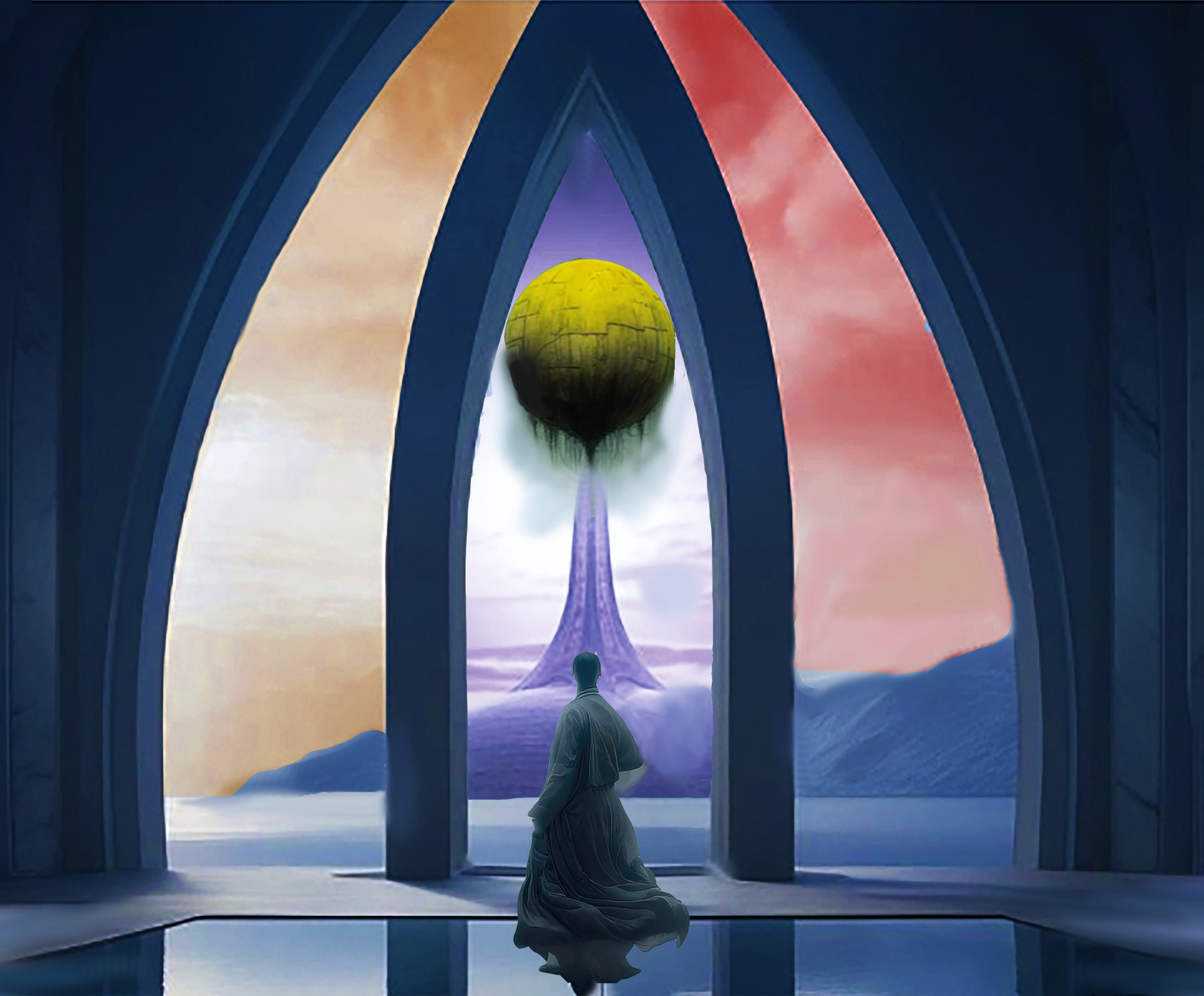
I have been reading slush all along and am a little surprised at the wide variety of formatting in submissions. Please don't use weird formatting. This will get your story noticed by editors--but not in a good way.
Here are some tips:
As you may have noticed, we've transitioned this blog to focus more on comments from our artists and authors and less on comments from editors.
This story’s first line came to me during a free write and remained unchanged throughout revision. I set out to write a story about a dragon falling in love with a human, but the thing I’m most proud of is the way this story highlights the many forms love can take, including a love of music, a love of collecting, and a love for our community, even after that community is no longer with us. I hope the story serves as a reminder that we can’t shoulder our burdens alone; by sharing our grief, we not only lighten the load, but we also grow closer with those around us. (The other reminder is this: when in doubt, listen to The Mountain Goats.)
Interesting! Thanks, Jamie! Be sure to check out "An Equivalent Exchange" and the rest of the stories now!
Thank you, readers!
We hope you enjoy this issue as much as we did.
The Time Machine by H.G.Wells (1895) is probably one of the most famous sf stories published, certainly one of the first, and remains my favorite sf story of all time. The core of the story doesn't concern time travelling, which Wells uses as a science-fictional device, but Darwin's Theory of Evolution. Darwin's On the Origin of Species... had been published in 1859, just 36 years before The Time Machine saw print, and Wells explored its implications for the human species using pioneering sf techniques that were a bombshell to the Victorian mind. When writing, I sometimes have trouble with titles, but in this case the title of my story came first: "The Malicious Time Traveller's Dinner Party" just popped into my head. Soon I realised that the 'Time Traveller' of the title was THE 'Time Traveller', Wells's own. From then on, the story wrote itself.
From movies, books and fiction of the day, we're familiar with the Late Victorian world of the 1890s, and my story is peppered with references that link to Wells's own life. I had the advantage, as well, in that the drapery store that Wells suffered to work in as a teenager, and that he later wrote about in his book The History of Mr. Polly.(1910), was located in the neighborhood where I grew up, in Southsea, in Southern England. By my day, sadly, it was long gone, but the elegant Victorian and Edwardian villas still remain, and retain in that part of Southsea the genteel air of Wells's time.
Interesting! Thanks, Nigel! Be sure to check out "The Malicious Time Traveller's Dinner Party" and the rest of the stories on November 30, 2024!
I always thought I would write cosy and comforting stories since those are the stories I gravitate towards as a reader. Yet every time I sit down to write a story, something chilling always seems to find its way into it.
This story started with a dream I had. The only thing I remember about the dream was the sight of lions prowling on a road. In the dream, I was driving a car. As I reached the top of a particularly high ascent in the road, the lions suddenly became visible as I looked down at the road ahead. I woke up shaken. The rest of the story grew from the sense of menace and terror that I felt.
Interesting! Thanks, Meenakshi! Be sure to check out "The Delivery" and the rest of the stories on November 30, 2024!
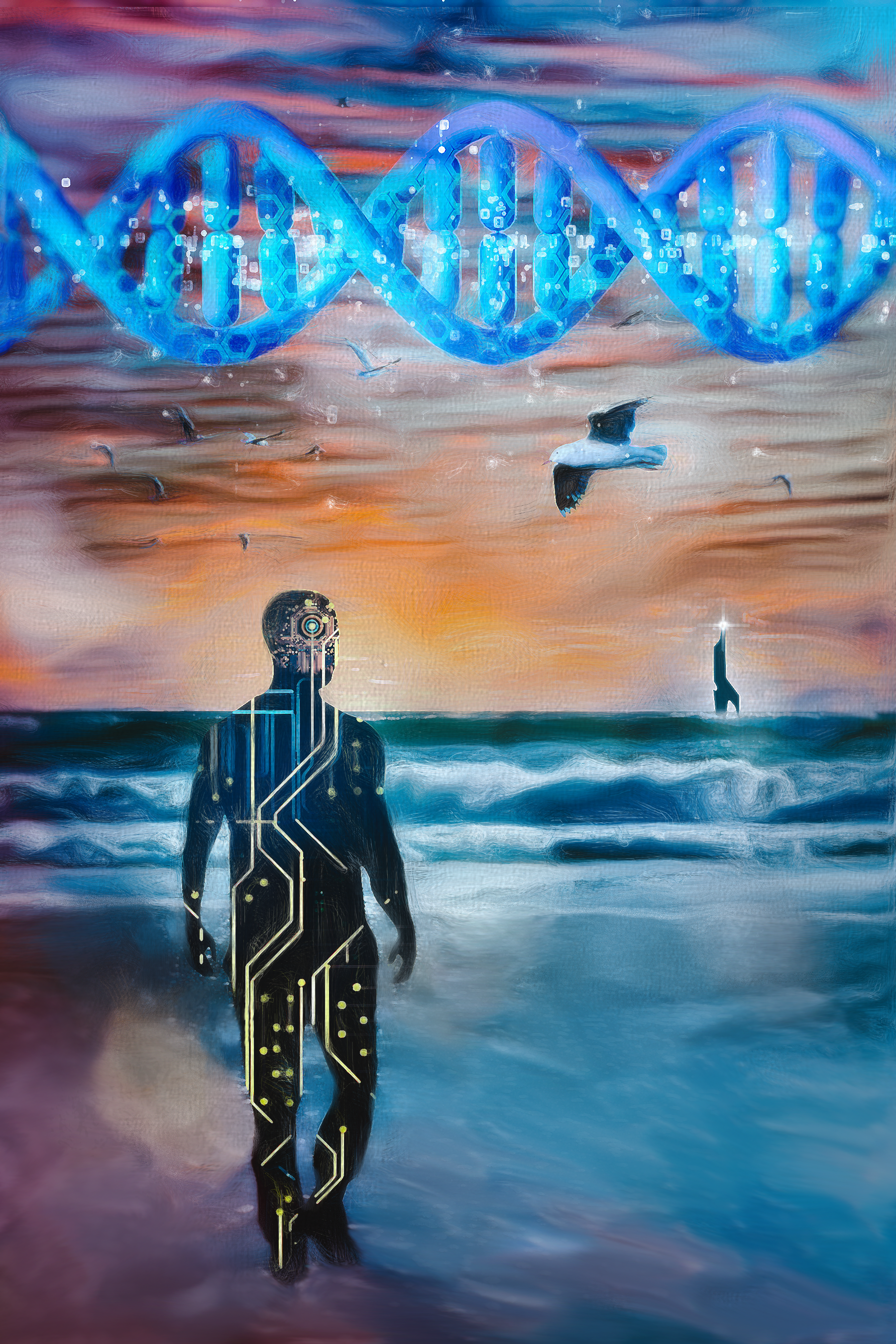
Over the past year, I’ve been writing a number of flash-length fiction pieces, which is a new endeavor for me. Sometimes when I write short fiction in the 5,000-ish word range, I end up getting too convoluted. Flash fiction helps me keep it simple, and challenges me to use words economically. This is a skill that hasn’t always come easy. In one of my high school English classes, we had to condense written articles of several paragraphs into something much shorter, which challenges you to figure out what the main points are. I really struggled with this sometimes, and would grumble to my friends (in a rather animated fashion) about how much I disliked these exercises. Now, though, I’m grateful!
Interesting! Thanks, Lisa! Be sure to check out "Just Fooling" and the rest of the stories on November 30, 2024!

 Posts
All Comments
Posts
All Comments


