
So, what is an aspiring author to do? IMHO, just keep writing. Most authors realize that becoming a professional writer is rarely a ticket to fame and riches. Writing despite knowing the odds against getting published (and getting a published again) means that you are writing for the right reasons.
06 April 2011
Your letters look good, but how 'bout your numbers
As aspiring authors, many of us are focused on getting that first agent or picking up that first sale. We're sure that once we can "break through" then the fiction game will be so much easier. Not so, according to author Karen Dionne in a recent blog post. "[A]fter an author is published, they [sic] face an even greater challenge: getting published again," writes Dionne. Sales are not a matter of the quality of your next book, but the quantity of sales. Editors look up your numbers on a data provider called BookScan, a service of Neilsen (you know, the same company that rates TV shows). If your numbers are poor, you can probably kiss your next sale goodbye.

05 April 2011
Internal Consistency
There have some good movies out recently in the speculative fiction genre. I must admit, I'm a bit of a movie geek and can tell you more than you want to know about movies like Blade Runner. One thing I loved about Blade Runner, and another Philip-K.-Dick-inspired movie Total Recall, was the ambiguity at the end. What really happened? My friends and I enjoyed debating the issue at length. We had similar debates about Inception. (What do you think happened at the end?) When I saw Limitless I was really struck by how much it reminded me of the classic science fiction story "Flowers for Algernon" by Daniel Keyes. This, in turn made me ponder the similarities and differences of short fiction and movies...
Ambiguity at the end of movies can be very good. Ambiguity at the end of short stories I am more ambivalent about; I would have to take that on a case-by-case basis. One thing that absolutely does not work in movies or short fiction is lack of internal inconsistency. Sadly, some recent movies may not be internally consistent. While enjoyable, The Adjustment Bureau (also influenced by Philip K. Dick's 1954 "Adjustment Team"!) doesn't seem entirely consistent. Do people have free will or are they controlled by The Adjustment Bureau's plan? I don't want to give anything away but if this plot was submitted to ElectricSpec, I'm not sure it would succeed.
A more serious consistency issue may be associated with The Source Code. Again, I don't want to give anything away because this apocalyptic Groundhog Day is enjoyable. But it's unclear if activating the source code brings the protagonist in the past to an alterate reality and/or an alternate timeline and what reality/timeline the source code affects. If there are different timelines/realities how can they interact and affect one another? As you may guess from my remarks, this one's a real mind-bender. I would have to say I would've rejected this plot if we'd gotten it in the slush. (If anyone understood the movie, I welcome your comments.)
My advice to ElectricSpec writers is: Make sure your stories are internally-consistent!
30 March 2011
Top Five Tough Sells
There are a few types of stories that I nearly always reject--even if they are otherwise well written. If your story fits one of the categories, it might be a tough sell:
- Stories that do not introduce the protagonist quickly. I'm willing to wait a paragraph, maybe two, but if the protag does not make his/her/its appearance by then, the story is not what I'm looking for.
- Stories that are almost all dialogue. These are often very witty, but wit isn't enough for me. I want a story, not a skit.
- Stories with more than (say) five world-specific idioms in the first few sentences. After reading slush for an hour, my brain just can't handle all that new vocabulary.
- False suspense. (I didn't an earlier post on this). This is the author using a non-specific pronoun to try to create suspense where there isn't any. E.g. "It happened one night." Or "Everything was fine until he came along."
- Stories that begin with the protagonist waking up (bad) in bed (worse) from a horrible nightmare (worst). It shocks me how many stories I read that begin this way.
29 March 2011
Be original
Happy Spring, all! We ElectricSpec Editors continue to make slow but sure headway on the slushpile. I thought I'd give another pointer inspired by what I've been reading...
Probably the A-number-one thing an author can do to stand out is be original. I've likely blogged about this in the past, but it bears repeating. It has been said there have been very few story plots throughout human history. These might include:
Obviously, in speculative fiction we see a lot of the same things, we call them tropes, such monsters or aliens attacking, epic quests, etc. I highly recommend authors use one of the three story plots above and I highly recommend authors use monsters, aliens, fairies or other speculative fiction elements. But authors must put a unique spin on things! This means authors need to know what has come before ==> so do your homework. You have to know enough to know what's different.
Probably the A-number-one thing an author can do to stand out is be original. I've likely blogged about this in the past, but it bears repeating. It has been said there have been very few story plots throughout human history. These might include:
- sentient being versus sentient being (romance is included here)
- sentient being versus nature (or the supernatural for us spec fic writers!)
- sentient being versus self
Obviously, in speculative fiction we see a lot of the same things, we call them tropes, such monsters or aliens attacking, epic quests, etc. I highly recommend authors use one of the three story plots above and I highly recommend authors use monsters, aliens, fairies or other speculative fiction elements. But authors must put a unique spin on things! This means authors need to know what has come before ==> so do your homework. You have to know enough to know what's different.
For example, I just read a quest story with a unique twist at the end. This story ended up in hold-for-voting because it was original. Kudos, author!
As for the rest of you, keep sending us your original stories. Thanks!
22 March 2011
setups and payoffs
We've been busy going through our slushpile over at ElectricSpec. Recently, I was pondering a story that was so close to being really good...but it wasn't quite there yet. So, I had to reject it. In that situation, I wish I could sit down with the author and talk about their story. Alas, the few times we editors have tried that via email it hasn't worked. :( So, I thought I'd try to discuss some aspects of this story which didn't work--while keeping it as general and anonymous as possible. Many stories we see do not have satifying setups and payoffs. Of course, there are exceptions to every rule, but readers expect setups and payoffs. Editors also expect setups and payoffs. (I must admit I have trouble with these in my own writing.)
In the story in question, the opening paragraph was cute but it wasn't really related to anything else in the story. Most readers expect the beginning of the story to set up, or get the reader ready for, the rest of the story. As an example of what not-to-do, I have a story that starts with the protag's rant against her ex-husband. But as my critique partners pointed out, the relationship with the ex is not what the story is about--so it shouldn't start there. This is related to the common problem that stories usually start later than authors think they do. So, in your story: look at where it ends up. What is this story about? Now go look at the opening: is the setup there? My bad story is actually about the protag's relationship with her daughter, thus I need to edit the opening to set it up for the reader that it's about the daughter. As it stands, a page or two later, I do get to the daughter, so I probably need to cut that first page or two. Should you cut your existing opening?
The main problem with the story in question was it fizzled out at the end. I read faithfully for over four thousand words and ...blah. The protag basically achieved her heart's desire (good!) but it was by accident AND there was no satisfying character reaction. One definition of payoff is it is the climax of a story, the scene that satisfies the reader's emotions and/or intellect as it wraps up the story plot(s). It often falls at the very end of the story. Take a look at the last page of your story: is it satisfying for the reader? If not, how can you make it sastifying?
Good luck with your setups and payoffs! And keep sending us your stories.
17 March 2011
On Editing Stories . . .
Recently, one of our blog readers noted that E-spec's submission guidelines begin with the following statement:
A note on our editorial policy: before publication we may edit the story for length or readability. However, we always remain true to the spirit of the story.
Why do we say that? First, we want to make it clear that, unlike many other online 'zines, we edit stories. Everyone one of them. Sometimes this means cleaning up a few typos, but many times it means a heavier edit (e.g. cutting unnecessary parts, clean up awkward sentences, resolving minor inconsistencies, etc). We do this because we want to make stories the best that they can be, and very few authors write a perfect story start to finish.
Do we review these changes with the authors before the stories go to print? Absolutely. The authors are usually pleased with the edits and recognize that they make the story stronger. If an author disagrees with an edit or two we're usually willing to change it back or make further modifications to address the issue. The important part for us is that the author is professional about the editorial process. But we do take the position that we have the final say on what we publish. If the author is really unhappy with how the edited story looks, he or she is free to withdraw it at that point, but that has never happened.
I will share one example of what I view as an unprofessional approach. In a recent slush submission, one author stated in the cover letter that he would "let" us publish his story "on the condition" that we published it "as is." I sent it back unread stating that we'd never publish a story on that condition. (Okay, maybe if you're George RR Martin). In my opinion, the world needs authors AND editors to create the best possible product and make the reading public happy.
16 March 2011
Update
When I read slush, I read to a certain date. Granted, that's affected by how many stories run me up to a particular date. I read to Feb 1 last session. So, our slush is caught up to February 1 (and there are really just a few stories left between Feb1-15), so you should have heard from us on any slush sent to us prior to February. If not, feel free to resubmit.
We like to keep our response time at about a month ideally, but our slush pile is growing by the issue. Not a bad thing--great for us, actually! It makes our job tougher, but the magazine is better for it. I think we're running, realistically, 6-8 weeks right now. (Again, I'm usually the slow one.)
If you end up in Hold For Voting, you can be happy with that as an accomplishment in and of itself. Competition is very stiff. And if you don't, well, please know competition is stiff. =) And try, try again. I'm a huge proponent of that. Don't give up on yourself or your stories.
Happy storytelling...
13 March 2011
George RR Martin, reviewed
Okay, we'll launch this puppy with the standard "If your story is late getting back to you from our slush pile it's likely me." My bad.
Now onto George RR Martin. I've read a lot of his stuff, but of course GAME OF THRONES is all the rage right now with the HBO show coming up (and it looks to be brilliant!)
But I'm hardly the expert. Dave is. Dave LOVES him some GRRM! But maybe I'm more qualified to talk about him cuz I've actually met the man and shared some party conversation with him. I texted Dave, if I recall, from Worldcon that night after he ditched out early: I'm sitting on George RR Martin's lap.
No, I didn't sit on his lap. And I think Dave met him at a signing, too. So my specialness didn't last long. But I'll segue back to that in a moment.
GRRM has sizeable real estate on my bookshelves because his books are so fat, and I loves them, I loves them all. But the thing is, plot-wise, they (and I'm speaking of THRONES and the other three) all make a horrible lot of sense, too. All I can tell you is what I think he does so well, what I learned from Mr Martin, the stuff young Jedi should look to.
First up, Characters.
He draws memorable characters. For such big books, he doesn't waste a ton of time actually describing them. Each one might get a line or two, and then hang on for the ride. Each of his characters is their own personal trainwreck. Neuroses, violence, Flowers in the Attic action, weirdo dragon ladies...they are all nuts six ways from Sunday. And you can remember who they are because they each have their own personal neurosis.This is not to say you have to make all your characters neurotic. But make them unique, memorable. We read speculative fiction because we like our people different. So give us wonderful, awful, different people to meet in your stories.
He gives each character some grand quality...and then proceeds to batter them about their psyches with it. The greatest swordsman in the land gets crippled in a no-more-tourneys-for-you sort of way, the most beautiful woman in the world gets married off to a horrible, hard-hearted ugly dude. Oh, and don't get too attached cuz the minute you do: Off with their heads! This is pretty basic: Don't forget to torture your characters, and your readers along with them.
His characters change. The ugly ones' hearts grow three sizes (okay, maybe half a size, but the series isn't finished yet). The naive learn. The good ones get forced into doing bad things. The wimps grow a pair. Seriously, and this is a biggie, make your characters change.
World Building.
He works with a cast of thousands. His world feels rich and huge because it is. This epic fantasy and Mr. Martin wisely does not skimp on peopling it. This isn't what I advise for short fiction, but it works in epic fantasy, of course. And you never once question whether a character has to be there. So write the correct number of characters for your genre and give each a distinct role to play.
He also picks a cultural reference and sticks with it. We get what Ser means cuz we get the whole Knight gig. We get the tribes living in the tents; we've all seen National Geographic stories on Bedouins with their horses. It gives us a foundation, a shelf to stand on as he draws his new world tight around us. So help your readers out and build your world on a framework of familiarity.
On writing and style:
Mr Martin doesn't cheat on his own voice. He writes the number of words required to tell the story the way he needs to tell it. More words than I would, but still, each word serves the story. He has a distinctive voice, all his own. So whether you write short stories or door-stoppers, make each word count, and make them all yours.
On Being a Famous Writer:
You can learn well from The Man, Himself, too. As I said before, I met him at a fan party. He was making unhurried rounds of the party floor, people kept him stocked with libations, and he had no problem stopping to talk to me, a nobody. We leaned in the hallway and sucked our drinks and chatted for several minutes. Of course, I have no idea how the conversation went because as I recall I had this constant voice in my head shouting things like: YOU'RE TALKING TO GEORGE RR MARTIN. DON'T SAY ANYTHING STUPID. OH NO YOU JUST SAID SOMETHING STUPID, DIDN'T YOU? and TEXT DAVE, RIGHT NOW!!
My point is, he was there at the fan parties, chatting up fans. He wasn't hiding in the SFWA suite, he wasn't in some dark corner of a hotel bar where no one but his agent and editor could get at him. So when you get readers and fans, go and greet them. Heck, go and greet them before they belong to you. After all, they will someday! These are the folks who buy our books.
Oh, and he's nice. Like, just extraordinarily nice. So be nice.
He is hands-down the best reader I've ever heard. His voice was made for his own stuff. Well, it stands to reason, right? So is yours. So learn to read your own words as if you love them, (c'mon, don't pretend you don't!) read like you hear it in your head, read with inflection, chin up, from the diaphragm, and all that.
Yeah. I'm sure Dave could add a lot, so I'll hand it off to him...
10 March 2011
repeat offenders
I mentioned at end of Februarythat we had a "repeat offender" in the new issue of Electric Spec. It turns out we had two repeat offenders in the current issue. In a story I described as emotionally poweful (i.e. creepy) we have End User by A.L. Sirois in the February 2011 issue. We also had Original Position by A.L. Sirois in our February 2010 issue. My apologies to A.L. for not mentioning this earlier. Interesingly, there's a bit of creepiness in this story, too. (Read it and find out for yourself.)
I think this proves we judge solely on story.
This prompted me to wonder just how many repeat offenders we've had over the years in Electric Spec. There are a few more:
- David Redd gave us "Doctor Sam" in January 2006 and "Galactic Undesirables No. 3231: The Con Artist" in May 2006
- Hank Quense gave us "The Impressario" in May 2006 and "The Rainbow Bridge" in January 2007
- Stephen L. Antczak gave us "Pure Luck" in May 2006 and "Fade to Black" in September 2006
- TW Williams gave us "The One-Legged Assassin" in September 2006 and "Possession is Nine Parts" in January 2007
- Matthew Howe gave us "All Kinds of Monsters" in June 2008 and "Pusher" in August 2010
I think this proves we judge solely on story.
Please keep sending us your stories.
Enjoy the current issue! And feel free to check out the older issues, too. :)
06 March 2011
First Pages
I'm doing a workshop in May in which I'll critique first pages of novels (well, 2 pages) and dispensing publishing advice (that one cracks me up). I am fairly capable at critting and judging a work by the first page or two though, from my time here reading slush and also playing The Game, plus just reading 5 years worth of critiques for my partners, too.
I've been asked what I can find out about a story from the first page. For the purposes of our game here I call that 250 words (granted, longer than a first page but generally about how long I can be guaranteed to read before giving up). I actually expect a LOT out of that first page.
I expect these items, in order of importance though not necessarily appearance:
One like the Renaissance? (THE SPIRIT LENS)
 Dystopic Jersey Shore? (I think there's a show or something.)
Alternate historical Alaska? (THE YIDDISH POLICEMAN'S UNION)
Space? Maybe a long, long time ago? (Duh)
We're doing speculative fiction here, folks. Take me where I've never been before.
And, yeah. That's really about it. See? Put like that, it really doesn't seem like too much to ask from 250 words.
I've been asked what I can find out about a story from the first page. For the purposes of our game here I call that 250 words (granted, longer than a first page but generally about how long I can be guaranteed to read before giving up). I actually expect a LOT out of that first page.
I expect these items, in order of importance though not necessarily appearance:
- Who is my hero/ine? For short stories, I really want to know who I'm banking on. Think of it this way: I'm new to your world and I need a guide to show me around. I'm not much for a prologue featuring the antagonist in short fiction, though of course it can work. (Generally I prefer single POVs in short fiction, and no prologues or epilogues.) No need to be coy, Roy, use actual names for your characters. And I daresay you won't see a story in Electric Spec that starts with the word "It." (Now of course someone will run out and find one that did!) A safe bet is to get your character doing something in the first lines, or at least the first paragraph. Not a rule by any means, but a reliable technique. Bonus points for showing me it's a protag I will care about or am happy to depend on, either cuz s/he's sympathetic, empathetic, or too cool for school.
- Where am I? I don't need a travelogue, but gimme a hint.
One like the Renaissance? (THE SPIRIT LENS)
Dystopic Jersey Shore? (I think there's a show or something.) Alternate historical Alaska? (THE YIDDISH POLICEMAN'S UNION)
Space? Maybe a long, long time ago? (Duh)
We're doing speculative fiction here, folks. Take me where I've never been before.
- Is there a problem here, officer? C'mon, at least a hint at a story problem and conflict. What's this guy or girl or multi-gendered alien up against?
And, yeah. That's really about it. See? Put like that, it really doesn't seem like too much to ask from 250 words.
03 March 2011
Tor Poll's Top Ten
Tor just released a reader's poll of the top ten SF&F novels of the last decade. Here are the results:
- Old Man’s War by John Scalzi - 295 votes
- American Gods by Neil Gaiman - 270 votes
- The Name of the Wind by Patrick Rothfuss - 231 votes
- Blindsight by Peter Watts - 221 votes
- Kushiel’s Dart by Jacqueline Carey - 194 votes
- A Storm of Swords by George R.R. Martin - 179 votes
- Jonathan Strange & Mr Norrell by Susanna Clarke - 167 votes
- Anathem by Neal Stephenson - 141 votes
- Mistborn: The Final Empire by Brandon Sanderson - 125 votes
- Perdido Street Station by China Mieville - 124 votes
01 March 2011
gotta love short fiction
When asked about writing short fiction, an award-winning author said something recently I've been pondering a lot "if you're a novelist, don't lose focus on writing your next book." Hhm. It's possible I should focus less on writing short fiction. But it's not possible I should read less short fiction. I love short fiction. It rocks! I've said before short fiction can be like a perfect jewel--a story encapsulated in a world that exists for a short while only in space, time and imagination. To prove my point, let's look at some good short fiction...
The Untold Tale of an Executioner by Dawn Lloyd is a chilling tale set in a very dark world. Dawn does an excellent job starting her story: I waited until the pulse ceased and left the body lying on the ground. Wow! Aren't you just dying (sorry) to find out what happens next? In this story--like most good stories--the protagonist is profoundly affected by the events that transpire.
End User by A.L. Sirois is a horrific story with a character that definitely doesn't follow Asimov's Three Laws of Robotics. I must admit, this story really creeped me out. A short exerpt will show you what I mean: The head of a pretty young Japanese girl was pillowed on the couch, a slender torso below it, with wires and tubes feeding in from various canisters and IVs. Draped across the drobe, clasped in its smooth, strong arms, was the body of a man. Dried blood had pooled under him, across the drobe's thighs and legs, soaking the couch. Flies feasted there, and on the corpse. And the head-thing was still alive! It just gets creepier from there. That's a mark of a good story, when it provokes a strong emotional reaction in the reader.
Birth of a New Day by Fredrick Obermeyer is a unique fantasy in which daybreak requires a special kind of midwife. I loved the new original idea of this piece. Here's an intriguing exerpt: Evanar collapsed on the sand, pain ripping through his side. He reached under his beige robes and tried to pull the sides of the dayslit open wider, so he could push it all out. WTF is going on here? Better read it and find out.
What Eats You by Sara Kate Ellis is a near-future adventure involving role-playing and political correctness taken to the extreme. This story has a great opening: It was an ordinary Friday night when Mollie Barker exploded in the snacks aisle of Pirate Pat's. Her head popped off with the quicksilver efficiency of an action figure, trailing a graceful arc into a sampler bowl of Waldorf salad. I love the drama and the humor.
A Touch of Poison by Jaelithe Ingold is a traditional fantasy in which a power struggle has a very unexpected outcome. There's something lovely, dramatic and maybe naive about traditional fantasies. The moment she'd been tested, everything had changed. The Catevari had claimed her. Don't you want to know what or who the Catevari are? Exactly what trouble is the protagonist in? And how will she get out of it?
Gotta love that short fiction!
Keep sending us your stories.
28 February 2011
We're Live!
Editor Betsy tells me we just went live with the new issue of Electric Spec! Hurray! Thanks, everyone who helped make this happen. :)
22 February 2011
New Issue Coming
We editors are busy wrapping up production for our February 28, 2011 Electric Spec issue! It's fabulous! We can't wait for you to read it. We'll be featuring short fiction by up-and-coming authors Dawn Lloyd, A.L. Sirois, Sara Kate Ellis, Jaelithe Ingold, and "repeat-offender" Fredrick Obermeyer. We try to give you a variety of stories within the speculative fiction genre. All of the stories are excellent, so be sure to check them out. :)
Another neat project I've been working on for the issue is an interview of popular Urban Fantasy author Mario Acevedo. Mario writes the Felix Gomez vampire detective series, and as anyone who's ever seen Mario at a book signing knows, the author is very funny. He doesn't disappoint in our interview and addresses such questions as: Was The Nymphos of Rocky Flats based on a true story? Do men and women look for different things ...in literature? Incidentally, our interview prompted an interesting blog post by Mario Why do we like to play God? on Feb 6 (scroll down).
If you can't wait until February 28, the Electric Spec Archives have many, many excellent stories still available on line. You could even check out Fredrick Obermeyer's old story The Ambiguity Broker.
20 February 2011
What Do You Want to Know?
Sometimes I feel like I'm just casting around for topics. I write on stuff that interests me, but whether it interests you I've no idea. So I'm inviting questions. Any and all are welcome. I'll answer in posts. Maybe if we're lucky, my esteemed partners will chime in as well!
I'm also inviting first page submissions for critique. That's an open invitation, but I forget to mention it. I'll critique your first page here on the blog. I'm happy to keep it anonymous; just let me know in the cover letter. Rules are here.
New issue NEXT MONDAY!!! waaahoooo!
I'm also inviting first page submissions for critique. That's an open invitation, but I forget to mention it. I'll critique your first page here on the blog. I'm happy to keep it anonymous; just let me know in the cover letter. Rules are here.
New issue NEXT MONDAY!!! waaahoooo!
15 February 2011
a great story?
I gave myself a little homework assignment over the holidays. I tried to find out what makes a short speculative fiction story great. I probably read over a hundred stories from those "Best of" anthologies. What did I conclude? Every great story is different, there are no hard and fast rules. Okay, in hindsight, this may be obvious. :) Another obvious thing: opinions about stories are subjective.
I will continue to study the issue...
Here's what I took away from the exercise...
- an excellent story engages the reader's emotions. Note, too, serious emotions such as poignancy, sorrow, or joy are more effective than humor.
- an excellent story really tortures (figuratively, not necessarily literally) the protagonist. Often the protagonist is an underdog, starting the story behind the 8-ball (or whatever metaphor you prefer).
- many great stories have empathetic, and even sympathetic, protagonists. Interestingly, this is one of Donald Maass' instructions in Writing the Breakout Novel.
- many very good stories have unique voices
- most excellent spec fic stories have fully fleshed-out worlds. The reader feels like they are actually in another place and/or time
- most excellent stories follow the standard plot arc: the protag has a problem and acts to solve it
- most great/excellent stories are about more than one thing and these things are interrelated. Often this involves an external and internal plot arc.
- most great stories involve some kind of originality--a new twist on an old idea, or ideally, a totally new idea
I will continue to study the issue...
Anyone out there have any insights? What do you think makes a story great?
14 February 2011
Chicken or the Egg
Plotting vs Character is often in hot debate among writers, as if, incidentally, one can survive without the other. Lots of folks love PLOT PLOT PLOT, especially mystery and thriller writers, I think, because really, what is the detective without a complicated murder to solve? But character...characters make the fictional world go 'round. If we don't love our character, why write about them? Then there are the Centrists, who advocate vague organic approaches, none of which ever make sense to me because obviously, one has to come first, a plot concept or a character, even if by miliseconds.
I've worked both ways and I lean more toward starting with concept and plot now. This is not to say I don't dream up characters constantly. They assault my psyche day and night. But they are plotless, unformed creatures. So before I start writing I make myself do the grueling task of plotting, at least in synopsis form. Dinner before dessert, after all. Characters must prove themselves to me. Also, I think as I delve deeper into the speculative aspects of fiction, I find myself wanting to explore concepts rather than characters, at least at the outset.
However, I'm not advocating one or the other. We all have our processes. I know successful writers who start with just a name and a face and go on to sell thousands of books. So which do you start with first and why?
10 February 2011
What I'm Looking For
I've written on this before, but I always hope I can improve on my explanation.
I like Darkness of the Soul stories, characters pushed to their bottom limits and still climbing out on top. Not horror, not necessarily suspense. Gore in print doesn't thrill me either, not like it does on the screen.
Often contrasting this, I dislike a great deal of internal narrative. To me it's often like a voiceover in film, telling what the story's about rather than showing it unfold. But how do you show Darkness of the Soul?
Character Motivation.
I've been watching Spartacus: Blood and Sand lately. It's oftentimes bad, and yet good, because it's gotten me thinking about character and plot structure. Spartacus is a Thracian slave turned gladiator. He doesn't want to be there, and no one else wants him either, but he won the crowd's favor with a great fight. He could give up and die. He's a gladiator slave in the ludis, after all, with no hope of freedom. He faces a future of only death and violence. And yet one thing drives him: seeing his enslaved wife found and safe. (I don't think it's the cleverest motivation, but it's better than him wanting to live just for the sake of living, and it's fairly noble, anyway, allowing our character to do horrible things and yet still keep us in his corner.)
Anyway, the effect is plain. Spartacus is enslaved, but not only to his Dominus. He's enslaved to his desire. And that gives the character strong motivation around which entire plots are built. Spartacus will do the craziest things, win the worst fights, and the audience believes it all, because of his motivation to save and protect his wife. He strikes a deal to fight and survive and make his Dominus a rich man, if only he'll find Spartacus' wife. The Dominus, incidentally, is absurdly in love with his own wife and has some pretty bad money troubles. Not a good man, but all that gives him some gray areas, and money and status motivates him to help Spartacus succeed. There are, incidentally, worse people on the show than Dominus.
Of course Spartacus fails in the arena almost immediately and is sent to the pits. This is cage fighting at its goriest. (As an aside, I wondered why they haven't managed to make the other episodes' blood effects look this good.) He is going to die there. It's only a matter of time. But while getting the living hell beaten out of him, he scrapes his way up to favorite there, too. He just can't give up, even when he wants to, because of his wife. If he dies, who will save her? Who will hold Dominus to his promise to find her? But the success in the pits frustrates Dominus, who hoped this would be a short term measure to earn some money off betting. His reputation starts to suffer, and he's not earning quite enough money to hold off the debtors.
So Spartacus finds a way to earn his Dominus more money and seal Dominus to the bargain of finding his wife. He swears to throw a fight and die, letting Dominus put all his money on the other guy, if he'll swear to the gods to find his wife.(Religion and the gods is another heavy motivator for all the characters, except Spartacus in this episode. He uses the Roman's beliefs against him.) Dominus, who loves his own wife, sees some nobility in that and agrees to the bargain. And when the fight comes along it doesn't look like Spartacus will actually have to throw the fight.
But then, one of Dominus' creditors send an assassin to kill him during the fight. So Spartacus kills his opponent and saves Dominus' life. He costs Dominus a lot of money, but Dominus now owes him a blood debt.
And that leads me to another point. In motivation driven story, there's no voice over required (or internal narration, etc). We understand Spartacus lives for his wife's safety, not because he ever says it, but because he remembers her by flashback, he talks to the other gladiators of it, and he's even willing to throw a fight to save her. Her safety resides in Dominus' vow to save her. So when Dominus is threatened, Spartacus saves him in order to save his wife. We also understand the two men are more tightly tied than ever.
The lesson here is clear. Use strong character motivation to drive your plot and story. That applies to all stories, not just Darkness of the Soul stories. Even though those are my favorites. :)
08 February 2011
subconscious writing?
I'm hip-deep in revisions for my WIP. I thought I resolved some problems, so I did a quick reread. And, of course, I found another glaring problem, namely, a large dramatic event happens early in the book and no explanation is ever given. Nor do the characters ever wonder 'Why/how did this event occur?'. Ugh. So, I rolled up my sleeves, put on my thinking cap, mixed some metaphors and ...couldn't think of anything plausible to explain why/how. Double-ugh. I pondered and pondered and still nothing.
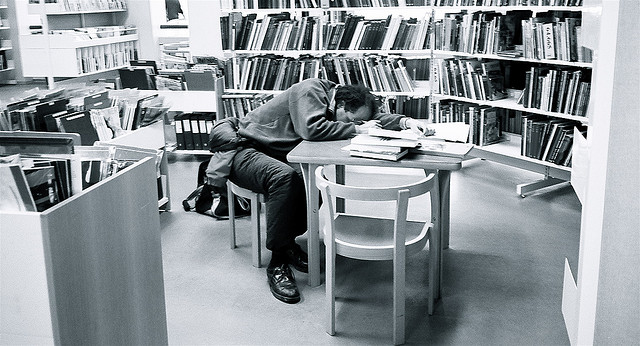 | Thus, imagine my surprise the other day when I woke up with a great solution to the problem. Apparently, my subconscious had been working on the problem. Hurray, subconscious! If I could feed it some chocolate, I would. :) |
The creative subconscious isn't a new idea. In Dr. Richard W. Hamming's classic seminar You and Your Research, he says,
If you are deeply immersed and committed to a topic, day after day after day, your subconscious has nothing to do but work on your problem. And so you wake up onemorning, or on some afternoon, and there's the answer.
More specifically, for writing, Joel Fagin says in his writing tutorial The Subconscious,
[S]ubconscious knowledge.. can add depth and flaws to characters, become themes for a story and also covers the premises for a bunch of useful story concepts ... In a way, this is also pure character development. Those key moments when a character in a story changes from what he was and into what he will be are very often based on this.
And The subconscious works in the background and drops feelings, instincts and impressions into the conscious mind. ...The subconscious also does a massive amount of background processing in support of the conscious mind and is incredibly powerful. ...And the more you do [a] task ... the more refined the program becomes.
So there you have it, subconscious writing! I think I'll go take a nap, er, do some creative writing/thinking. :)
Has this ever worked for you?
01 February 2011
Editor's report
Hi guys,
We are finalizing the stories in our Feb 2011 issue. (We ran into some logistical problems due to a pesky sub-zero blizzard.) Authors should hear back from us by the end of the week one way or another. We appreciate every story that is submitted. Thanks a lot! Closer to the end of the month, I'll tease you with tidbits about our exciting issue interview. :)
In the meantime, check out Editor Dave's post from yesterday about The Art of Reading Epic Fantasy.
How do you do it?
Subscribe to:
Posts (Atom)

 Posts

