19 July 2016

abaft the scenes

The deadline for the awesome August 2016 issue of Electric Spec has passed. But, don't fear, we're accepting submissions for our November 2016 issue.

'What's going on abaft the scenes' you ask? Well, I'll tell you. We are going through our mountain of slush. (Thank you for sending us your stories!) We have 3 editors and 2 associate editors and we need every one of them. Please don't query us on the status of your story; we don't have the manpower to answer queries. We make every effort to get back to you as soon as possible. We got an email last week that a particular rejection seemed pretty nice, and they were wondering if we were sincere. If we send you a nice rejection we're being sincere. We have sent out our share of not-nice rejections, don't worry!
In other miscellany, our email autoreponders were kind of problematic so I got rid of them. So, if you sent us something and didn't get an autoreponse--that's why. Apologies, if that leaves you wondering if we got your story... Most do get to us!

Authors should hear back by ~July 31 with a "no thanks" or a "hold-for-voting." We will email all hold-for-voting authors back before ~August 9 with a final decision.

And then the editting begins! :)

Please note, we do tend to keep art submissions hanging around for a while. So if you don't hear from us, we're probably still considering your piece.

Finally, there is a chance the awesome August issue may get pushed a week or two and become the spectacular September issue. Stay tuned for that info.

I better get back to slush!

12 July 2016

do what works

Once in a while I get together with other writers to talk writing. (I recommend it.) I did this recently and was struck by how different everyone's writing process is. One writer plans and plots and outlines everything out before writing a word. I'm at the opposite extreme. I just start writing. Neither of these approaches is right or wrong.

I've learned the hard way to do what works for me as a writer. Don't get me wrong, you should try new things. You should be willing to put these new things into your writer's arsenal. But if you try something and it doesn't work, if it prevents you from putting down words, stop. Don't do that thing.

This advice is relevant to all aspects of writing. One writer friend has a huuuuge list of tasks and projects--that she likes to tell everyone about. Telling everyone makes her feel accountable. Multiple tasks gets her writing juices and optimism flowing. If I made a list like hers my head would explode. It's difficult to write with an exploded head. So, I do not do that. It would not work for me.

Bottom line: do what works for you

The submission deadline for the awesome August 31, 2016 issue of Electric Spec is on July 15, 2016! Yes, that is in a couple days. Get those stories in!

05 July 2016

slush tip: hook me

THe next submission deadline is coming up: July 15, 2016! Get those stories in to be considered for the awesome August 2015 issue. :)

We, the Editors, are deep in the throes of the slush pile. It is a deep and dangerous beast, threatening to swallow us up. If you've submitted to us before, you know our reponse times can vary. A lot. This continues to be the case. (Sorry.)

In my forays into the pile, I realized I can be a bit impatient when reading a story. Thus I say to you: hook me!
Maybe this is an obvious tip but some writers seem to get lost in setting the scene. Or giving us the backstory of the characters. Or other looong setup details. Or extensive descriptions.
Don't do this!

Our culture has changed and it's faster-paced now than it was even a few years ago. Hook me immediately. This means your story has to start on the first page. This is particularly relevant for on-line 'zines. Readers want to be hooked immediately, so editors need to be hooked, as well.

Good luck!

28 June 2016

good enough is good enough

I knew a lot of writers. Do you? (If not, find some! Check your local library...) Some writers are perfectionists. Some writers edit and edit and polish and polish and don't submit stuff. As writer Aaron Ritchey says on the Rocky Mountain Fiction Writers blog Halfway and Unfinished Good enough is generally good enough. and If you don't finish the book, no one will ever be able to read it.

I'm not a perfectionist but I have this problem with both novels and short stories. I keep thinking one more revision will make them better than ever. I work on some pieces for years.
Don't be like me. Be smarter than me. Finish your stuff.
Submit your stuff!

Speaking of which, the submission deadline for the awesome August 2016 issue is coming up soon!
July 15, 2016! Send your good stories in!

In the meantime, I'm going to go try to take my own advice and submit something...

21 June 2016

writing for joy

Recently, one of my writer friends shared a project. It wasn't what I think of as his usual genre or topic--which I said. He agreed and said he'd combined a bunch of things he loved. As I watched him talk about it, I could tell he'd been writing for the pure joy of writing. His whole face lit up. And the joy, the passion was very evident in the piece. Wow.

I highly recommend this. Try writing something for the joy of writing. Don't think about market. Think about what you love, what you're passionate about. It can really rejuvenate your writing juices.
I bet the result will be beautiful!

Good luck!

Think about sending us your joyful writing. :)
The submission deadline for the next issue is July 15, 2016.

14 June 2016

Summer vacation -- not!

I know many writers from around the world. (Writers rock!) And I've been noticing a tendency now that summer is upon us (in the Northern hemisphere)... Some writers have stopped writing. Oh, no! Say it isn't so! I'm not the only one who's noticed this. Writer Dean Wesley Smith has been blogging about it for a while. An example is, Either/Or Thinking. Dean says some writers think they have to choose between family time and writing time, especially in summer.

Don't do it! Writers need to keep their writing muscles primed and ready, in shape. Writers need to write.
That's not to say you shouldn't take a break on a fun vacation. But in your everyday life: keep writing! Do not take the whole summer off.

Send us the fun new speculative fiction stories that result from your continuing hard work. We're starting to think about the awesome August 2016 issue...

Good luck!

07 June 2016

Tips from Grayson

We hope you're still enjoying the marvelous May Electric Spec stories. While we rest up a bit, Editor Grayson Towler has something to tell our prospective authors.

Here are a few tips you may never have heard that can help you stand out in the slush pile:

  1. Don’t start the story with your character waking up. It seems an obvious place to begin—your hero gets out of bed and heads out into to a day of adventure. In fact, it’s so obvious we see it all the time! See if you can figure out a different starting spot for your tale.
  2. Don’t have your character look in the mirror. It’s tricky to get that all-important character description in, especially for first person stories, but having your hero admire her flowing chestnut locks in the mirror is pretty cliché. And speaking of chestnut locks…
  3. Don’t just rely on hair style and color for descriptions. It’s amazing how much we run into this trend. For some reason, in many stories we read hair style and color are not just the first details we hear about a character, but they end up being the only traits we see!
Even if your favorite bestselling story starts with a character waking up, looking in the mirror, and describing their hair, remember these are trends we’ve seen so often they make our eyes glaze over. Keep a lookout to see if you’re leaning too hard on these well-used writing tropes, and we’ll all be grateful.

Thanks Grayson!

31 May 2016

We're live!

The latest issue of Electric Spec is available! W00t! Huzzah!

Thank you Artist Andrew Muff!
Thank you authors Graham Brand, Frances Gow, Irene Punti, D.A. D'Amico and Dean D'Amico, and Dale W. Glaser!
Thank you Associate Editors Minta Monroe, Candi Cooper-Towler and Chris Devlin!

Most of all, thank you readers! We wouldn't exist without you!

26 May 2016

from Author Glaser

We're pleased to post comments by Dale Glaser on his upcoming scintillating story "Red Screamy."

My father was my gateway to genre fiction in a lot of ways. I read the Tom Swift novels he had collected in his childhood, listened to his vinyl double album copy of the Star Wars soundtrack on the family turntable (back before cable TV and VCRs made watching the movie itself at home a possibility), and generally followed him down various rabbit holes from a young age. Eventually I went my own way and discovered my own particular fandoms. My father was never the horror fan I grew up to become, nor was he ever taken in by the mythological or dystopian overtones of heavy metal. Still, there's no denying that he got me started on the path, from way back when to where I am now.

Somewhere in the middle, though, there was the point in time where I was outgrowing child-friendly versions of science fiction and fantasy and moving into more mature material, still about aliens and magic and so forth but with explorations of moral gray areas and other existential ambiguities, as well. I was a precocious kid and a voracious reader, so this transition came young enough to be somewhat problematic. My father never forbade me to follow my own interests, but I do remember him having conversations with me about whether or not I really understood what an anti-hero was and that they were not exemplary role models. I promised him that I knew the difference, which may have been motivated as much by wanting to tell him what he wanted to hear as objective truth, and I like to think that time bore out the promise, but I leave it to others to judge how well-adjusted (or not) I truly turned out to be.

Over the years I often found myself returning to these ideas, the things we learn from our parents and the interests we share in common with them, and how many of those things are or aren't considered acceptable and appropriate. Once I finally had children of my own, I gained more insight into how it all looked from the other side. A staggering amount of insight, really, as anyone who has undergone the fundamental life shift of having children knows. Picking and choosing which parental interests to investigate further as a child is a luxury; determining what to offer and what to withhold from a child as a parent is a responsibility, wrapped up in the ongoing efforts of trying to mold and shape a halfway decent human being.

Somewhere in the never-ending process of sorting through all of the above, my story "Red Screamy" started to take shape. As with many story seeds, it grew from taking something I believe in and extending it far beyond the usual rational limits. I encourage my children to be unique and independent and free-thinking, and if that means outsiders might perceive them as a little strange, so be it. But what if that strangeness became its own kind of gateway to forces beyond a child's understanding, or even beyond my own? That struck me as a tale worth telling.

Another compelling wrinkle occurred to me as the story played out in my head: what if two parents fundamentally disagreed on where to draw the line between fair game and out of bounds? I'm very lucky, and eternally grateful, to have a partner in real life who shares both a good proportion of my interests and my philosophical outlook, and we've never experienced major conflict and strife over what our children are exposed to or encouraged toward. But in the world I was inventing, I could see how it would be easy for opposites to attract and then clash over the young, impressionable spirit they are both responsible for.

Ultimately I invented a portrait of a family to reflect that notion, and "Red Screamy" was the end result. So it's a little bit autobiographical, but also pure fiction. It's a little bit realism, but also fantasy. It's a little bit thought experiment, but also a cautionary tale. And what exactly is being cautioned against may certainly be open to interpretation.


Thanks, Dale!

Be sure to check it out May 31!

24 May 2016

from Author Gow

We're coming down to the wire now. The marvelous May 31, 2016 issue of Electric Spec is only one week away! We've been working feverishly behind the scenes to get your free speculative fiction out to you. As promised, here are some more previews of coming attractions. We will be featuring two more spectacular stories:
"One Slow Trigger Day" by D.A. D'Amico and Dean D'Amico is an unusual tale of old-West gun slingers and their challenges. Or it is? :)
"Red Screamy" by Dale W. Glaser is a disquieting horrific fantasy which isn't afraid to take some risks.
We'll also feature some amazing art and possibly some other surprises.

And now without further ado, some words from Frances Gow author of "The Watchers."


I wrote The Watchers when I starting researching steampunk fiction as part of my MA Creative Writing. The aim was to write a piece of fiction using the city as a backdrop, evoking a strong sense of place. Victorian London has always been a classic backdrop for steampunk and because I know the city well, I felt able to feed on its nostalgia. I chose Paris because it fascinates me and the similarities and differences between the two cities was interesting to explore.

So with the background suitably steampunk, I managed to get in a bit of steam-powered tech alongside the retro-futuristic inventions. The protagonist’s story itself attempts to subvert the norms of the historical times, simply by the fact she is female attempting to enter a male dominated profession. And of course, there have to be aliens involved somewhere. The story itself might not live up to the classic steampunk definition, but it is my version and I think what emerged was something quite unique.


Thanks Frances!

Check it all out on May 31, 2016!

17 May 2016

from Author Brand

As promised, here are some comments from Graham Brand, author of a story we are very proud to present: "Cutting It Fine."

When I checked my notes for "Cutting It Fine" I was surprised to find that it was the first science fiction story that I wrote, where by 'wrote’ I mean that I completed a first draft. However, it had such a long revision period that other stories came and went before this one reached the final version that you can read here.

I’ve always had a fascination for the people in the background of space-faring tales: the janitors, the barmen, the clean-up crews. One of my favourite episodes of Babylon 5 was "A View from the Gallery," which focusses on two maintenance workers, and let’s us see the space opera action of an attack on the station through their eyes.

I decided to get serious about writing back in 2011, and "Cutting It Fine" started life as a warm-up exercise. I plucked a topic from the air (a barber on a space station) and sat down and wrote without any preparation. That file—called 'Barber Musings’—became the first scene of the story.

My barber character then languished in his orbital salon for over a year, until I fleshed out the story to its first draft of 6,900 words in October 2012, with a revision trimming it down to 5,900 words in February 2013.

My day job as an IT project manager intervened again. Throughout all this I’d been running projects first in Seoul and then in Sydney, and I didn’t get back to the story for another year. In the spring of 2014 five of us from the MobileRead forums decided to put an anthology together, and "Cutting It Fine" was one of my contributions. We acted as beta readers for each other, and their helpful criticism saw the story revised, and cut still further to 5,350 words.

We didn’t get enough material for the anthology, sadly, and the process eventually stalled. A year later, I ran the story past the eyes of a good friend—the editor of a science journal—who found yet more fat to cut, and I arrived at the final version of about 5,000 words that appears here.

One more thing.
Although I’ve had other full-length science fiction stories accepted in the meantime, they’ve yet to appear. So my first science fiction short story has also turned out to be the first that I’ve had published. So, it’s a big thank you from me to the team at Electric Spec.

I hope you enjoy the story.


Thanks Graham!

Everyone check it out May 31, 2016!

12 May 2016

fabulous fiction

This is our official first preview of coming attractions for the marvelous May 31, 2016 issue of Electric Spec. As I said before we had some really lovely stories to chose from. Thus, not surprisingly, we ended up with some truly fabulous fiction.
  • "The Watchers" by Frances Gow is an amazing, rich steampunk tale complete with aliens and biblical references.
  • "Mother" by Irene Punti is a unique, lyrical far-future science fiction tale with some horrific overtones.
  • "Cutting It Fine" by Graham Brand is a beautifully-written science fiction tale about an unusual family legacy and possible implications/ramifications in its demise.
We have two more author stories I hope to tell you about soon.

In addition, in Editor's Corner Nikki Baird will share a wonderful science fiction tale, "Runaway," in which a young girl isn't who she seems and an old man comes to terms with his past.

Be sure to check it all out May 31!

And, in the meantime, check back here for more previews!

10 May 2016

from Author Punti

We're putting together a great new issue of Electric Spec for May 31, 2016. One of our featured stories will be the fascinating SF tale "Mother" by Irene Punti. We asked Irene to say a few words about her story:

As the granddaughter of a twin sister, I have always been fascinated by the ways in which two people with the same genetic makeup and upbringing will seem almost identical in their character and then suddenly reveal themselves to be extremely different. This got me thinking about how it would feel to be treated like a copy rather than as an individual, and that’s how I started writing my short story “Mother”.

While I was writing the story I would walk home from work and I would see nests of processionary caterpillar on the pine trees (a very common pest in the south of Europe). They seemed to be the perfect example of losing your individuality: moving in a single file of caterpillars that look exactly like you, following the exact same path as the caterpillar before you. So I decided to incorporate them into the story. Plus I have always been slightly terrified of processionary caterpillars and it seemed only right that for once they would do something good for me.


Thanks, Irene!

Check out "Mother" on May 31, 2016 at Electric Spec!

03 May 2016

pulling back the curtain

The Electric Spec Editors recently had the production meeting for the marvelous May 2016 issue. Choosing amongst the lovely stories in hold-for-voting is always difficult. As I think I mentioned, we had an unusually large number of good stories in hold-for-voting. Thus, it was especially tough this time. :( Many of the stories we passed on were strongly liked by one or more editors. Take heart if you were in hold-for-voting: your story was publishable.
If you're interested in more subjective specifics regarding the meeting: the weather strongly resembled a blizzard when we met. (Yikes!)

We're in the process of emailing folks with our decisions. Yays also get a contract. Please send it back ASAP so we can start editing. Once the editor and the author agree on the story version, files still have to go to our copy-editor. Then, after we get files back from her we have to create the webpages. Yes, it's kind of an elaborate process. We also post author bios--so send those along, if relevant.

Other behind the scenes tasks include picking cover art, writing the Letter from the Editor, putting together the Editor's Corner entry. And, of course, we have to pay everyone! Please send along your paypal info. :)

We've also been encouraging authors to send along a blog entry for right here. Please consider this if you are one of our authors. I believe blog hits are around 520,000 at this point. Keep in mind that's hits accumulated over a decade. :)

Next week I'll post more specifics about delicious upcoming stories!

26 April 2016

temptation


In my neck of the woods, spring has finally sprung. The sun is shining, the scents of flowers ride gentle breezes. Yes, I would rather be outside in the sun, rather than inside on my computer! A very experienced full-time writer I know says the productivity of part-time writers plummets in spring and summer. He says: don't succumb to temptation! Keep your butt in the chair, your fingers on the keyboard.

What's a poor writer to do? Every writer needs to answer that question for him/herself. Personally, I'm going to give myself permission to yield to temptation, to shorten (not eliminate!) some of my writing sessions--with the caveat that I try to make them up another time.
Good luck with your own battles with temptation. :)

Behind the scenes we are hard at work on the marvelous May 2016 issue of Electric Spec. We are almost through the slush pile. We've got the production meeting scheduled for the beginning of May. We do seem to have an unusually high number of good stories already in hold-for-voting. Next week I'll start blogging about coming attractions in the new issue. I can already say we'll have some beautiful cover art and five excellent short stories!

19 April 2016

explain or not?

Preparations for the marvelous May 2016 issue of Electric Spec are in high gear! The submission deadline is passed. (But don't fear: we're accepting stories for the August issue.) Once again, we got a huge number of stories submitted. Thank you very much if you submitted! It will take some time, however, for us to get back to you... (See approx schedule in last week's blog post.)

In the meantime, I had an interesting discussion with some writer friends about explanations in novels. One writer recently finished a unique horror novel. Should she explain the whole monster mythology and origins and rules within said novel? Hhm... We thought: maybe not. It was scarier not knowing what was really going on. It was scarier thinking the monsters might come to our town!

I do think this is related to genre. At some point explaining your horror turns it into a science fiction. For example, if scientist John Smith's virus escapes ABC lab and sickens folks with the result that they get super hairy, their teeth grow, and they crave live food, the story seems like SF--especially if Dr. Smith is seeking a cure. If suddenly people howl at the moon, on the other hand, it seems like horror.
Fantasy can also be turned into SF with too much explanation. For example, if folks in your story can float by waving a magic wand it seems like fantasy. If folks levitate by manipulating dark energy it seems like SF.

Please note when I say explain I'm not talking about info-dumping. The age of the info-dump is over. Don't do that in any genre. Info-dumping involves the author directly explaining things to the reader. Often this is done via narrative without characters. A rule of thumb I use is: no more than 250 words of exposition at a time. Info-dumping can also be attempted via characters using the dreaded "As you know, Bob..." Don't do this. Characters should not discuss things they already know.

Bottom line: each author has to decide for him/herself. To explain or not to explain?
Good luck!

12 April 2016

reaction to slush

We are in the thick of it now! We're furiously trying to get through the slush pile in preparation for our next production meeting at the end of the month.

I read a story recently that started off great. It had a great voice, a great protagonist, a great opening. The protagonist had a good problem and started acting to solve it. I was totally reading along, thinking 'this is going to make it into the issue' when it ended. And not in a good way! It just petered out. There was no story resolution. I was super disappointed. In fact, I almost emailed the author that we'd buy it if he/she added a more satisfying ending. But I resisted. (Why? Because it's against our editorial policy. Why? Because it's caused troubles in the past.)

I'm sure everyone read Nikki's excellent article "Story Endings, How They Torture Me" in the last issue. You read it, right? If not, go check it out.
The gist is: "Change is probably the biggest and most important part of an ending." Make sure something is changed in your story. Also, make sure to show the reader the change. It doesn't count if it doesn't make it onto the page.

Thanks for submitting! We appreciate it!

Some schedule notes:

  • The submission deadline for this issue is midnight April 15, 2016, U.S. Mountain time.
  • Our production meeting is at the end of April.
  • This means all authors should hear back from editors by May 7, 2016 at the latest.
    If your story is accepted, this email should include a contract. Please write us back as soon as possible.
    If you don't hear back by then, something went awry and you should probably resubmit your story for the next issue. (Sorry!)
  • Regarding art: we do tend to hang on to art submissions for possible use in future issues. Thus, it's possible artists will not hear back by May 7. If you need us to release your art for another project, please let us know.
  • We're still encouraging accepted authors to blog about their stories here. It's helpful if you get back to us with your blog entry ASAP. (Thanks!)
  • The issue goes live May 31, 2016. Yay!

05 April 2016

write to market?

I recently had the opportunity to interact with several different editors from around the country. I was frankly shocked at how diverse our opinions of stories were. A single publishable story could have opinions ranging from 'loved it' all the way to 'hated it.' I did notice editors had certain preferences. One editor wouldn't consider a story unless the first page had a lot of setting description. One editor only considered G-rated stories. One editor only seemed to like stories with male protagonists. And on and on...

These editors edit for different markets. If you study the publications they've edited you can get some reasonable ideas for what they like. There are a lot of different elements in a story including point-of-view, tone, vocabulary, telling vs. showing, and internal and/or external plot. My point is: different markets are different. Does it make sense to submit a story to an inconsistent market? Maybe not. Does that mean you should write to market, i.e. try to write a story that's consistent with a particular market to sell it to them? Every author should probably answer that question for his/herself.

Electric Spec does have some conventions. Here's a short list. To appear in our market your story must:

  • have a speculative element
  • have some kind of protagonist
  • have some kind of external plot
  • be good.
In addition, our stories almost always have some kind of showing. Often, the ratio of showing to telling is over fifty percent. We do look for unique stories, something we haven't read before. Our stories very rarely involved graphic violence such as brutal murder and/or rape of a child.

We're starting to gear up for our marvelous May 2016 issue. Stay tuned here for more info!
The submission deadline for this issue is April 15, 2016.

29 March 2016

story throughline

We are starting to work through our slush pile for the marvelous May 2016 issue of Electric Spec. Sometimes a story starts of strong but then sort of falls apart. :( I hate it when that happens.

Authors should consider: what is your story's throughline? There are several different definitions of 'throughline.' Don't get bogged down in definitions. The point is: what is the central idea of your story? It needs to be evident in the first scene and in the last scene.
A story that peters out often starts with one central idea and then, somewhere in the middle, switches to another idea. This rarely works.

Personally, I tend to use the protagonist's main problem with its emotional component. Remember, one of your jobs as an author is to affect readers' emotions. Thus, scene one at least alludes to the protagonist's main problem and shows his/her/its accompanying emotions. The middle of the story is essentially the protagonist acting to solve the problem. The last scene is the solution to the problem with the accompanying emotions.

You don't have to do what I do, but you should have a throughline--some kind of consistency from the beginning to the end of your story.
Your central idea can be anything!

I look forward to reading what it is. Send us your story.

25 March 2016

please don't query

We've been getting an uptick in the number of queries we get about submitted stories. Please don't do this. We get hundreds of stories. We don't have the manpower, er, personpower to answer queries about stories. Thanks!

Happy weekend!

22 March 2016

suspension

I've heard it said that readers of fantastic fiction must suspend disbelief. Some sources attribute this to Samuel Taylor Coleridge in 1817:
...procure for these shadows of imagination that willing suspension of disbelief for the moment, which constitutes poetic faith...
I do think readers need poetic faith to enjoy any fiction. Authors should also play their part, however, by creating an internally consistent world.

When it comes to science fiction, it is additionally important for readers to suspend confusion. If can be hard to get into a SF story when new worlds, new technologies, new jargon are being thrown at you. But, SF readers, never fear! It's worth it, if you persevere. :)

These different approaches are due to the inherent and deep-seated differences between fantasy and SF. Fantastic fiction is the earliest type of fiction. To some extent, all fiction is fantastic.
Modern SF, on the other hand, originated in the 17th and 18th centuries' Age of Reason with its scientific discoveries. Thus, at its core, SF is rational. All phenomena should be explained, or at least be able to be explained.

Here at Electric Spec we love both fantastic fiction and SF!
Send us your stories!

15 March 2016

writing rules

There are a lot of writing rules, tips and suggestions out there. (I give them all the time. mea culpa) Probably the most famous for Electric Spec readers and writers are Robert A. Heinlein's rules for writing:
  1. You must write.
  2. You must finish what you write.
  3. You must refrain from rewriting, except to editorial order.
  4. You must put the work on the market.
  5. You must keep the work on the market until it is sold.
SF Author Robert J. Sawyer adds
        6. Start working on something else.

Personally, I agree with all these rules.

But...absolutely, positively, the only rule of writing you need to follow is:
There are no rules of writing.
Writers can get bogged down reading writer's blogs or chasing down the best methods or rules. Don't fall in this trap.

Just do whatever works for you!

08 March 2016

Write it! Submit it!

Phew! We're all still basking in the glow of the fabulous February 29, 2016 issue of Electric Spec.

*glow*

Check it out if you haven't already!

I went to a very interesting short story workshop recently in which we were forced to write and submit a bunch of short stories in a relatively short time period. I gleaned some things which I want to share with you all.

  1. Write the (first draft of the) story! There's no magic potion or circumstance you need to write a short story. Just do it!
    I've blogged here many times about how to write a short story, for example, see Short Story Cheat Sheet. In a nutshell, you need a protagonist, a problem, and the protagonist needs to do something to try to solve the problem.

  2. Revise the story. I am a strong believer is following your muse. Part of that is figuring out what writing method works for you. Some people can dash off one draft of a story and have it be perfect. I am not one of those people. I need at least one reader to set eyes on it and tell me things like, "This character is too stupid to live." And then I can say, "Now that you mention it, oh, yeah..."
    So, figure out what writing method works for you. FYI-every writer has their own method.

    Be warned, however, don't get trapped in revision. Don't let this step stop you from the next step.

  3. Submit the story! Again, there's no magic potion needed here. Find a market and send it out! A helpful place to find markets is ralan.com.

    Of course, we would love to get your story here at Electric Spec. :)

Good luck!

01 March 2016

Thanks!

Huzzah! The February 29, 2016 issue of Electric Spec is live!

Thank you very much Authors Kate Sheeran Swed, Patricia Russo, Nina Shepardson, Tiffany Michelle Brown, and Daniel Brock.

Thank you very much Artist Ron Sanders.

Thank you very much Associate Editors Minta Monroe, Candi Cooper-Towler and Chris Devlin.
I don't know if it's strictly kosher, but I'm also going to thank Editors Nikki Baird and Grayson Towler.

Finally, thank you very much readers!

Huzzah for all of you! We couldn't have done it without you.

28 February 2016

Huzzah!

Huzzah! We're Live!
Check out the new issue of Electric Spec!

23 February 2016

new issue next week!

We are getting close now! We'll publish a new issue of Electric Spec next week: February 29, 2016! We've already mentioned "Catch and Release" by Tiffany Michelle Brown and "Posthumous" by Daniel Brock. In addition to these we'll have "Where everybody Knows Your Name" by Kate Swed, "The Wish of a Child of Wishes" by Patricia Russo" and "Gifts from a Newlywed Husband to his Wife" by Nina Shepardson.

"Where Everybody Knows Your Name" is a unique and fun take on a more traditional fairy tale--with a nod to a famous TV show. "The Wish of a Child of Wishes" is a unique fantasy tale involving a very empathetic child and her accomplishments. "Gifts from a Newlywed Husband to His Wife" is a haunting and lyrical romance. Read them!

In addition, we'll have an extremely helpful article "Story Endings, How They Torture Me" from newly-promoted Editor Nikki Baird. She's been working in the trenches for quite a while and has a lot of expertise. Check out her article which includes the basics, sizzling recommendations, and a very helpful checklist.

I strongly recommend you check out everything in the issue on February 29! You won't want to miss it. :)

16 February 2016

from Author Brown

We're excited to publish the story "Catch and Release" by Tiffany Michelle Brown in our February 29, 2016 issue of Electric Spec. Here's what Author Brown has to say about her story:


The show Lost Girl, my proximity to water (I live in San Diego, California), and my lifelong love of Greek and Roman mythology are what inspired me to write "Catch and Release."

You know how some people go gaga over vampires? That’s how I feel about sirens. But you don’t see too many contemporary stories about them (or am I simply not looking hard enough?), so I challenged myself to create my own interpretation of the classical siren. In modern times. In a bar in Florida. Out on the hunt. Because sirens need to eat, too, and why should vampires and werewolves have all the fun meddling in the human world?

During this particular hunting trip, Theron, my protagonist, doesn’t enjoy his usual routine—walk into a bar, find a snack, go home to Persephone. Unexpectedly, he meets another mythological creature. One to be reckoned with. And that’s when the fun begins.

When I wrote "Catch and Release" last year, it was an anomaly. At the time, I was writing a lot of straight-up horror. In lieu of gore and ghosts and creepy campfires, I embraced sensuality, folklore, and different kind of tension than fear. "Catch and Release" started out as a challenge, a writing exercise, and it progressed into something I’m rather proud of.

"Catch and Release" was a gateway drug, because since, I’ve been writing a lot more in the fantasy/magical realism vein. A few weeks ago, I finished a story about Death personified, but instead of the customary black robe and a scythe, Death shows up wearing the likeness of a past love (and isn’t a terrifying presence—friendly and comforting, in fact). I just finished a happily never after story inspired by The Frog Prince, which features a talking pigeon and sexual addiction (separately, I promise!). And now I’m working on a Japanese folk story adaptation that involves aliens, bamboo, and interplanetary love.

With fantasy and speculative literature, there are no limitations. You can be sexy or funny or absurd. You can create new creatures and species. You can play with gender tropes and social norms and inhuman emotions. Anything goes.

Even darkly attractive sirens in well-tailored suits who sip fruity cocktails at beach bars.

I hope you enjoy "Catch and Release."


Thanks, Tiffany!

Check out the issue on February 29, 2016!

09 February 2016

from Author Brock

We're excited to publish an SF tale from Author Daniel Brock in our February 29, 2016 issue. Here's what he has to say about his story "Posthumous":

"For me, ideas come and go so fast I can barely keep up with them, let alone remember how they came about. Most of them begin as small, fickle things, little more than a vague notion of something I think would be cool, that slip away unless I capture them in ink first. Posthumous, on the other hand, was one of those ideas that slipped away and just kept coming back. I’d get excited thinking about it, then lose faith and put it on the backburner. It was a bit of a struggle, but because of this, it is one of the few stories I can say for sure where the idea came from and how it evolved.

At first it was just the title. Posthumous, meaning awarded or occurring after death, always made me think of Grammys awarded after death, so the musician coming back from the dead was always a part of the story. That was the “coolness,” but for the longest I couldn't decide how to make it an actual story. Eventually, I thought the best thing to do was address the two main characters and let them drive the plot. I think for this version, that was the right thing. The inspiration for the characters came from my own music idols. Though the explosion of publicity Michael Jackson’s music received after he died played a big role in the early days of “Posthumous,” Billy Strat and his story were heavily inspired by my newfound love of Alice in Chains and my wish that Layne Staley could still be singing now. His voice alone influenced this story more than anything.

So that, in a Nutshell (ha! :D), is how I came up with “Posthumous.” One more thing, before I go. I submitted this story exactly one week before David Bowie passed away. I worked on it during Lemmy Kilmister’s last days, and was toying with the idea when they found Scott Weiland. Though I didn’t witness any of these men in their prime, the mark they left on music and entertainment has probably influenced me in ways I don't even know. This story isn’t about them, but for some reason I feel it should be, so I’ve dedicated this story to these three men and all the others we’ve lost. It’s the least I can do.

May they continue to Rock in Paradise."

Thanks Daniel!

02 February 2016

first 2016 production meeting

We are well on our way to producing the first issue of 2016! Woohoo! Thank you, authors for sending in your stories. We appreciate it. I believe all authors should have heard back from us one way or another if you submitted before the Jan 15 deadline. If you didn't hear from us (and you submitted before Jan 15), please submit again. We do want your story! I did disable the auto-reply for the submissions email--it was causing trouble.

The discussion amongst editors was very spirited. Grayson, Nikki and I had fun discussing the latest spec fic books, TV shows, movies and the Broncos (we like them! Go Broncos!). The story discussion for the issue itself was surprisingly agreeable. We pretty much agreed about everything, but it was spirited because we like the stories a lot! :)

For Editor's Corner Nikki's going to give us all some tips on writing endings. Yay! Unusual fact: we didn't get much SF this time. In terms of food and drink, nothing too weird except my dish...I got 'Breakfast Nachos.' Have you ever heard of this before? I hadn't. Let's just say it was an adventure in itself!

Hopefully, we'll have some blog entries from our authors the rest of the month. Stay tuned.
Look for the new issue February 29, 2016!

26 January 2016

tips 2

Here's the second set of tips for 2016. Last time ended up being a bit negative with all the "don't's" so here are some "do's." What do all these "do's" have in common? Uniqueness. Good luck creating your unique story!

Next time I'll blog about the first production meeting with the new editors. Should be interesting!

19 January 2016

the first tips of 2016

As you're reading this, the submission deadline for the first 2016 issue of Electric Spec has passed. I hope you got your story in! (If not, don't fear: we are accepting submissions for the second issue of 2016.) We are hard at work on the new issue.
Here are some tips which may or may not pertain to your particular story:
  • Do obey the submissions format guidelines:
    • Submit an rtf file, not a doc file (or anything else).
    • Use the subject line: SUBMISSION: Story Title by Author's Name (Word Count). The word SUBMISSION is particularly important so it gets through our spam filter.
    • Do stay within the 250 to 7000 word limit.
    • Don't do any unusual formatting, such as unusual fonts, headers, pictures, etc.
  • While we're on the topic of guidelines...
    • Please don't query us on the status of your story.
    • Please don't ask us to join your LinkedIn network or anything similar.
    • Please don't send a query about submitting your story. Just send the story.
    • Please send one story at a time.
    • Since we have a variety of editors reading slush, you can address your submission letter to "Dear Editors." But, be aware, this can annoy editors at other markets.
  • Know your market! By this I mean be aware of what stories we have published in the past at Electric Spec. Every zine is different. Some tips for us, which may not be relevant for other zines include:
    • Show us the story! Very generally, narrative is telling. To me, telling reads as a summary of a story rather than as a story. Your story should probably have some dialogue--notice this is showing.
    • I understand creative folks might not be aware of very common tropes, plots, openings, so for your convenience, consider avoiding vanilla versions of the following:
      • The protagonist wakes up in the first scene.
      • The (male) protagonist kills his wife/girlfriend/random woman.
      • The protagonist is revealed as some kind of nonhuman at the end. Surprise! (Not.)
      • The epic male protagonist kills the monster and wins the female.
    • Your story must have a clear speculative element. It is popular in mainstream fiction to write stories which might have a speculative element. See, for example, The Best American Short Stories, 2014. We don't want ambiguity about this.
  • Probably, the biggest tip I can give for stories in general: start your piece at the beginning of the story. We often see stories that contain a lot of setup and filler in the first paragraphs. Look carefully at your story. Ask yourself what it's about, and where does your piece start addressing this?
This is getting a bit long, so I'll end it here.
Thanks for sending us your stories! We appreciate it!

12 January 2016

Feedback

For the last month or so and continuing for the next month or so, I've been writing one short story a week. It's an interesting exercise. With limited time I really have to think about the story before I begin writing. Some elements I consider:
  • Who is the main character? What is his/her/its external and internal problem initially?
  • What does he/she/it do to solve the problem(s)?
  • What is the external plot resolution?
  • What is the internal plot resolution? What is the emotional oomph of the story?
  • What is the theme, setting, world, time, big-picture of the story?
I do this all mentally; I don't write anything down until I know the general answers to these questions. IMHO, once you start writing, you've committed/trapped yourself into something. Then, when I finish the first draft I ask What is this story really about? Usually I can't answer this last question until I've finished the first draft. Often I have to edit the second draft to make it fit in a little better with this really about answer. So, at the end I'm left with what I think is a decent story.

And then...

When I submit a story to my critique group every time they raise good questions. Every time! Like "Why does the protagonist do this? It's not motivated." or "This plot point is unecessary." or just "This part is confusing."

I relate all this to illustrate the crucial importance of feedback. IMHO every writer needs to get some other eyes on their work. Every writer! Writer friends are ideal for this. Significant others, BFFs, parents, kids, neighbors also work.

At Electric Spec we really wish we had the resources to give feedback on every submission, but we don't. Here on the blog, we will give some general feedback (based on slush) for the rest of the month.

05 January 2016

Emotional Complexity

I've been pondering what makes a story great. Yes, I have pondered this before. About this time last year, I blogged about genre versus literary fiction. The editors I quoted there have some significant insights.

Of course, you can't go wrong in reading what awesome authors say about the issue. I quoted Norman Spinrad in true literature. I quoted Ursula K. Le Guin on Fiction.

Back in the beginning of 2011 I also considered a great story?. And in 2006 I considered Short story first lines. A great first line does hook the reader. You can't show off your great story if no one ever reads it.

Here and now in 2016 I think the one thing that makes any story great is emotional complexity. This works for short stories, and for 'TV' shows and movies as well. For example, in a recent movie a protagonist has to chose between love and personal safety. The creators of this work successfully created a character, a person, that has a whole host of emotions. Personal safety would be the safer, and probably easier, choice. What does the character do? He does what he has to do.

As you write your stories, consider: do they have emotional complexity? Does your character have to chose between options he/she/it has strong feelings about? If not, work on it. Good luck!

The deadline for our first 2016 issue is Jan 15, midnight (US Moutain time). Get those stories in!

29 December 2015

Editor Changes

We have some new Electric Spec Editors! I'm very excited to be working with these folks.

Nikki Baird has been promoted from Associate Editor. She writes science fiction, fantasy, and horror, both long and short form. Her short horror story, "Devastation Mine" was published as part of the anthology Broken Links, Mended Lives, which was nominated for a Colorado Book Award. She has been a finalist in the Rocky Mountain Fiction Writers' Colorado Gold contest for the two years in the Speculative Fiction category, and is a regular contributor to Littleton Writers Critique Group, an open critique group in southwest Denver. She is currently trying to place her second fantasy novel with a publisher.

Grayson Towler is a brand-new Electric Spec Editor. He has had a lifelong fascination with dragons, dinosaurs, magic, and the telling stories. His first book, a middle-grade fantasy titled The Dragon Waking, is due to be published in Spring 2016 by Albert Whitman & Company. The book was a finalist in the 2012 RMFW Gold contest.
         Grayson has worked as a copy writer since 2004 for Sounds True, a publishing company for books and audio programs concerning meditation, spirituality, and self-help. He is also an illustrator, and he has been writing and drawing an urban fantasy webcomic, Thunderstruck, since 2004. He also created "Tales from the Vault" --a popular collaborative fiction website active from 1996-2001.
         In addition to writing, Grayson has also been a web designer, substitute teacher, comic artist, and small business owner. He and his wife, Candi, live in a house owned by three relatively benevolent cats in Longmont, Colorado.

We also have two new Associate Editors. One is Candi Cooper-Towler. She was raised in the desert of Southern Nevada and now lives in the high desert of Colorado. She has been writing haiku seriously for about five years and finds the short form a perfect fit for her minimalist style. She is accompanied by her novelist husband as well as a horse, three cats, and a dog. She is a spectacularly fast reader.

Our second brand-new Associate Editor is Minta Monroe. She writes darker fantasy, particularly involving the occult or supernatural. She is the author of The Mound Dwellers and several collections of short stories. One of her stories will appear next year in Haunted, a Fiction River anthology. In addition to fantasy, she writes science fiction and mystery under other pen names.

And, thankfully, Chris Devlin agreed to stay on as Copy Editor. She's a writer, blogger and copy editor. She runs Devlin Author Services, a full-service writer support agency. She's the Contest Chair for Rocky Mountain Fiction Writer's Colorado Gold contest and has years of experience as a copy editor and critique group moderator. Her Young Adult speculative fiction novel, St. Vitus Academy Book One: The Lazarus Rock, finaled in the Pikes Peak Contest 2012.

Welcome aboard, everyone!

22 December 2015

Peace on Earth

Today is the solstice, the shortest day of the year in the Northern Hemisphere. (Fun fact: today is the longest day of the year in the Southern Hemisphere.)

I thought it would be an appropriate occasion to pass along some wisdom from the late SF author Clifford D. Simak speaking of his work:

The series was written in a revulsion against mass killing and as a protest against war... It was filled with the gentleness and the kindess and the courage that I thought were needed in the world.

We wish you gentleness, kindess, and courage.

And in the new year: Peace on Earth.

15 December 2015

tips from slush

The excitement of the most recent issue of Electric Spec hasn't faded when we already have to start working on the next issue. We, The Editors, have been reading slush. As you may have guessed I have some tips...
  • MARKET. Know your market. If you are submitting to Electric Spec, we are your market. And you're in luck: you can read every story we've ever published for free! This will tell you some things about Electric Spec:
    • Your story must have a speculative element.
    • Your story must have a protagonist.
    • Something must happen in your story.
    • We prefer showing rather than telling. (If you don't know what this means, say something in the comments here and I'll do a blog post on it.)
  • We do accept flash fiction, but it still has to be complete story and not just the beginning of a story or the outline of a story.
  • Don't send us stories we've read a million (okay, a bunch of) times. These include:
    • The protagonist wakes up in the first scene.
    • A man killing his wife/girlfriend/mistress/all-of-the-above/etc.
    • Straight-up regular vampires or werewolves with regular problems. We like vamps and weres but show us something different.
    • Standard quest stories. Again, we like quests, but show us something original.
  • We'd love to see
    • Unique epic fantasy.
    • Steampunk.
    • Genre mashups.
    • Your original idea here. :)
Do send us your stories! We appreciate you, authors!

Thank you!

08 December 2015

good stuff

Wow! The new issue of Electric Spec has a lot of good stuff in it! Have you finished perusing it? If so, you must have gleaned many interesting facts...
  • How many stories have we published in the last decade?
  • What famous author is part of our tech support team?
  • Why did we start Electric Spec?
  • What gets a story sold?
  • Who or what is Itsumi in Levenson's story?
  • How does Jillian survive in Miller's story?
  • What cause's Taylor's change of heart in Boden's story?
  • What in the world happens to Bobby at the end of Grey's story?
  • What does Sheri do to Molly in DeHaan's story?
  • Who or what is Doyle in Smith's story?
  • What motivates the character Li-lin in Boroson's novel The Girl with Ghost Eyes?
Don't know the answers to all of these questions? Maybe you better check-out the issue again! :)

01 December 2015

New Issue!

As promised, we published a brand new exciting issue of Electric Spec yesterday! Huzzah!
Thank you very much Authors Levenson, Miller, Boden, Grey, DeHaan for the excellent stories! Thank you very much M.H. Boroson for the intriguing interview! Thank you very much Artist Sanders for the captivating cover art! Thank you very much Associate Editors Baird and Devlin for associate-editting! :) Thank you very much Hardlight Multimedia for tech support!

Thank you very much Editors Dornbusch and Hughes! For those of you who haven't read the Letter from the Editors yet, they have a huge announcement: they're stepping down as ElectricSpec Editors. It's been a great decade working with you! Best wishes on your new adventures! Check out their letter it's very interesting.
(And don't worry, ElectricSpec is continuing. More about that later in the year.)

Most of all: Thank you Readers! We wouldn't exist without you!

Huzzah!

24 November 2015

More Coming Attractions

Today I'm going to brag on the final two outstanding stories of the November 30, 2016 issue of Electric Spec.

"Still the Champ" by John Grey is a very intriguing and unusual SF tale. Initially, it's not entirely clear it is a SF story (okay, if you ignore the alien). Let me just say, the ending will definitely surprise you here. I was extremely surprised. And considering I've read many thousands of SF stories that's not easy to do. Check it out on Nov 30!

We also have a lovely fantasy "A Walk Among the Ivy" by Devin Miller. Oops, I guess it made it sound sedate. It's not. It's very dramatic, with phenomenal plotting and empathetic characters. Check it out on Nov 30!
Fun fact: we've published Mr. Miller before. Check out his "Tom the Sheller" from 2009.

Also in the upcoming issue we have a very special Letter from the Editors from Betsy Dornbusch and David E. Hughes. A while back I blogged about Dave's writing: author Dave. I wanted to discuss Betsy's excellent writing as well. We have published quite a bit from her over the years, including short stories such as "Race to Redemption", and "Last of a Caste". Betsy is also a very talented and successful novelist. Check out the excerpt from Archive of Fire here. Check out the excerpt from Exile here. Check out the excerpt from Emissary here. So much yummy fiction!

Less than a week until the new issue! I can't wait!

17 November 2015

Preview of Coming Attractions

We are working hard on the upcoming November 30, 2015 issue of Electric Spec. You heard about one of our excellent upcoming stories last week. This week I'm going to preview two more stories. They are both excellent science fiction tales.

"Stealing a Starship" by Barton Paul Levenson has atypical characters and fully-fleshed out world-building. The characters are not stereotypical SF characters. It also involves stealing a starship--as you may have guessed. But the plot does not go the way you might expect.
Yes, I realize I'm being vague--but I don't want to spoil the story for you! Be sure to check it out on Nov 30!

Fun fact: this is not the first time we've published work by Mr. Levenson. If you're impatient, you can check out his "The Boogie-Woogie, Time-Traveling, Cyborg Blues", or his "Khuminay and the Axe-Wielding Psycho".

"Chasing Frisbees" by Derrick Boden has a particularly powerful and emotional character arc. It has fully-fleshed out world-building. It also has frisbee-chasing--as you may have guessed. But the plot does not go the way you might expect. And the unexpectedness is different from the unexpectedness mentioned above. Furthermore, the 'big picture' of this story is a great metaphor for some other stuff...
Again, sorry for the vagueness, but it's unavoidable. :) Check out the story Nov 30!

Both of these stories are what I like to consider new classic SF. They have great, fun classic ideas--such as starships--but they also have an additional modern power and sensibility.

10 November 2015

from Author DeHaan

We've started working on the Nov 30, 2015 fabulous issue of Electric Spec. One of our featured stories will be "Theater Amorpheus" by Author Laura DeHaan. Here's what she has to say about the story:

          Theater Amorpheus has always been a little slow.
          In the spring of 2011 I went to one of Toronto’s theaters to see a show that billed itself as a live-action ghost story.
          “Cool!” I thought. “I love ghost stories!”
          And it was pretty cool. Kind of hokey, but the sets were neat and I got startled a few times, so overall I was into it. At least I was until the Final Terrifying Plot Twist which At Last Reveals the Monster who has Stalked Our Narrator Throughout the Years… and it turns out this monster is just a dude with mental and physical disabilities.
          WHAAAAAAAAAAAAT
          This bothered me so much that it took two years to write down exactly why I was upset in a way that people might listen to it and say, “This is what we need to guard against, this is where we are vulnerable.”
          Then it took another two and a half years (and seventeen rejections of varying encouragement) for Theater Amorpheus to sell.
          And understandably so. Even horror publishers tend to frown when you murder children, especially the hypervulnerable ones. It was never brought up in any of the rejections, but I can’t help but think it wasn’t the biggest selling point, either.
          The reviews for the show I went to are still up on the theater’s website. Reactions were mixed, tending on the extremely negative side, but out of the 80+ reviews only two mentioned they were disgusted and outraged at being expected to view, and tacitly accept, the disabled character as a hideous monster.
          Which suggests everyone else thought it was too uncomfortable a subject to bring up, or didn’t see anything wrong with it… or, worse yet, that they thought it was right.
          Can’t say I like any of those options.
          Some of my story ideas come from watching a bad movie and thinking, “I can do better than that.” When I write the story, I don’t want anyone thinking they can do better. Except for Theater Amorpheus. I hope it makes people upset. I hope it makes people do better.

Thanks, Laura!

03 November 2015

tales from the production meeting

Once upon a time, on a dark and non-stormy night, three intrepid editors met to select stories. It was crucial said stories not be bore-ies. (Sorry!) We considered tales of sci-fi and dead guys, of fantasy and things from the sea. We looked at tales of macabre and one of heartthrob. And though it was difficult, in the end we did exult, for we came up with five --which readers get to test-drive. As of November 30, 2015!

And now you know why we don't publish poetry. :)
But seriously, we are in the process of contacting authors in hold-for-voting with the good or bad news. Good news does get a contract with it. Watch your inbox.
By now, you should have received at least one email from us if you successfully submitted your story. If you haven't heard anything from us, something probably went awry. But, please do not query us about the status of your story. We get hundreds of submissions and don't have the resources to answer queries about stories.

As usual, it was tough selecting amongst the excellent stories. As usual, issue balance was a factor. (For some reason we got a lot of time-travel pieces this time. What's up with that?) As usual, if you made it into hold-for-voting, pat yourself on the back. You are publishable! You rock!

Actually, at the meeting, we were a bit nostalgic. It's the end of our tenth year of publication, and it's been an amazing ride. We sincerely appreciate all you readers! We sincerely appreciate all you writers! We wouldn't exist without you. Thank you very much for your support. You rock!

Hopefully, the next ten years will be as successful as the past ten years. :)

27 October 2015

more spookiness

We have such a lovely treasure trove of spooky stories I couldn't resist sharing more...
  • In "Frazee" by Patricia Russo, we see two extremes: how far people are willing to go in the name of magic power, and how far they are willing to go to save the ones they love.
  • For those of you are looking for more chill than the winter weather can provide, "Her Pale Smile" by Simon Kewin will leave you with just the right kind of tingles.
  • "Stiltskin" by Samantha Boyette is a tale that explores just how far a father will go to preserve his family in a bleak future.
  • Another thriller for sci-fi readers is Joe Ollinger's "10,000 Bones", an extraterrestrial noir tale that will shake you to your . . . er, bones.
  • Jennifer Crow's "Strange Notes from Underground" will send chills up your spine that probably originated from deep below your feet.
  • In "A Page of Skulls," Tony Peak tells a dark tale of a dark and magnificently strange world.
Happy Halloween!

20 October 2015

spooky stories

In honor of the spookiest month of the year, today I'm sharing some macabre tales from the Electric Spec archives:
  • "Tom the Sheller" by Devin Miller gives us a dark glimpse into a world where a man can rip thoughts from another's mind-at a devastating price.
  • "In The Land Of The Deaf" by Ferrett Steinmetz is a dark tale about a new kind of virus that makes H1N1 seem like a case of the sniffles.
  • Phil Emery's "Streetwise" is a dark and edgy SF story.
  • Miranda Suri's "The New Arrival" is a macabre story that will leave you satisfyingly chilled.
  • "The Untold Story of an Executioner" by Dawn Lloyd is a chilling tale about maybe the worst job ever.
  • "End User" by A.L. Sirois is a horrific story with a character that definitely does not follow Asimov's Three Laws of Robotics.

13 October 2015

yet more tips

We are going through our mountain of slush. Thanks for sending us your stories. :) Since we can't critique stories, here are some gleanings from the slush pile...
  • Length. If your story is 7,000-words, or almost 7,000 words, we are going to be less enthusiastic about it. It's more work to edit such a long story. If your story is less than 1,000-words it's tough to tell a whole story in that length. If you can write effective flash, however, we want to see it!
  • Sensory details. We do enjoy stories that make use of all the senses: sound, sight, touch, smell and taste. Life makes use of all these senses and good fiction makes us experience life in a new way.
  • Character. If you can make the reader think your protagonist is a real person: huzzah for you! Good characters seem real. They are multi-dimensional with good and bad qualities and unique perspectives. One way to create this is to be very specific, and to be very subjective. Your character should have unique thoughts, reactions and opinions on everything. Show us. You can never be too subjective in fiction.
  • Plot. The bare bones of plot are:
    1. problem
    2. effort
    3. resolution
    As an editor, I don't care what any of these are, but they should all be there. Usually, the effort is related to solving the problem. The resolution is just letting the reader know if the problem was solved or not.
Don't forget the submission deadline for the last issue of 2015 is this week: October 15, 2015!

06 October 2015

more slush pile tips

Sometimes it seems the slush pile is never-ending... We know it takes awhile for authors to hear from us. Sorry about that! Without further ado, here are more tips gleaned from the slush pile:
  • Regarding plot:
    • Please don't start your story with the protagonist waking up.
    • Please don't send us your story of a man killing his girlfriend and/or wife. You wouldn't believe how many of these we get and it's very hard to do something fresh.
    • In terms of horror plots, possession by demonic types is a close second. If you must write this, do something unusual with it.
    • Do consider sending us epic fantasy with some kind of unusual twist. We don't get enough epic fantasy.
    • Do consider sending us urban fantasy (without vamps or weres).
    • Do consider sending us some kind of genre mashup.
    • Do consider sending us steam punk.
  • Regarding point-of-view: Fiction does follow trends and omniscient narrators are off-trend. If you want to try this, more power to you, but make sure you do it right! Head-hopping within a paragraph and especially within a sentence is not good. The current trend is for very close third-person pov or first-person pov.
  • Regarding science: I have been known to say you don't have to know a lot of science to write science fiction. (Of course, knowing science is a plus!) I stand by this. However, including blatantly wrong science will get you automatically and very quickly rejected.
Please do continue sending us stories.

FYI the submission deadline for the November 2015 issue is approaching: October 15, 2015. Good luck!

29 September 2015

slush pile tips

We've started working on the notable November 2015 issue of Electric Spec, namely, going through the slush pile. Sadly, we can't critique all (or any) of the stories submitted to the 'zine. But, from time to time, I give some advice here on the blog. These tips are gleaned directly from reading our slush. I would tell the respective author this if he/she were standing in front of me.
  • Be careful not to use too many adjectives. A single sentence probably shouldn't have four or more adjectives. Every sentence probably should not have adjectives. Instead of adjectives, use specific nouns, use strong verbs, use distinctive similes and metaphors.
  • Something should happen in your story. There are markets which publish stories in which nothing happens. This is not one of those markets. How can you tell if something has happened? Something should be different at the end of the story. It can be subtle but it has to be discernible.
  • You must have speculative elements. Metaphorical gods, monsters, etc. likely are not sufficient. Literal gods, monsters, etc. likely would be sufficient. Of course, your literal gods/monsters/etc. could also be metaphorical gods/monsters/etc. :)
  • Proofread your piece. If I see a lot of grammar and spelling mistakes on the first page it's a turn off. I may stop reading. This may be unfair to the author. :( But, as an editor I don't want to deal with a piece that needs extra work.
That's it for tips for now.

Please do not query us asking about your story. We get hundreds of stories and extra queries just bogs down the whole process.

That being said, please do keep sending us your stories! We love authors!

22 September 2015

Le Guin interview

Ursula K. Le Guin is one of the preeminent speculative fiction authors. Her novels include The Left Hand of Darkness, The Dispossessed, A Wizard of Earthsea and many other award winners. Her work deals with themes such as gender and sexual identity, race, culture, environmentalism, anarchism and others.

About science fiction she says, "...science fiction ...contemplates possible futures."

Last week there was a very interesting interview of Le Guin over at salon.com: Ursula K. Le Guin on myths, Modernism and why "I'm a little bit suspicious of the MFA program". Highlights include:

  • Regarding publishing: the rules of the game are all changing, and the game itself is kind of a different game... no one knows where it'g going.
  • Regarding writing: ...there is a good way to write, and a not-so-good way to write. This hasn't changed.
  • Regarding critique groups: ...People who meet and read ... and critique...It's simply very nourishing and very useful.
She's a fascinating author. Check out the whole article!

15 September 2015

Phew!

What a whirlwind weekend! We published the latest and greatest issue of Electric Spec on September 10. We hope you are still enjoying the issue. What's your favorite story? Ghostalker? The Metal of a Man? A Dose of Aconite? Tried and True? Peacekeeper? I really enjoyed them all. Please check them out if you haven't already and tell your friends!

Another milestone this weekend was the annual Rocky Mountain Fiction Writers (RMFW) conference. All the Electric Spec editors and associate editors are members of RMFW and participate in conference. For example, Editor Betsy presented "Learning to Love the Step-Children of Writing" which was about taglines, queries and synopses. I presented "Scintillating Science for your Science Fiction." (Psst, here's the link to all the handouts: rmfw.org/conference/2015-handouts.)
If you're a writer, you should seriously consider attending the conference next year.

One of our most popular Electric Spec blog posts resulted from last year's conference when Editor Betsy and I taught a 'How to Write a Short Story' workshop. The post was called Short Story Cheat Sheet. Check it out.

We're accepting submissions for the November 2015 issue of Electric Spec. Get those stories in!

Phew! That's it for now. I think I need to go rest some more...

10 September 2015

Yay live!

Yay! We're live!
Check out the new issue of Electric Spec!

Thank you, authors!
Thank you, Ms. Carriger!
Thank you, associate editors Nikki and Devlin!
Thank you, tech support folks in Ireland!
Thank you, cover artist P. Emerson Williams!

Most of all: thank you, readers!

08 September 2015

new issue brag-athon

I've talked a bit here about the spectacular September 10 2015 issue of Electric Spec. Now I get to tell you about the rest of it!

As you might expect, we have some fabulous fantasy. We present to you "Ghostalker" by T.L. Huchu, in which the voice and world-building are excellent as the protagonist has to deal with ghost-related issues...
"A Dose of Aconite" by Lindsey Duncan shows us the emotional trials and tribulations of a werewolf hunter. Interestingly, both of these might be considered urban fantasy.

As you might also expect, we have some scintillating science fiction. In the SF arena we have a unique character, who used to work in well, an ...arena, and has a unique problem. This is Travis Heermann's story "The Metal of a Man."
"Tried and True" by Daniel Brock is a harrowing tale also involving technology and personal evolution.

Be sure to check out the entire issue on September 10! You'll be glad you did. :)

01 September 2015

author Dave

Last time I talked about the exciting Carriger interview coming up in the spectacular September 10, 2015 issue of Electric Spec. And before that we heard from author Jamie Killen about her neat story "Peacekeeper."

Another treat we have coming up is an Editor's Corner story by author and editor David E. Hughes, "Rex's Last Ride." This is an unusual one featuring demonic creatures and a motorcycle gang... I won't spoil it for you. I will recommend you check it out.

We've featured several stories from author Dave over the years. Many of them have been humorous. We had "The Dog that Broke the Camel's Back" which was a very humorous ghost story (no thanks to me!). In "My Kingdom for a Gislestorchen" a humorous SF tale puts a new spin on organ donation.

Many of them have been less humorous. Recently, we featured the haunting fantasy "Forgetting".There was also The First Priest of Maat an unusual fantasy inspired by Egyptian mythology (okay, this did have some humorous elements). Another unusual one was "The Devotion Egg" featuring religion and an egg (as you might have guessed). Dave also contributed the fantasy "Give ... Grieve." -- definitely not humorous.

Readers may know in real life Dave is actually a lawyer and much of his longer fiction features lawyers. In the fantasy "The Art of Persuasion" we see what really could go wrong with lawyering. Hmm. Dave has had a lot of successes in the courtroom...

Be sure to check out the new issue September 10!

25 August 2015

Carriger interview

Last week we told you about one of the exciting stories we're featuring in the spectacular September 10, 2015 issue of Electric Spec. Another exciting element of the next issue is an interview with the Queen of Steampunk, Gail Carriger!

Carriger says Steampunk is a re–imagining of either the past or the future where steam technology never died, and electricity never dominated, and a Victorian aesthetic overshadows all. Think Jules Verne and hot air balloons flying to the moon.

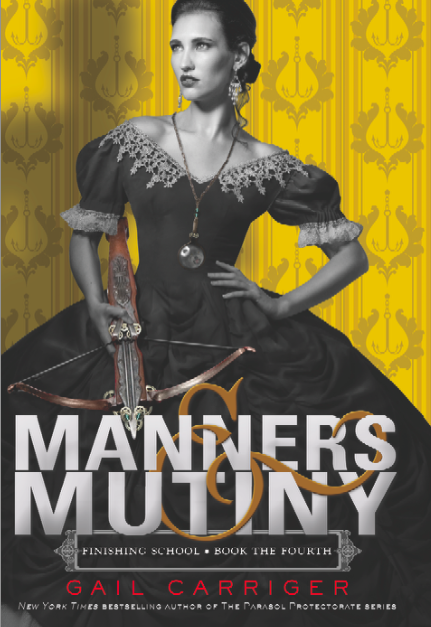
Her next release, in November 2015, will be Manners & Mutiny of the Finishing School series. If you haven't read Sophronia's exploits yet, I highly recommend you do so posthaste!
Be sure to check out our interview where Carriger talks of hedonism, aether currents, canoodling and more!

18 August 2015

from author Killen

The super September 10, 2015 issue of Electric Spec is in the works! We're proud to share several excellent stories with you. One of these stories is "Peacekeeper" by Jamie Killen. It's a SF story set in a very intriguing culture where 'nats' and 'synths' are pitted against each other...

About the story, Killen says:

This story started out as my way of playing around with noir/crime drama tropes: the hardboiled detective, the hooker with the heart of gold, the corrupt public official. Of course, being me, I had to end up with a story in which these tropes took the form of cyborgs in outer space.

The second major piece of this story was my realization that very few stories about conflict between humans and robots/cyborgs/cylons/etc stop short of full-blown apocalypse. Instead of the conflict escalating to victory for one side or the other or ongoing total war a la The Matrix or Terminator, I wanted to explore a world in which a human-cyborg conflict resulted in a fragile but workable peace.

The end result is a story in which the main conflict stems from the tricky details and competing interests that come with that peace.

Very interesting! Thanks, Jamie!

11 August 2015

September 10 2015

We, The Editors, had our production meeting recently. The most important result of which is we are pushing the publication of the next issue from August 31 to September 10, 2015. A confluence of events made the earlier date impossible. (If I could just get my damn time machine to work properly...) Apologies, if this causes any inconveniences.

If you submitted a story by the July 15 deadline, you should have already received an email. If you furthermore had a story in hold-for-voting, you should be getting another email very soon.

As usual, it was very difficult to get the attention of the wait-person. Ha! Kidding! (No, I'm not.) No, as usual, it was very difficult to decide amongst the many excellent stories. All the stories in hold-for-voting were publishable. If you had a story there, pat yourself on the back. Nice job!
If you've submitted a story to us: Thank you very much! We appreciate it!

One deciding factor this time seemed to be length. We accept flash fiction, but it's tough to write a complete story in a flash length. We had a couple flash pieces as finalists but in the end, they weren't emotionally satisfying enough. At the other extreme, we had a loooong story that we enjoyed but it was ~7000 words and no one was willing to edit it. We may revisit our word length limits in the future.
Bottom line for writers: avoid the shortest and longest lengths.

As usual, genre was an issue. We had one story we decided was not, in fact, speculative fiction, so it had to go. The upcoming issue has to have a variety of genres, so the stories we ended up with reflect that. I will blog more about the upcoming stories in the coming weeks. We may even hear directly from some authors...

Some genres we don't get much and would like to see more of:

  • Steampunk. Make sure there's a complete story to go with your neat world. Also, the steampunk aesthetic should be integral to the story.
  • Macabre horror. Basically, non-gory horror.
  • Epic or high fantasy. Yes, this is swords and sorcery, and possibly creatures such as elves, fairies, etc. Essentially, this is good versus evil in an imaginary (or "secondary") world.
Stay tuned for more info about the scintillating September issue!

04 August 2015

Delany

Long time blog readers are expecting to read a production meeting post right now.
Due to a scheduling issue we're meeting a little later than usual this time, so I'll post something about it next week. In the meantime...

The New Yorker had a very interesting article last week: Samuel Delany and the Past and Future of Science Fiction. Peter Bebergal says From the beginning, Delany, in his fiction, has pushed across the traditional boundaries of science fiction, embraced the other, and questioned received ideas about sex and intimacy. Hurray for him! I think SF is the perfect place to push and explore boundaries of all kinds. Check out the article.

In recent years (with the exception of a few pathetic baby canines) I think our society has caught up with the ideas and ideals Delany brought forth for our consideration. Authors like Delany contributed significantly to this change. Literature, even genre literature, has the ability to change the world.
As for troublesome puppy-types, Delany says, "It has nothing to do with science fiction. It has to do with the rest of society where science fiction exists."

What do you think? Do you agree? Disagree?

As Grand Master James E. Gunn said in our January 2007 issue of Electric Spec, "Let's save the world through SF!"

28 July 2015

the value of editing

We, The Editors, are busy working behind the scenes on the next issue of Electric Spec.

With all the recent brouhaha surrounding Go Set a Watchman by Harper Lee I can't help thinking about the value of editing. Of course, Ms. Lee's novel To Kill a Mockingbird is a classic. Until recently, I didn't know Lee's editor Therese "Tay" von Hohoff Torrey played such an important part in its development. You can read about several places including The New York Times: "The Invisible Hand Behind Harper Lee's 'To Kill a Mockingbird'".

Editors clearly can play a very important role.

Here, at Electric Spec, we do edit our fiction--although we're not in Hohoff's league. Usually, this editing consists of cutting words that aren't needed. Sometimes, we suggest or ask for alternate titles. We have even occasionally polished a diamond in the rough into a beautiful gem.

Once in a while an author refuses to make any changes. When this happens we agree to go our separate ways.

Hurray for all those unrecognized, unlauded editors throughout history! We salute you!

21 July 2015

write your passion

We've closed submissions for the August 2015 issue of Electric Spec. Of course, you can continue to submit for the next issue (November 2015). Thus, we are very hard at work behind the scenes getting the August issue ready to go.

So, in the meantime a few words... Writers are told to write what they know. I don't totally agree with this advice. I think it's better to write what you love. Write what you're passionate about. One of the things I'm passionate about is: the universe!
This week we saw some amazing new images of pluto. I can't help sharing one of them with you. Here's Pluto with it's moon Charon:
Awesome!
What are you passionate about? Send us a story!

14 July 2015

effective protagonist

The story submission deadline for the awesome August 31,2015 issue of Electric Spec is July 15, 2015! Tomorrow!

I've been reading a lot of fiction this summer. In my opinion the protagonist is the most important thing in any story. Yes, that includes speculative fiction stories. There are some different ways to achieve an effective protagonist...

Probably my favorite type of protagonist is a flawed but heroic protagonist. This is someone who tries to do the right thing but has some significant personal issue(s) that will make this difficult. This type of protagonist is very common in YA fiction and is very easy to empathize with. Often they also have a unique characteristic, like a supernatural ability, or extra gumption or brains or something similar. In modern fiction, there's a sliding scale of flawed heroism that goes all the way to the anti-hero. An anti-hero would be mostly (all?) flaws--but still opposing the villain.
Please note there's an important point here. In most cases, an empathetic protagonist should have at least one good quality. (Yes, fighting evil could be that quality.) An effective author tool to make readers empathize with a protag is to show other characters caring about said protag. Or, you could have said protag experience something bad, like bullying. Or, you could have said protag caring for babies or puppies. :)

In the olden days all protagonists were straight-up heroes. They are basically perfect and always fight evil and win. You shouldn't use this type of protagonist because it's too old-fashioned. Modern folks can't identify with perfection.
I read a novel recently in which the protagonist basically had no flaws or problems. I did not enjoy that novel!

Of course, the polar opposite of a hero is the villain. They work to oppose the hero. Again, there's a sliding scale here. He/she could be an old-fashioned all-bad villain all the way to a partially good-villain. What makes a villain? That can be hard to decipher in this day and age. I'm going to say villains pursue evil while heroes pursue good.

There is an interesting modern phenomena in which stories and novels are written in which the actor has no, or very few, redeeming qualities. Basically, the author has made the villain into the protagonist. The fiction of Gillian Flynn might be an example of this. And you can't argue with success! Therefore, one way to create an effective protagonist is to actually create a villain. Who knew? :)

Good luck with your protagonists!

07 July 2015

cliches

Don't forget the deadline for the awesome August issue is July 15, 2015!

I've been reading a lot of stories from our slush pile lately. I've also been reading entries for a certain unspecified writing contest. I'm pretty sick of some things...

  • Please do not start with a dream.
  • Please, please do not have your story start with the protagonist waking up.
  • Please do not start with someone driving somewhere in a car.
  • Please, please do not tell me about your protagonist's hair style--especially not multiple times in the first 5 pages. I don't care how messy it is. I don't care if it's long or in a pony-tail or whatever. Hair style does not elucidate character.
  • Please, please, please do not tell what color hair your protagonist has--especially by running his/her fingers through it! No real person thinks about hair color while they run their fingers through it. Go ahead, try it: run your fingers through your hair. Did you think "my red hair" or "my brown hair" or "my blond hair"? I bet you didn't.
  • Please do not have your protagonist look at him/herself in a mirror as a mechanism to describe him/her for the reader.
  • Try not to use common idioms. "Avoid it like the plague" if possible. Because if not, your story may be "dead as a doornail" "at the end of the day." Creating unique idioms is actually a great way to create character and build your world.
Yes, I'm a little grumpy. Sorry. But avoiding cliches can only help make your writing as awesome as it should be.
(You probably shouldn't use "awesome.")
Good luck!

30 June 2015

Locus

Wow! Time flies. The deadline for the awesome August 2015 issue of Electric Spec is coming right up: July 15, 2015. Get those stories in!
I do apologize, we've been pretty behind on slush this time.

In terms tips, from last week, slush pile tips, still seem pretty relevant. I also recommend you proofread your piece in terms of spelling and grammar. We generally don't toss a story for bad spelling or grammar unless it's really bad. But if we're on the fence about a story, better to be safe than sorry.

Did you know there's a very famous magazine about speculative fiction? For many years the p-zine Locus was the industry standard. In recent years the e-zine Locus has been gaining in prestige. This past weekend they announced their annual speculative fiction award winners:

  • Ancillary Sword by Ann Leckie, for best science fiction novel
  • The Goblin Emperor by Katherine Addison, for best fantasy novel
  • "Yesterday's Kin" by Nancy Kress, for best novella
  • "Tough Times All Over" by Joe Abercrombie, for best novelette
  • "The Truth About Owls" by Amal El-Mohtar, for best short story.
The full list of winners is here.

Congratulations to all the winners!

23 June 2015

slush pile tips

Here at Electric Spec we do something a little different. We never close to submissions. For a particular issue we just look at submissions from within a certain time frame. Thus, our next issue is out August 31, 2015, so we'll be accepting submissions for that issue through July 15, 2015. A quirk of this process is we don't look at the new slush pile for about six weeks while we work on the upcoming issue.
Bottom line: we have a backlog of slush right now and we know it. We're addressing it.
I've been doing my part to wade through the slush pile and consequently I have some tips...
  • Do submit your story in *rtf format as requested.
  • Do remember to attach the file.
  • Don't use any weird formatting such as unusual colors, symbols, strike-outs, etc.
  • Regarding your cover letter:
    • Don't tell us you have no sales.
    • If you did sell to Electric Spec, mention it!
    • Don't ask for critique.
    • Don't send a follow-up email asking if we got your story. We get hundreds of stories and having to answer queries about your query just bogs down the process.
  • In your story, do show us stuff--rather than just telling.
  • If your story is super-long it's going to be less desirable (we have to edit it!)
  • Do write a story with speculative elements.
  • Your story shouldn't be about "business as usual." Something unusual should happen.
I'll have more tips in the coming weeks.
Thank you for submitting!

16 June 2015

novel openings

I've been thinking a lot about novel openings lately. It shouldn't surprise you that a good novel opening is a lot like a good short story opening. One of our most popular blog posts ever was our short story cheat sheet, and it has a lot of great tips for short stories. I was inspired to write this after Editor Betsy and I taught a workshop on writing short stories.

Focusing more specifically on speculative fiction novels, however...

  • You really need to have a character within the first couple of pages, ideally on the first page. This is because the reader identifies with the characters. If there's no character, who do they identify with? Keep in mind fiction is unique in that the reader gets to become another person via this identification. This initial character should be the protagonist, but it doesn't have to be.
  • In chapter one your character needs to have a problem or some other unique situation. This is the first appearance of 'plot' and it needs to at least hint at the major conflict of the novel. Also this should be related to the protagonist's character arc.
  • On page one you should give the reader some idea of setting in terms of time and space. I do not recommend a long description or a big info dump--just give us a sentence here and there. As an aside, paragraphs of info dump are old-fashioned; don't do it.
  • Your novel opening should be consistent with your genre. You read a lot in your genre, right? If you don't know what your genre is: figure it out ASAP.
  • You should know your novel's theme or big idea and chapter one should be consistent with it. Your theme is the take-away from your novel. Similar plots can have very different themes. For example, if your novel's plot is the zombie apocalypse ... What's the theme? The theme basically guides you in how you tell the story. Perhaps your protagonist moves heaven and earth to save his daughter, in which case the theme is 'family is everything.' Or, perhaps, the protagonist cures the zombies via medical expertise, in which case the theme is 'science can save us.' You get the idea.
Good luck with your novel openings!

09 June 2015

Editorial tricks

As we put together the last issue of Electric Spec I couldn't help noticing I've picked up some editorial tricks, to make a story pop, over the last decade. I thought I'd pass some of them along to you...

Tricks to make your story stand out from the crowd:

  • Have minimal spelling and grammar mistakes. (Okay, I admit this isn't strictly a trick.) No one will read your story if they're distracted by errors. Use your software's spelling and grammar checker. Use your significant other. Use your persnickety retired-school-teacher aunt.
  • Create a unique title for your story. Your title is essentially the commercial for your story. When readers see it in a table of contents they should think "I need to read that!" After you finish your story, stop, pause, think. What is the essence of your story? Your title should reflect that. You might even have a great phrase already in your story you could use.
  • Put your power words at the end of your sentences. This gives the sentence more oomph! Related to this, put your dialogue tags in the middle of the sentences. Here's an example:
    • "I can't believe he's dead," the angel said.
    • versus "It can't believe it," the angel said. "He's dead."
    The second version is more dramatic, isn't it?
  • Make use of white space on the page. Putting more white space around a sentence makes it stand out more. In other words, start a new paragraph--even if you don't have to--to emphasize something. This can be especially effective at the end of the story.
Good luck!

02 June 2015

Thanks!

As you know, the marvelous May 2015 issue of Electric Spec is out. Huzzah!

Thank you potential authors for submitting your stories. We appreciate you! Thank you authors K.C. Griffin, Jessica Kelly, Malcolm Laughton, Jim Breyfogle and George Schaade. We appreciate you!

Thank you to our associate editors Chris Devlin and Nikki Baird. You rock! Thank you to our columnist Marty Mapes. You rock! Thanks, also, to our cover artist Ron Sanders for his piece "Ache." Nice job!

Thank you tech guys at Hardlight Multimedia in Ireland. Huzzah for you!

Most of all, thank you readers! We wouldn't exist without you. :)

01 June 2015

It's alive!

Check out the brand new issue of Electric Spec!